The UK manager of road safety technology company Acusensus, Geoff Collins says he hopes a trial of AI-powered enforcement cameras in the “back yard” of the UK’s lead for Road Policing will result in a step-change to the take-up of anti-distracted driving technology.
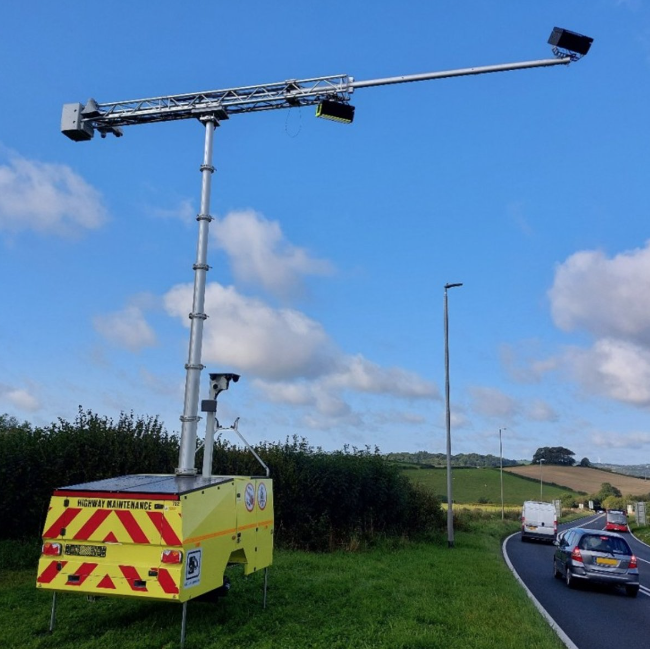
The Australian company’s ‘Heads-Up’ system is being used in the Sussex Police region to detect drivers using mobile phones or not wearing seatbelts. The force’s Chief Constable, Jo Shiner, is also National Police Chiefs’ Council Lead for Roads Policing, guiding and co-ordinating roads strategy and policy across the country.
Sussex is the latest force to adopt the system, which has been used across multiple regions of the UK, as police forces expand the use of AI-enabled technology to identify dangerous driving.
“Police forces get great ideas put to them all the time, so when you have a solution it’s a matter of building the evidence, and being patient, until there is a tipping point and everyone starts to realise the benefits,” explained Mr Collins, who has previously led the up-take of average speed camera technology to the UK road network. “I really believe that when other police chiefs see our technology operated successfully in Jo Shiner’s back yard, they will be ready to follow suit. Our experience demonstrates that our solution will deliver dramatic road safety benefits.”
In a statement, Chief Constable Shiner commented that the cameras “are not designed to replace modern day policing, but to enhance it. By embracing the technology available to us, we can build a better picture of driver behaviour, influence behavioural change and take action where necessary.”
Mr Collins agrees that the technology allows police to identify dangerous behaviour in a way that would be impractical using traditional enforcement methods, adding that previous deployments have already delivered “impressive improvements” in driver behaviour.
Analysis in Devon and Cornwall of data gathered between 2023 and 2025 showed a 80% decrease in seatbelt and mobile phone detections, across the period. Furthermore, statistics from Australia show that the first state-wide scheme rolled out in New South Wales in 2019 led to the number of mobile phone detections dropping by a factor of 6, with subsequent Acusensus programmes in other Australian states delivering similarly positive changes in behaviour.
The system uses powerful cameras, two different views and artificial intelligence to capture and analyse images of passing vehicles, automatically flagging potential offences for human review, before any enforcement action is taken.
The deployment follows earlier trials in the county, where hundreds of offences were detected in just a matter of days, which Mr Collins says underlines both the scale of the issue and the potential for technology-led interventions to change driver behaviour, long term.
(Picture – Sussex Police)