From major transport improvements to road repairs, traffic data collected by Lincs Laboratory is helping the county’s council make evidence-based decisions, improve journeys and get more from its highways budget.
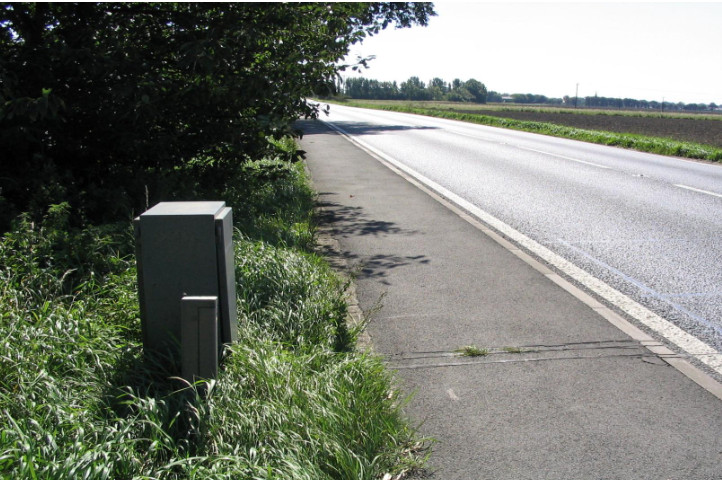
Lincs Laboratory operates 49 permanent Automatic Traffic Counter (ATC) sites on main A roads across the county, collecting traffic data 24 hours a day, 365 days a year.
Using inductive loops installed in the road surface, these counters record the volume and classification of vehicles travelling in each direction. The information helps the council understand how its roads are used and where investment, improvements and maintenance may be needed.

Cllr David East, executive member for highways, said:
“Good decisions start with good information. Understanding how much traffic our roads carry and the types of vehicles using helps us plan for the future, make better investment decisions and target maintenance where it will have the greatest benefit.
“This data underpins much more than day-to-day highway management. It helps us build the evidence needed to make the case for major transport investment, assess the impact of new developments and decide where limited maintenance funding can make the biggest difference.
“Ultimately, better information helps us make informed decisions about how we spend taxpayers’ money and support safer, more reliable journeys across Lincolnshire.”
Alongside its permanent and temporary counters, Lincs Laboratory carries out manual traffic surveys using its team of Traffic Data Enumerators. These surveys record vehicle volumes and classifications from the roadside, providing a more detailed picture of traffic at particular locations.
Two manual survey programmes are carried out each year, in spring and summer. The results help calculate Annual Average Daily Traffic (AADT) for individual roads, estimating the average number of vehicles using them each day. This information can then inform road design, maintenance and improvement schemes.
Manual surveys can also help assess whether a pedestrian crossing may be justified. In these cases, the number and type of pedestrians crossing the road are considered alongside traffic volumes through a method known as the PV² assessment (Pedestrian and Vehicle Volume Squared).
Chris Neal, laboratory services manager at Lincolnshire County Council, said added:
“The value of this work is that it gives us evidence rather than relying on assumptions. Whether we’re assessing a proposed development, planning a major transport scheme or deciding how best to maintain a road, reliable data helps us understand the issues and make better-informed choices.
“For a county with around 5,500 miles of roads, that insight is an important part of planning how we look after the network over the long term.”
The traffic data collected by Lincs Laboratory forms part of the wider evidence used by Lincolnshire County Council to plan transport investment, assess development proposals and manage its highway network. By helping the council understand where pressures are greatest and what interventions are needed, it supports better planning, more targeted maintenance and value for money for taxpayers.
(Picture: Lincolnshire County Council)