
Transport Scotland has published an updated baseline report for its Active Travel Framework, expanding the number of indicators used to monitor progress towards its ambition for walking, wheeling and cycling to become the most popular choices for shorter everyday journeys by 2030.
The updated report builds on the original framework, published in 2019, increasing the number of proposed indicators from 15 to 27 following discussions with stakeholders. The aim is to provide a more detailed picture of progress, with greater distinction between travel modes and other characteristics of interest.
The indicators are grouped around five key outcomes: increasing the number of people choosing active travel; providing high-quality infrastructure; improving safety; promoting and supporting delivery through partnerships; and ensuring walking, wheeling and cycling are accessible to all.
Among the areas covered are the proportion of shorter journeys made on foot or by bike, journeys to school, the availability of traffic-free walking and cycling facilities, and public satisfaction with infrastructure. The report also considers casualty rates, perceptions of safety, household access to bicycles, investment in active travel and the delivery of on-road cycle training in primary schools.
The expanded framework is intended to provide a more detailed means of assessing how Scotland is progressing towards its 2030 vision, while highlighting where further evidence is needed. Transport Scotland also says it is interested in exploring additional indicators relating to barriers to active travel.
The report updates the evidence presented in the original 2019 baseline study, drawing on a range of existing data sources. For most indicators, the latest available figures are compared with pre-pandemic data from 2019, with 2020 and 2021 generally excluded because of data availability issues or the impact of COVID-19 on comparability. For most sources, the latest data relates to 2024.
Transport Scotland acknowledges that the availability and quality of evidence varies across the indicators, with data gaps and limitations highlighted where relevant.
The updated report provides further detail on the measures being used to track progress, the sources underpinning them and the changes recorded since the original baseline.
Read the full report HERE.
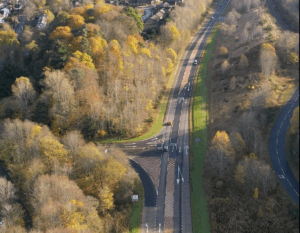
(Picture: Glasgow City Council)