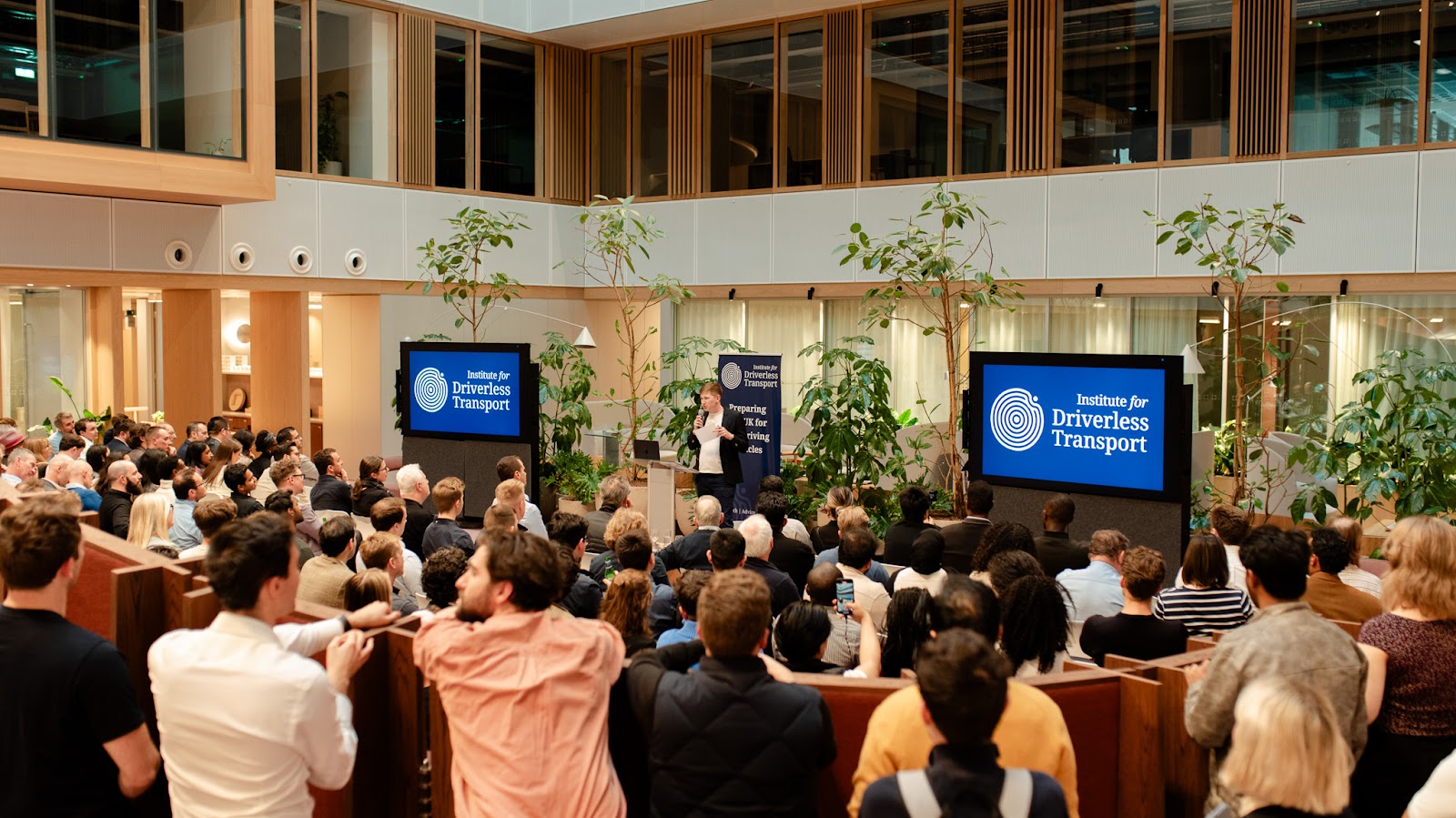
After its recent launch, the Institute for Driverless Transport is now in the process of mapping out the key unanswered questions which will determine the impact of driverless transport for the UK.
IfDT is set to continue focusing on the consequences of driverless vehicles operating at scale across: Economics & Productivity, Social Change, Job Displacement and Security & Geopolitics, saying that it’s the organisation’s intention for its Research Roadmap to provide the AV ecosystem with a common framework – one that directs new research, funding and attention toward important but under-considered questions.
To make this more tangible, IfDT has earmarked four questions that emerged from the roundtable discussions that were held at the launch event – questions that no single organisation owns, and that illustrate the scale of work ahead of us:
- Will fleet-based subscription models replace private vehicle ownership, or is consumers’ attachment to their own cars more durable than the AV-optimists think?
- What does a fair transition look like for the more than one million UK workers whose jobs are most exposed to automated driving?
- Can autonomous vehicles deliver real independence for disabled and elderly people without creating new safety questions in unstaffed shared rides?
- Should the UK have a sovereign-capability test for AV operator licensing, given the dependence on overseas hardware and software?
“To borrow an old phrase, we are dealing with knowns, known unknowns, and unknown unknowns. Large-scale AV rollout is uncharted territory,” a spokesperson for the organisation said. “The technology is moving faster than the public evidence base, and the relevant expertise is scattered across industries that don’t talk to each other as much as they could. Therefore, this project is necessarily collaborative. Only the people already working on these questions (which includes many who will be receiving this email) know which have been settled, which are contested, and which remain wide open.”

There are three ways you can help propel the discussion:
- Share your insights: IfDT is speaking with people working at and with operators, regulators, affected businesses, potential clients of driverless transport, technology providers, transport authorities, unions, civil society, insurers, lawyers, and academia.
- Share information about funders: This work can only happen at the depth it deserves if it can be properly resourced. Introductions to philanthropic foundations, family offices, or tech investors with public-interest arms who back this kind of work would make a real difference.
- Share with your network: Share with anyone who you think should be part of this conversation. The Research Roadmap will only be as good as the people who feed into it.
IfDT will unveil the early shape of this work at MOVE 2026 in Excel London on 17-18 June, with the full launch planned for September.
(Picture: IfDT)