INRIX has announced the launch of the INRIX Signals Scorecard, a new report that helps transportation agencies measure, benchmark, and improve traffic signal operations using real-world vehicle movement data collected across millions of miles of roadway every day.
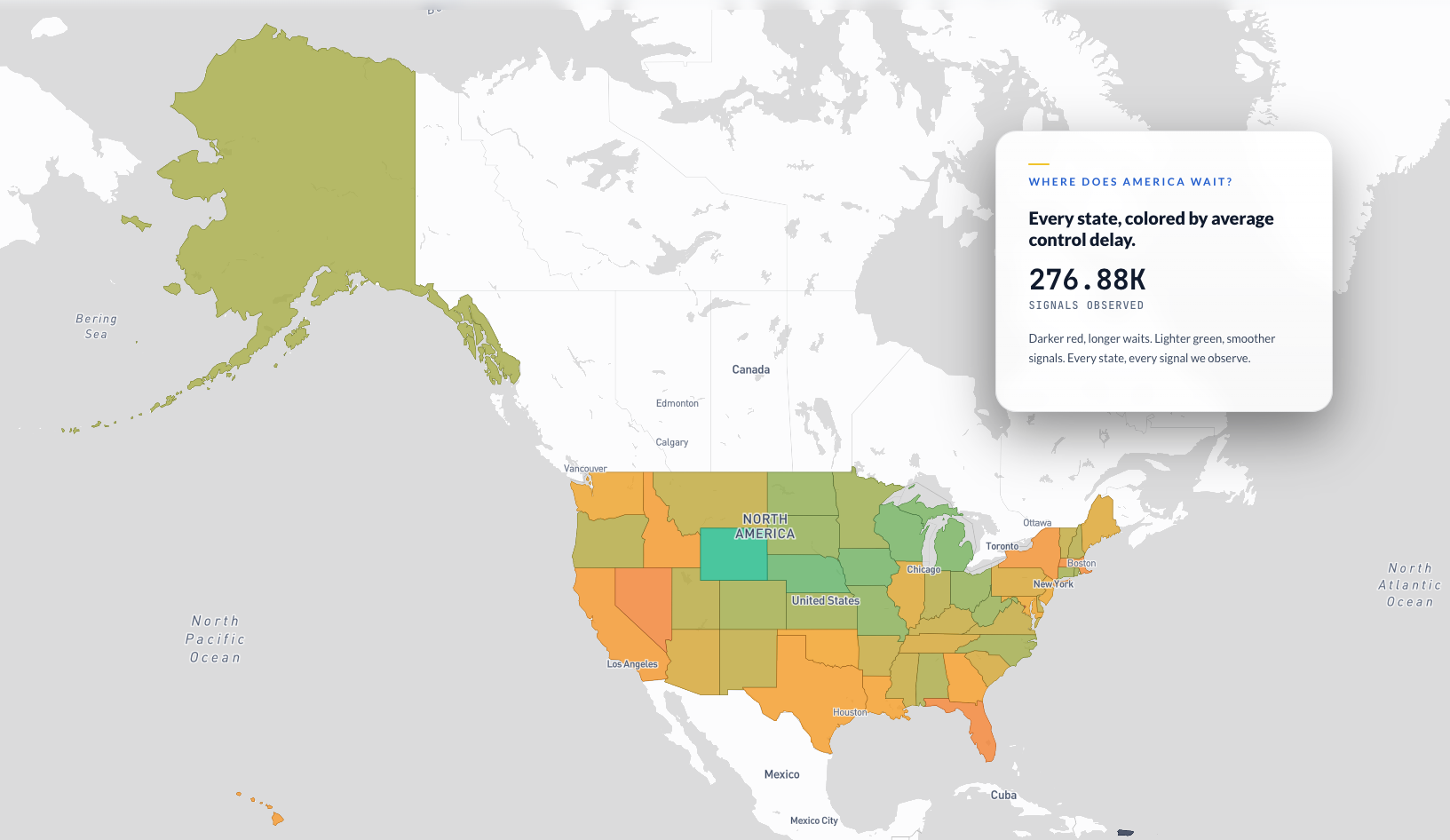
Built on the INRIX Signals Analytics platform, the Signals Scorecard transforms complex transportation data into an executive-ready report that quantifies corridor performance, identifies areas for improvement, and tracks operational outcomes over time. The report analysed 276,880 traffic signals across all 50 US states and Washington DC to determine how long Americans actually wait at signalised intersections, and found an average control delay of 20.1 seconds per signal visit.
Among other key findings were:
- Washington D.C. tops the list at 28.8 seconds per stop. Wyoming posts the best marks in the country at 12.6 seconds.
- The Northeast corridor runs 6% above the national average. From Washington DC to Boston, dense networks and constrained right-of-way push delays well past the national median.
- Most signals are fine 22 hours a day, but INRIX found an extra delay of 5.3 seconds in the busiest hour
(4 pm) compared with the national all-day average
Transportation agencies have historically struggled to measure the effectiveness of signal timing investments beyond individual intersections. The INRIX Signals Scorecard addresses this challenge by providing a consistent framework for evaluating signal performance nationwide using objective, network-scale metrics.

“Cities invest millions of dollars in signal timing, adaptive systems, and corridor improvements, but many lack an efficient way to prioritize improvements on their entire network and measure the results,” said Steve Remias, Head of Product, Signals for INRIX.
“The Signals Scorecard provides an easy-to-understand benchmark that helps agencies identify opportunities, measure outcomes, and communicate the value of traffic signal investments to stakeholders.”
(Picture: INRIX)