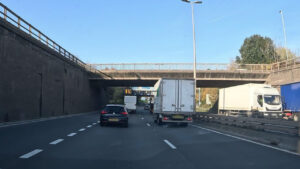
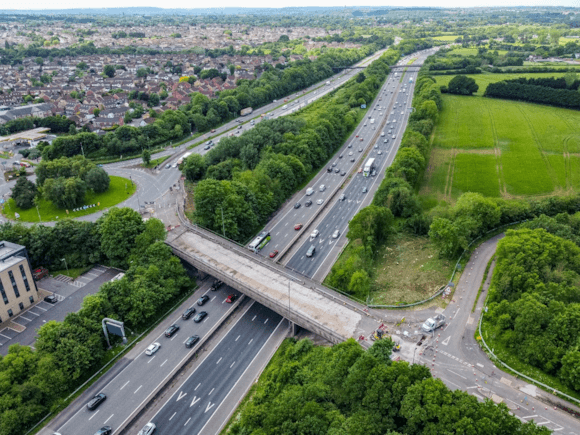
FM Conway and National Highways have delivered a first-of-its-kind low carbon scheme on the M4, combining hydrogen and electric plant to resurface the carriageway between Junctions 15 and 16, including the first use of JCB’s hydrogen 3CX backhoe loader on the strategic road network.
The scheme was about showing how low carbon materials, innovative paving techniques and low emissions machinery can be combined to accelerate the transition to greener infrastructure. It delivered a carbon saving of 50% (630 tonnes of CO2e) versus the standard design.
The M4 is one of the busiest motorways in the UK, carrying over 130,000 vehicles every day, making it the ideal test case for demonstrating how more sustainable road construction and maintenance can be achieved.

Showcasing the power of supply chain partnerships and collaboration, this scheme brought together JCB’s hydrogen 3CX backhoe loader for the first time on the UK strategic road network, accompanied by Sany’s electric planer and 4.5 tonne roller – which were all transported on Volvo’s fully electric 42 tonne lorry. The 11,000 tonne scheme was delivered over six weeks using low carbon material
The teams coordinated planning for electric charging and hydrogen refuelling infrastructure alongside support from the National Highways team and its Low Carbon Demonstrator Fund.
This collective effort paves the way for sustainable delivery across the strategic network, said Andy Weymouth, framework delivery manager at FM Conway:
“Delivering this scheme on time and to such a high standard was only possible through genuine collaboration with our partners – we all played a vital role. It took belief in a shared goal and a healthy dose of commitment to integrate the use of these new technologies effectively.
“By working together, we overcame challenges and set a new benchmark for how sustainable road construction can be achieved on the national strategic network. This scheme is proof that when we unite expertise and resources, we can accelerate the transition to greener infrastructure and deliver real impact.”
Angela Halliwell, Head of Carbon and Air Quality at National Highways, said:
“We’re committed to cutting carbon from road maintenance and are proud to support the acceleration of new low‑carbon technologies, helping bold projects like this become a reality.
“This isn’t just about testing ideas, but generating real‑world learning that can drive wider adoption and help make our network one of the greenest in the world.”
The integration of hydrogen and electric machinery, right through to the road laying method, the way equipment was moved, and the materials used, means emissions were cut at every stage of the job.
(Picture: National Highways)