Industry figures have responded to HM Treasury’s publication of the government’s response to its consultation on the introduction of Electric Vehicle Excise Duty (eVED), the new mileage-based charge on electric and plug-in hybrid cars due to take effect from April 2028. The government confirmed it will not proceed with mandatory mileage checks for cars under three years old and has simplified arrangements for fleets and leasing companies, including bulk licensing and estimated mileage readings.
In the consultation response the government states:
“The reduced rate of eVED for PHEVs reflects the fact that these vehicles continue to pay fuel duty on the petrol or diesel they use. The government recognises that driving habits vary and some PHEV drivers may drive more or less than 50 per cent of the time in electric mode. However, alternative approaches would require motorists to report mileage driven in different modes, which would not be a practical or proportionate approach. A reduced rate for PHEVs strikes the right balance between fairness, protecting motorists’ privacy and minimising administrative burdens on motorists.”
It also confirms its stance with regard to location-based charging:
“As set out in the consultation document, the government has ruled out charging tax based on where people drive, to protect motorists’ privacy. This means non-UK mileage driven by UK registered cars will be included within the scope of eVED. As with fuel duty, the government does not consider it proportionate to distinguish between different types of journeys or locations. Since the mileage driven abroad is a very small proportion of total mileage for cars5, it is proportionate to prioritise privacy and simplicity over a system of checks to deduct non-UK mileage.”
Tanya Sinclair, CEO, Electric Vehicles UK, said:

“Government has listened where it matters. Dropping mandatory mileage checks for cars under three years removes a significant speed bump that would been a burden on new drivers and big fleets. The other changes it made recognise the practicalities of how fleet operators work.
“Where government still needs to do better is in how it communicates its policies to drivers. We still have a mix of incentives, taxes, grants and policies which don’t clearly echo its vision of an all-electric future.”
Ben Nelmes, CEO of New AutoMotive, declared:
“If the government wants people to switch to EVs, it needs to make electric motoring easy, attractive and affordable.
“Today’s decision to drop mandatory mileage checks for brand-new cars is welcome. But much of the wider package remains untested and risks becoming an albatross around the neck of the next Chancellor and transport secretary.
“It is absurd that families heading off on holiday will be taxed by the UK government for driving on French roads. It is staggering that the DVLA’s legacy computers are unable even to process a simple automatic refund when someone sells or scraps their car – that in itself should be a massive red flag for the incoming government about the deliverability of this policy.
“With uncertainty over EV targets and a risky new tax on electric motoring, drivers, businesses and investors will question the UK’s commitment to the transition. New ministers should pause, take stock and get this right.”
Toby Poston, CEO, BVRLA, said:
“It is great that the government has taken some of the roughest edges off its eVED plans. They’ve accepted that a tax designed around private motorists won’t work for the fleets that are driving the UK’s transition to electric vehicles.
“But there is no avoiding the fact that you can’t create a smooth switch to electric vehicles by making them more expensive to own. The mechanics of the tax may have improved, but the timing is still wrong.”
Simon Smith, CEO, Voltempo, commented:
“Scrapping the under-three-year mileage checks is the right call. That proposal meant leased and rental vehicles off the road for checks that added cost, not value. Government listened, and the fleet package – bulk licensing, bulk payment, estimated mileage – is built around how the industry runs, not how Whitehall assumed it runs.
“The next test will be delivery. Guidance, systems and the MOT network all need to be ready well before April 2028.”
Vicky Edmonds, CEO, EVA England, said:
“This policy still does not work for drivers. The Government has made one welcome change for newer EVs, but the wider scheme remains too complex, risks leaving people out of pocket and fails to give drivers the confidence they need.
“At such a crucial point in the switch to electric, ministers should be making the system simpler, fairer and easier to understand, not pressing ahead with a policy whose key faults remain unresolved. This now piles pressure on the public charging review that really needs to work for drivers and pave the way for affordable charging.”
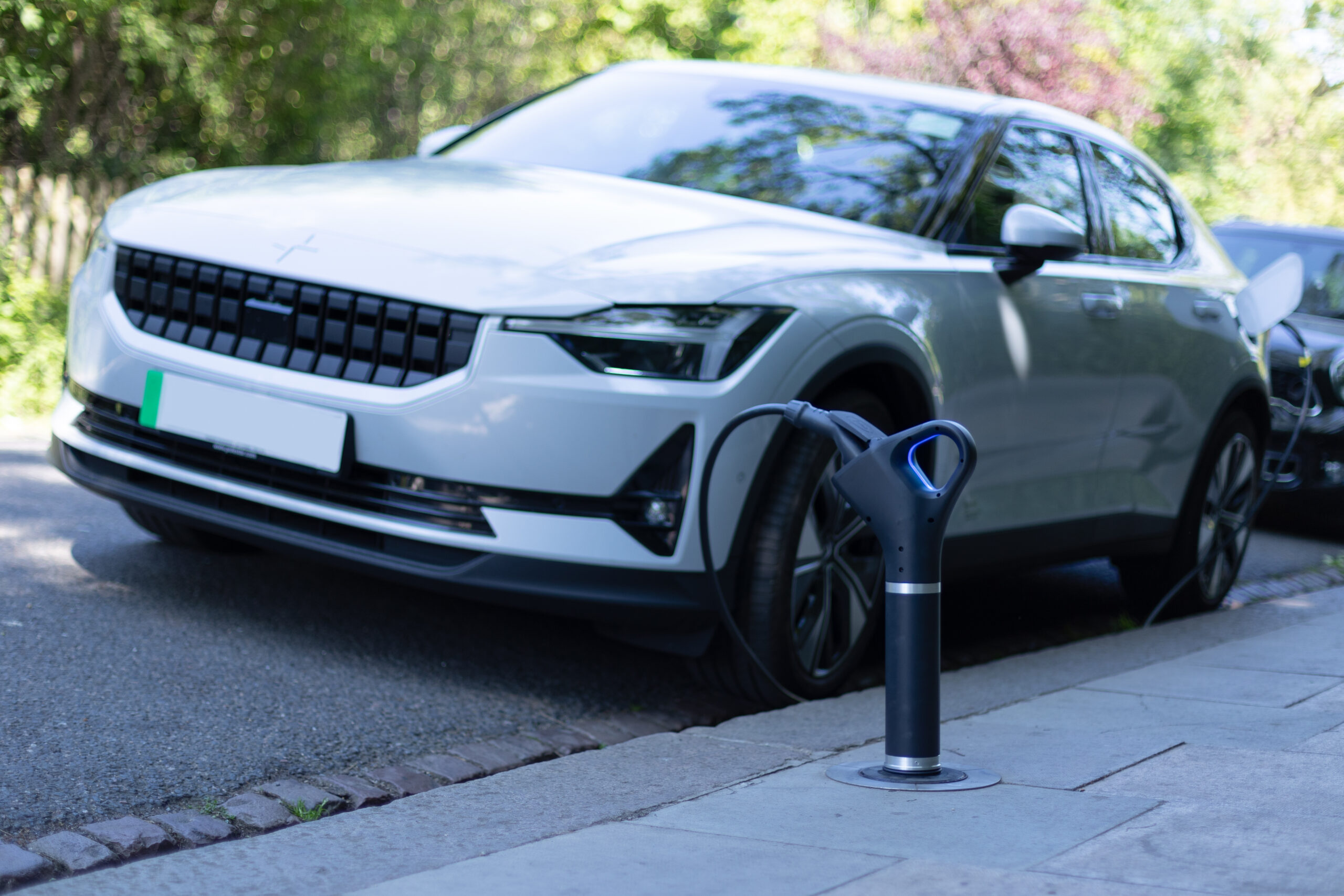
(Picture: Trojan Energy)