
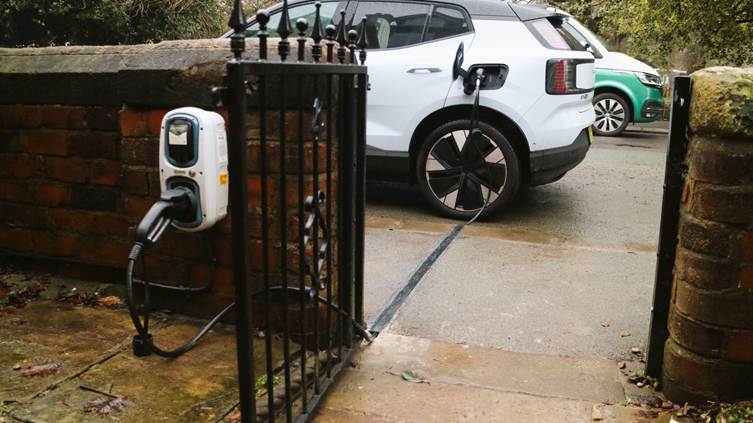
Councils have been accused of ripping off drivers by charging up to £185 a year to maintain electric car charging gullies across pavements. The fees, which are ostensibly to cover any future highway maintenance costs, typically range from £50 to about £100 per year.
Redbridge council in London has one of the highest fees, at £185 a year. The charges are on top of the cost of cutting the gullies into pavements, reports The Times (subscription required),
Officials this month confirmed plans to end the need for householders to obtain planning permission to have a pavement channel installed so they can run a cable from their home to charge their car. Home charging is about a quarter of the price of relying on public charging points.

However, observers and companies installing the gullies say that councils are holding up electric car adoption by charging annual licence fees.
Andy Palmer, a former Nissan executive who brought the Leaf electric car to the UK, said: “I can understand that when you install the charger, there’s a fee associated with connecting to the grid and putting a gully in place. I think that’s entirely reasonable. £50, £100, whatever. But to continue to charge you annually I think is thoroughly unreasonable.”
Charging as much as £185 a year was “basically a rip-off”, said Palmer, who runs Palmer Energy, a consultancy. “Councils really should be welcoming that [the gully] as a lower cost solution [for residents] rather than heaping a cost on it.”
He said the variation in fees amounted to a “postcode lottery”. Councils including Manchester city council do not charge, but others such as Milton Keynes charge £50 annually for three years after the gully is installed, and Enfield in London charges £107 a year.
Michael Goulden, the co-founder and chief executive of Kerbo Charge (pictured), which has installed about 3,000 gullies, said London councils were more prone to charging ongoing licence fees. He said that about half of councils charged.
He said: “The rationale is that once these are in the ground, the two-year original labour warranty expires and then there is an additional overhead for the council [for potential maintenance]. And there is also for councils a small additional insurance overhead.”
However, Goulden said the fees had to remain proportionate and reasonable. “It’s a lot cheaper to charge at home but it [the licence fee] does have a deterrent [effect].”
(Picture: Kerbo Charge)