The reopening of Glasgow’s M8 Woodside Viaducts has been delayed again, with the Scottish Government now expecting the emergency repair project to cost between £175 million and £185 million.
The eastbound carriageway is expected to reopen in early 2027, while work on the westbound carriageway is due to be completed in the second half of the year. The latest timetable replaces the previous target of autumn 2026.
The revised programme was confirmed by Transport Secretary Stephen Flynn in the Scottish Parliament on 17 November. He said further extensive concrete repairs were required to joints on the viaducts.

The latest cost estimate represents a substantial increase on the £81 million figure reported in 2023.
The announcement prompted criticism from Scottish Labour MSP Pauline McNeill, who expressed disappointment that the autumn 2026 deadline had been missed and called for better communication with the public.
The current works are intended to provide an interim solution rather than a permanent fix. Transport Scotland has said the steel supports being installed have a limited lifespan, will require ongoing maintenance and are not suitable as a long-term solution.
The agency is considering three options for the viaducts’ future: repairing the existing structures, replacing them or demolishing this section of the M8. Estimates published during a public consultation earlier this year put the cost of the most expensive option at up to £500 million.
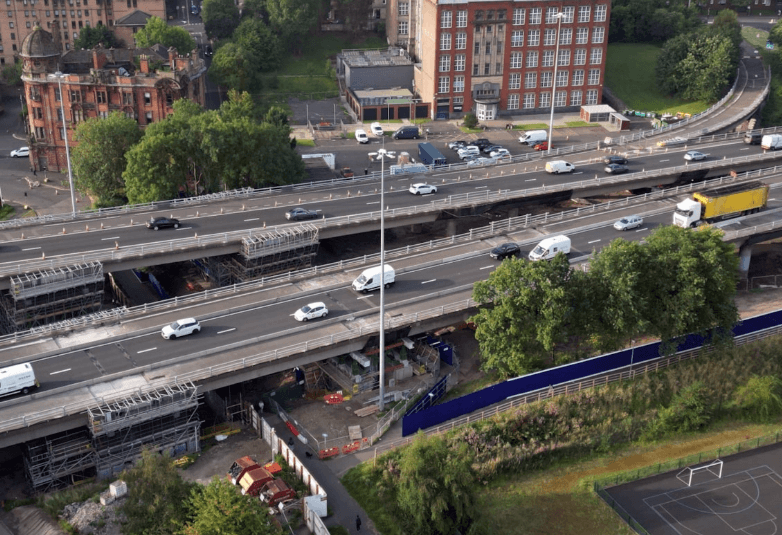
The viaducts carry around 150,000 vehicles a day through the north of Glasgow city centre, linking Craighall and Charing Cross. Restrictions have been in place since 2021, when structural assessments identified serious deterioration in the concrete supports beneath the elevated motorway.
The emergency programme involves installing temporary steel supports at 23 locations to transfer the weight of the motorway away from deteriorating joints.
Progress has been complicated by underground infrastructure, including Glasgow Subway tunnels and a sewer found in a different location from that shown in existing records.
The choice of permanent solution could mean several more years of construction after the current restrictions are lifted.
(Picture: Transport Scotland)