More than half of the capital’s Thames crossings are in a poor or very poor condition, with hundreds of millions of pounds needed to prevent further deterioration and possible closures, according to the London Technical Advisory Group.
Just six of the 30 bridges crossing the Thames in London are considered to be in either good or fair condition. The remaining 24 have been assessed as being in a poor or very poor state, the group has told the London Assembly’s transport committee.
Its chairman, Satbir Gill, warned that the scale of the problem was becoming increasingly difficult to ignore, with several major crossings already subject to restrictions or closed to traffic.
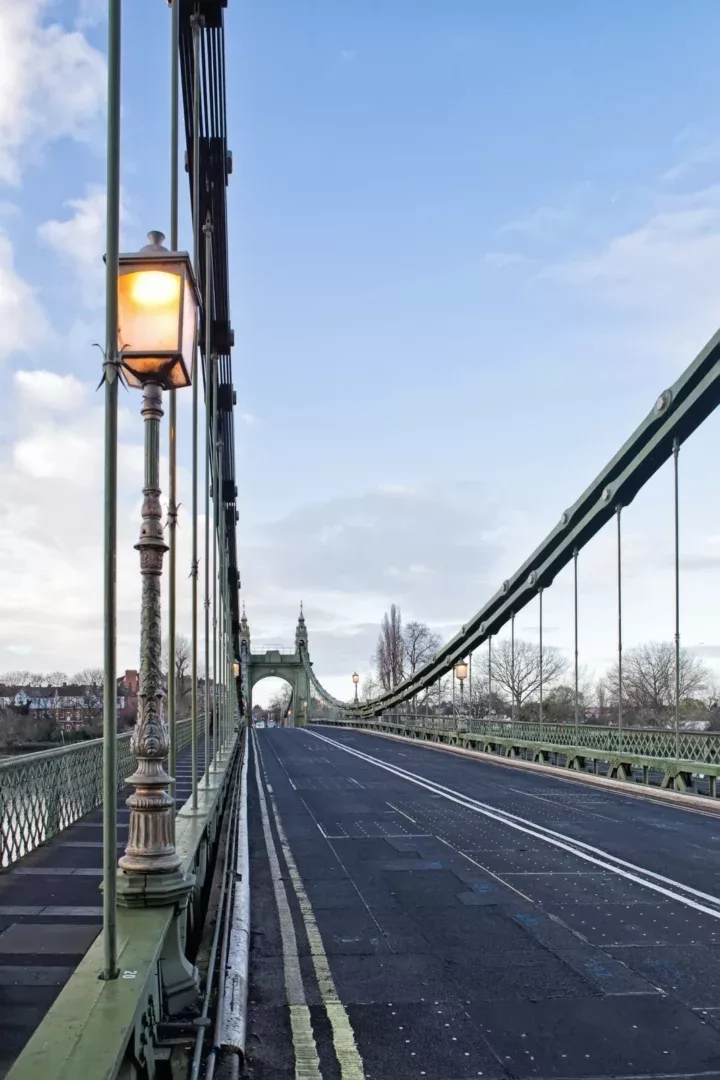
Among the most serious concerns is Hammersmith Bridge, which has been closed to motor vehicles since 2019. It could soon face complete closure unless £128 million in government funding is secured.
The wrought-iron suspension bridge, built in 1887, is slowly deteriorating, despite Hammersmith and Fulham Council spending £1.1 million on keeping it operational this year.
Mark Averill, the council’s highways director, told the committee that the bridge was “slowly getting worse”. Worn bearings and 172 hangers supporting the bridge deck need replacing, and he warned that without the necessary investment it would have to close on safety grounds. Such a closure would potentially leave even cyclists and pedestrians unable to use the crossing.
Hammersmith is far from the only London bridge facing problems.
Waterloo Bridge was recently identified as being at risk of closure after cracks were discovered in its foundations, caused by water damage. Westminster Council has warned that emergency repairs are needed, with possible measures including weight restrictions and, ultimately, complete closure.
The bridge, approximately 450 metres long, carries around 25,000 vehicles every day, making any prolonged disruption a major headache for the capital.
Albert Bridge has already fallen victim to the deterioration. It closed to motor vehicles in February after inspectors discovered a crack in one of its cast-iron components. Repairs are expected to cost £8.5 million, with the bridge not due to reopen until next year.
Meanwhile, Vauxhall Bridge introduced an 18-tonne weight restriction in July because of structural wear. The largest lorries are now being diverted elsewhere, placing additional pressure on neighbouring crossings.
The situation is being made worse by the growing number of heavier vehicles using London’s roads, including electric buses. With some bridges already restricted, the additional traffic and weight are increasing the strain on those that remain available.
There are also concerns that the lack of a single organisation responsible for London’s bridges is making it harder to agree on repairs and secure the necessary funding.
Responsibility is divided between London’s borough councils, which look after 15 of the crossings, Transport for London, which oversees 10, and the City Bridge Foundation, responsible for the remaining five.
That fragmented arrangement has contributed to delays in deciding who should pay for essential work and how repairs should be coordinated.
The Government launched a £1 billion fund earlier this year to help upgrade bridges across England and Wales, and Hammersmith and Fulham Council is seeking support from the scheme.
However, discussions over the funding remain ongoing, while the condition of the bridge continues to deteriorate.
(Picture: Yay Images)