
A new report examining the condition of London’s 30 Thames road crossings is due to be published next month, following evidence given to the London Assembly Transport Committee as part of its latest inquiry into the capital’s river bridges.
Satbir Gill, Chair of the London Technical Advisers Group (LoTAG), part of LGTAG (Local Government Technical Advisers Group), gave evidence to the Committee on 3 November, outlining work underway to build a clearer picture of the condition of the structures and how they are being managed.
The inquiry comes five years after the Committee’s previous investigation into the condition of Thames road bridges.
Mr Gill told the Committee about a dedicated status report commissioned by LGTAG and supported by AtkinsRéalis. The report is drawing on information requested from London boroughs, Transport for London (TfL) and other asset owners, bringing together details of the condition of the crossings and the measures in place to manage them.
Initial information presented to the Committee highlighted some of the condition challenges facing London’s Thames crossing structures.
The report is expected to be presented at the LoTAG conference on 26 November, ahead of publication in December 2026.
During his evidence, Mr Gill highlighted the importance of applying good asset management principles when assessing and maintaining highway structures.
He referred to the recently revised Well-managed Highway Infrastructure: A Code of Practice, which promotes a risk-based approach taking account of asset condition and effective asset management practices.
The potential effects of climate change on bridge infrastructure were also discussed, particularly the impact of rising temperatures.
Although heat-related monitoring information was not specifically requested for the current report, Gill said future status reports would seek information from boroughs and TfL about the monitoring they undertake and the impacts they observe.
With responsibility for London’s Thames crossings shared between boroughs, TfL and other asset owners, Gill stressed the importance of collaboration and information sharing.
He highlighted the work of the London Bridges Engineering Group (LoBEG), part of LoTAG, and the Thames River Crossing Coordination Group in supporting coordination between the organisations responsible for the structures.
He also called for a more joined-up approach to managing all 30 crossings, including the sharing of condition data and asset management plans.
Funding was another key theme of the evidence session, with Gill supporting arrangements that reflect good asset management principles, including recognition of organisations accredited to ISO 55001.
He also emphasised the importance of longer-term funding to support maintenance throughout the lifecycle of highway structures.
Authorities were encouraged to consider opportunities such as the Department for Transport’s (DfT) Structures Fund and the four-year Highways Maintenance Settlement to help support the maintenance and improvement of their assets.
LGTAG thanked the colleagues who contributed information and expertise to the work presented to the Committee, saying their collaboration had been invaluable in developing a clearer picture of the condition of London’s Thames crossings.
Mr Gill confirmed that he would share the completed status report with the Transport Committee once it is published, providing further information to support its ongoing scrutiny of the condition and future management of the capital’s river crossings.
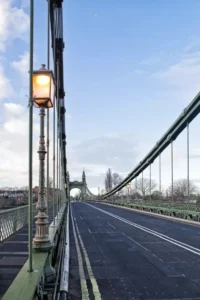
(Picture: Yay Images)