Every day, millions of passengers travel through the UK’s transport networks, while vast quantities of freight move through ports and terminals. Behind the scenes, security teams work around the clock to protect passengers, staff and critical infrastructure, often monitoring hundreds of cameras across busy, geographically dispersed locations. In this feature article, written exclusively for Highways News, Barry Norton, Fellow at Milestone Systems, highlights how AI is transforming transport security
Keeping transport networks safe isn’t just about protecting infrastructure. It’s also about ensuring passengers feel confident using them. Unfortunately, research is showing that the majority of people travelling on our public transport networks are encountering situations that make them feel unsafe. The National Centre for Social Research found that 86% of public transport users had experienced antisocial behaviour that made them feel less safe in the previous 12 months. More concerningly, 54% of female passengers aged 18 to 34 reported experiencing sexual harassment or unwanted behaviours that left them feeling upset, distressed or threatened. Among passengers who experienced a personal safety incident, 57% changed their travel behaviour afterwards.
For transport operators, the challenge is considerable. Railway stations, bus terminals, airports, and ports are constantly changing environments where security teams must identify threats, respond to incidents, and keep people and goods moving.

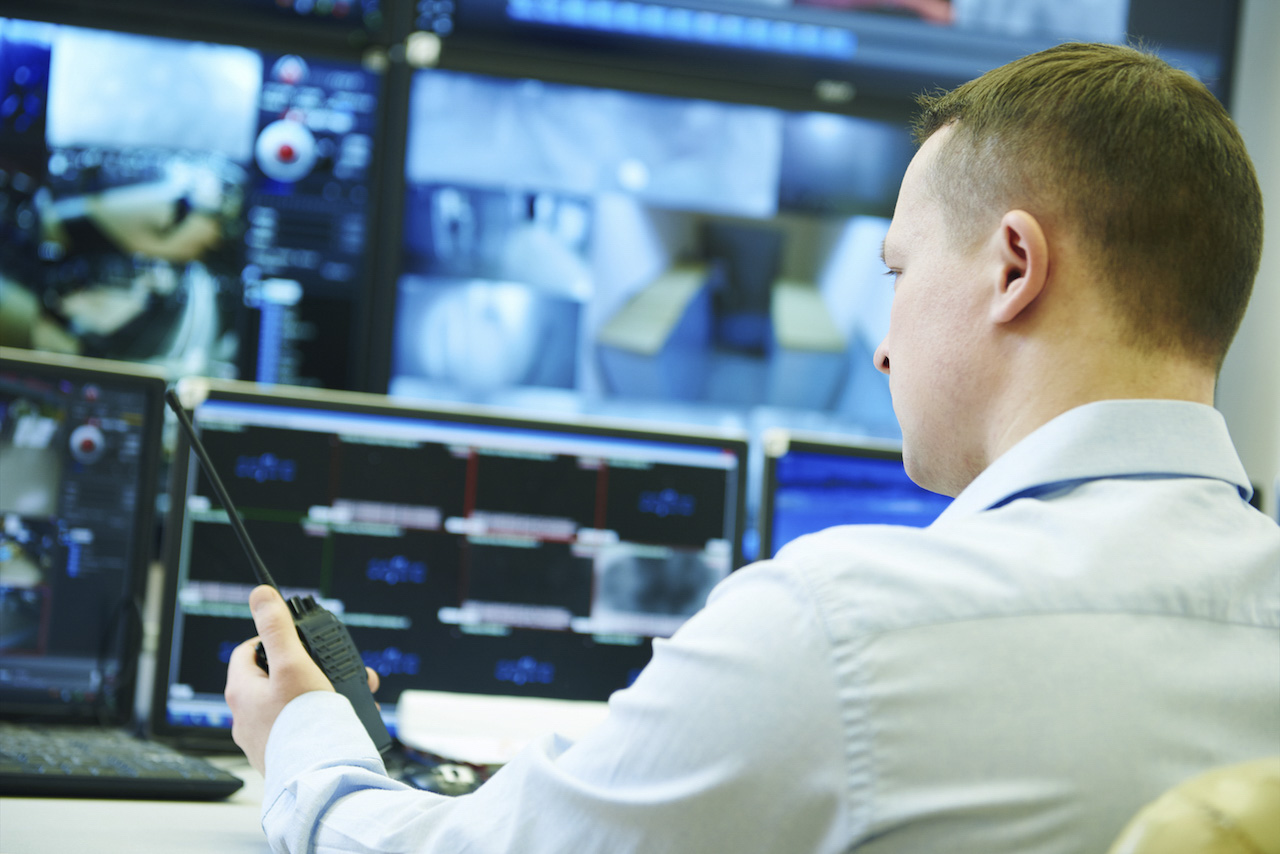
Yet expecting control room personnel to monitor hundreds of camera feeds continuously isn’t realistic. Recently, the UK’s Centre for the Protection of National Infrastructure (CPNI), now part of the National Protective Security Authority (NPSA), uncovered a challenge faced by many security operators known as the vigilance decrement, where concentration can begin to decline after just 20 to 30 minutes of continuous monitoring. A study of 42 professional CCTV operators, published in Applied Ergonomics, found that they detected only around half of the target behaviours during a 90-minute video review task.
AI-powered video analytics offers a way forward, helping operators identify unusual activity, filter unnecessary alerts and focus on incidents requiring attention.

Breaking the cycle of alarm fatigue
Transport environments present particular challenges for traditional surveillance systems. Passengers arrive and depart, vehicles move through restricted areas, and deliveries take place at all hours. When systems rely on basic motion detection, this constant activity can generate large volumes of unnecessary alerts.
A traditional system might trigger an alarm whenever movement occurs near a railway boundary, whether caused by wildlife, vegetation or an unauthorised person. At a port, cranes, vehicles and workers moving around operational areas create similar challenges.
Multiply these events across hundreds of cameras and operators can quickly become overwhelmed. Repeated false alarms contribute to alarm fatigue, increasing the risk that genuine incidents are overlooked.
Rather than simply adding cameras or personnel, transport organisations need systems that can distinguish routine activity from events requiring their rapid intervention.
Creating safer journeys with intelligent video
AI-powered video analytics can identify objects, recognise movement patterns and provide context around activity. At railway stations, this might mean flagging someone entering a restricted trackside area or a person falling onto a platform. At bus depots, it could involve identifying unauthorised access, overcrowding, or unusual vehicle movements.
Audio analytics adds another layer of intelligence. Through compatible integrations, video management systems can detect acoustic events such as screaming, shouting or breaking glass, alerting operators to investigate.
For example, a scream at a bus station or on a railway platform could indicate harassment, an assault or another emergency. An operator can review the associated footage, assess the situation and direct security personnel or emergency responders where needed.
This is particularly relevant after dark. Only 5% of adults feel “very safe” at a bus stop or station after dark, compared with 10% while travelling on a bus. This fell to 2% for females.
Intelligent video can also support crowd management. At busy stations and airports, analytics can identify developing congestion or unusual passenger movements, helping operators decide when additional staff or alternative routes may be required.
Importantly, these technologies highlight potential concerns rather than independently determining whether a crime has occurred. Operators retain responsibility for interpreting the situation and deciding how to respond.
From incident detection to evidence-led investigations
Identifying an incident is only part of the challenge. Transport operators must also investigate effectively and provide reliable information to passengers and law enforcement.
Especially because, while four in five passengers say they would report criminal or antisocial behaviour, only two in five victims actually make a formal report. Confusion over reporting procedures, poor experiences and limited confidence that action would be taken were among the barriers identified.
Technology cannot solve these reporting challenges alone, but it can help once an incident is identified. Traditionally, investigating an assault, theft or harassment incident could involve manually reviewing hours of footage from multiple cameras, stations or vehicles.
AI-powered video search and synopsis technologies can accelerate this process. Investigators can search for people, vehicles or objects using visual characteristics, helping them locate relevant recordings without watching footage sequentially.
Following a reported assault at a railway station, for example, security teams could use intelligent search to identify relevant camera footage, reconstruct movements and support police investigations.
A video management system can also help preserve original recordings, timestamps and associated information. With appropriate access controls, audit trails and evidential export procedures, security teams can securely provide footage to law enforcement while supporting its integrity and traceability.
Analysing incidents over time can also help transport operators identify recurring problem areas and make more informed decisions about patrols, staffing and preventative measures.
Improving transport operations beyond security
Intelligent video can also help transport organisations improve operational efficiency, from monitoring passenger flows and congestion at stations to tracking vehicle movements through depots and freight terminals.
The Port of Livorno in Italy demonstrates the benefits of an integrated approach. Handling more than 6,300 ships annually, the port uses Milestone XProtect Corporate and XProtect Smart Wall to bring together footage from more than 200 optical and thermal cameras into a centralised monitoring environment.
The platform also supports integrations including licence plate, facial and container recognition, alongside environmental sensors monitoring water inflows and pollution. These capabilities help operators oversee vessels, vehicles and cargo while maintaining visibility of security and environmental conditions.
Environmental monitoring is particularly valuable when extreme weather brings debris into port basins through surrounding waterways. Real-time monitoring helps operators identify developing problems and keep waterways clear.
The infrastructure also supports collaboration with law enforcement and customs authorities.
As Dario Del Giovane, from the Northern Tyrrhenian Sea Port System Authority, explains: “We chose Milestone precisely because it does not tie us to a specific product ecosystem, which gives us the freedom to select the best technological solutions available in the market.”
For transport organisations, this illustrates how an open video management platform can support evolving operational requirements without necessitating the replacement of existing infrastructure.
Keeping people at the heart of transport security
As AI becomes more capable, human oversight remains essential, particularly where decisions affect passenger safety and critical infrastructure.
Analytics might identify someone entering a restricted railway area, but an operator can establish whether they’re an authorised maintenance worker or someone presenting a genuine security concern. Similarly, unusual vehicle movements at a port may be entirely legitimate once delivery schedules are considered.
AI can continuously analyse footage, identify patterns and highlight events requiring attention. Security professionals bring the experience, contextual understanding and accountability needed to make informed decisions.
Responsible deployment also requires appropriate privacy safeguards, particularly when combining video and audio analytics in public spaces.
Ultimately, the future of transport security isn’t simply about watching more cameras. It’s about understanding what those cameras are showing, responding to incidents more effectively, and giving security teams the intelligence they need to protect people, infrastructure, and essential services.
(Pictures: Milestone Systems)