Neo Odos, the Greek motorway operator (part of Gek Terna Group), has been recognised by the International Road Federation (IRF) for its deployment of British company Valerann’s artificial intelligence technology, which has shown impressive improvements in incident detection and operational efficiency after just six months in operational use.
The award, in the ‘Technology & Innovation’ category, recognises a project which has developed from a pilot on a 40km section of the A1 motorway into what the partners describe as Greece’s first fully developed AI-powered Advanced Traffic Management System (ATMS) across an open motorway network.
The system now covers the entire 196km Ionia Odos, using Valerann’s Lanternn platform to contextually (spatially and temporally) analyse data from a range of sources and systems in real time to produce a real-time operational single view of the network. This enables earlier incident detection, more effective risk assessment and faster operational responses, with the aim of improving road safety.

The deployment has delivered a number of reported operational improvements, including a 134% increase in detected events and impressive 94% detection accuracy. Incidents are being identified 50% earlier, while animal detection is 40% earlier. Operator efficiency has also increased by 40%, with detection taking place an average of 15 minutes sooner.
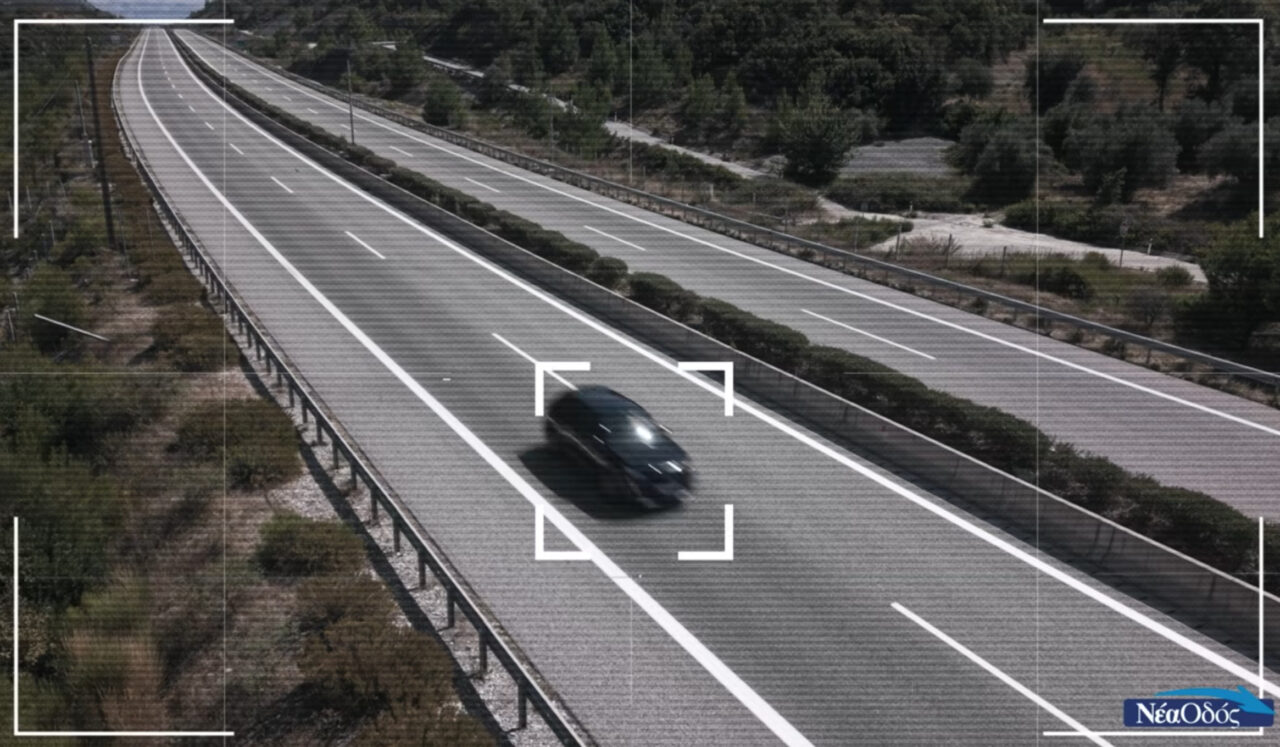
A particularly notable element of the project is the introduction of automatic camera patrolling, with Nea Odos being the first authority to deploy this technology.

Automatic camera patrolling significantly improves capabilities and efficiency of the installed camera network. Rather than each pan-tilt-zoom (PTZ) camera monitoring a single fixed view, Valerann’s system automatically repositions cameras’ view through a sequence of patrol positions, automatically adjusts settings and detection capabilities for the new coordinates whilst continue to run computer vision detection algorithms for potential incidents.
This allows a single camera to monitor extended stretches of motorway without requiring manual observation or additional hardware. According to the companies, the approach roughly doubles motorway coverage compared with fixed camera views, while reducing the need for operators to reposition cameras manually and helping to minimise human error.
Since the capability was introduced, patrolling cameras have detected stopped vehicles at distances of up to 1.7km.
The latest award adds to Nea Odos’s international recognition for its use of technology to improve highway safety. The operator also received the IRF’s 2024 Gold Award in the Road Safety category for its deployment of AI cameras at highway junctions.
The project demonstrates how combining existing motorway infrastructure with AI-powered analysis can help operators make better use of their assets, identify potential hazards sooner and accelerate the response to incidents.
(Pictures: Nea Odos)