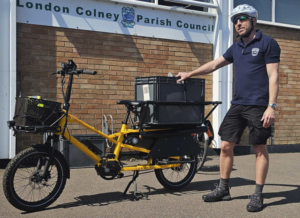
Cycling UK is supporting an e-bike rider and Birmingham Bike Foundry through the Cyclists’ Defence Fund (CDF), after an incident in April 2026 that saw West Midlands Police stop a cyclist on suspicion of riding an e-motorbike on the road without a licence plate, tax or insurance. The stop ended in the seizure and destruction of a legal Tern HSD S00 electric bike, worth £6,500 and on loan from Birmingham Bike Foundry.
The CDF suggests further evidence also reveals the assessment used to determine whether the cycle complied with Electrically Assisted Pedal Cycle (EAPC) regulations was fundamentally flawed.
Body-worn video footage obtained from police appears to show officers testing the cycle by lifting the rear wheel from the ground, turning the pedals by hand and recording the speed displayed on the bike’s own speedometer. CDF believes this method is incapable of determining whether an e-bike complies with regulations as any bicycle equipped with a rear-wheel speed sensor can display speeds above 15.5mph when the wheel is spun freely.
To be considered a legal e-bike, the rider needs to pedal for the motor to assist, and it needs to cut out at 15.5mph. Bikes that exceed this limiter or that were purchased and then modified to go faster are categorised as e-motorbikes under the law, requiring insurance, a license, and road tax. People riding electric motorbikes are not allowed to use cycle lanes.
Through the Cyclists’ Defence Fund, Cycling UK is supporting both the rider and Birmingham Bike Foundry in clarifying how a £6,500 e-bike came to be destroyed despite evidence suggesting the testing process used to assess it was inadequate.
The latest case comes as the Cyclists’ Defence Fund (CDF) marks its 25th anniversary. Initially established in response to the case of Darren Coombes, a nine-year-old cyclist who suffered brain damage from a collision with a car driver, Cycling UK set up the Cyclists’ Defence Fund (CDF) to support cyclists in similar cases.
While the immediate consequences have fallen on one rider, the implications of the case extend much further. The charity believes too many people remain uncertain about what is safe and legal to buy, while reports of legal e-bikes being seized and destroyed increasing suggests further training on how to differentiate between legal e-bikes and e-motorbikes is needed.
Cycling UK has previously made the case for clearer guidance, improved public information and more consistent training to ensure everyone, from consumers and retailers to police officers and enforcement agencies better understand what constitutes a legal e-bike.
Duncan Dollimore, Associate Director at Cycling UK, said:
“This year marks the 25th anniversary of Cycling UK’s Cyclists’ Defence Fund supporting cases that matter for people who cycle. We’ve seen real progress in defending people’s freedom to cycle for their journey.
“While cycling and technology have changed significantly in the last quarter century, the need to stand up for people who want to cycle when things go wrong remains the same. Especially in cases where there is real confusion around the law and how to apply it. Cases like this underline the need for clearer guidance for police on how legal e-bikes are identified and assessed, as distinct from illegal electric motorbikes. Pair that with better public understanding of the rules of the road, and we can make our streets safer for everyone who walks, cycles or drives.”
(Picture: Kevin Borras/Highways News)