Professor Eric Sampson CBE is urging organisations seeking a place in the ITS World Congress Technical Programme to read the submission requirements carefully, answer the questions asked and demonstrate how their work moves transport technology forward.
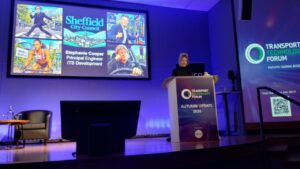
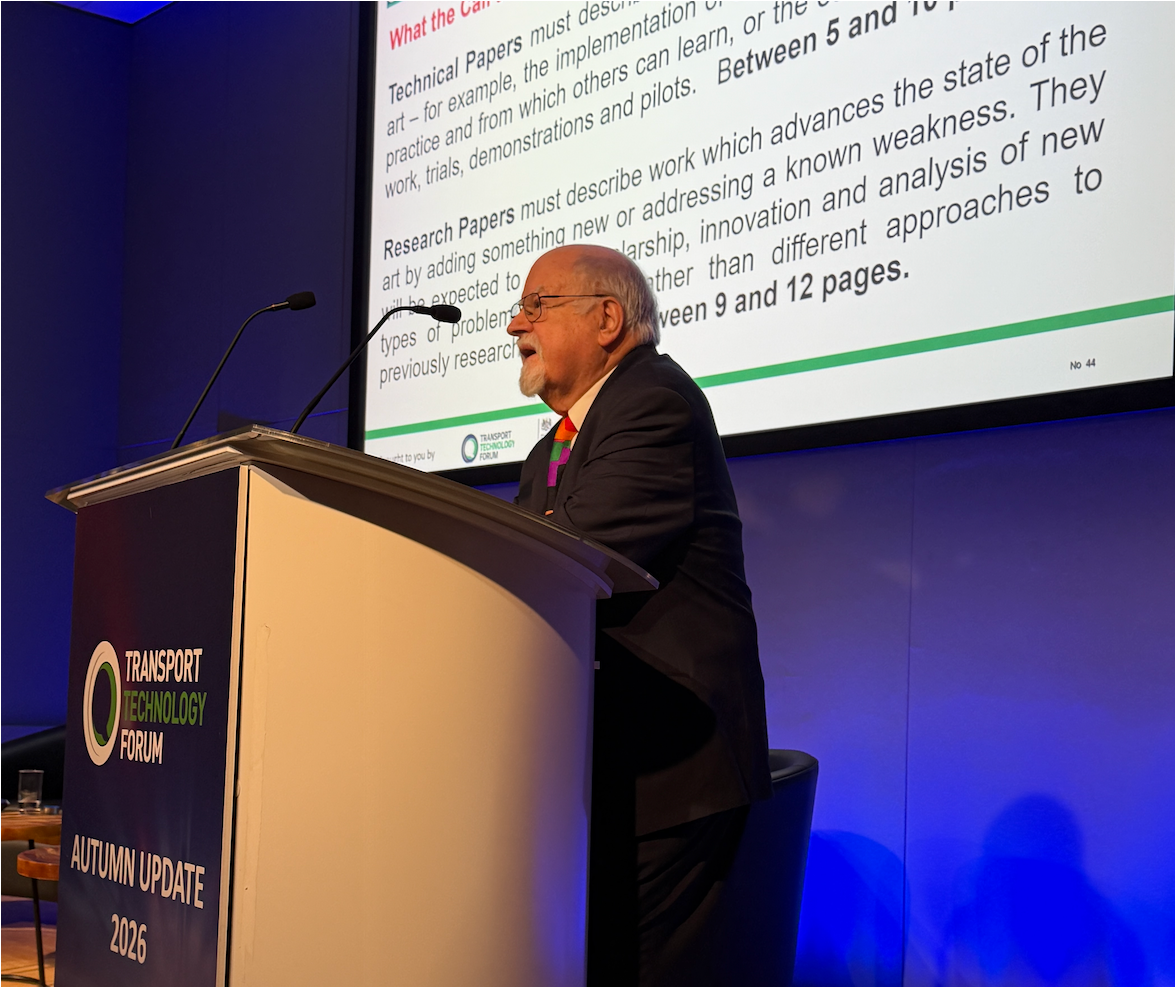
Speaking at the Transport Technology Forum Autumn Update in Birmingham on 17 November, Professor Sampson (pictured) outlined how prospective contributors can improve their chances of securing acceptance for Special Interest Sessions (SIS), Technical Papers, Research Papers and Posters at next year’s Congress, which is expected to feature up to 200 sessions.
His simplest advice was presented on a slide: “Read the Call text and do what it asks.”

He explained that strong expertise or an interesting project would not, on their own, secure acceptance if a proposal failed to meet the published criteria. Applicants should choose the right submission category, follow the guidelines and provide enough detail for reviewers to assess their contribution.
For Special Interest Sessions (SIS), Professor Sampson stressed that organisers must propose a lively, interactive discussion covering a broad issue, with audience participation, rather than a sequence of presentations about a single project.
“This is your chance to be Graham Norton,” he said, explaining that the moderator should orchestrate a discussion between contributors with different perspectives.
Technical Papers offer an opportunity to share original work improving existing practice, including lessons from implementation, trials, demonstrations and pilots. The central question is what other people can learn from the work and how it contributes to progress.
“If ever there was one sentence that is the single test that the judges look at,” Professor Sampson said, it is: “Well, it’s all very interesting, but does it take us forward?”
For Research Papers, the emphasis is on advancing the state of the art through new concepts, discoveries or work addressing existing limitations. Reviewers will look for scholarship, innovation and analysis, supported by evidence and well- argued conclusions.
He advised authors to follow the official submission guidelines and use the prescribed paper template. Abstracts should clearly explain the scope, methodology and outcomes, while the paper itself should put the work in context, reference relevant existing research and provide sufficient data to support its findings. Submissions must be made in English, and each individual may submit no more than two proposals across the technical programme categories.
The introduction of Posters provides another route for organisations with promising work that is not yet ready for a full Technical or Research Paper. These can present early findings, emerging ideas and practical experiences, provided the status of the work is clear and there is enough substance to encourage useful discussion.
Proposals should include at least three confirmed speakers and explain why each has been selected, what they will contribute and how their contributions fit together. They must also demonstrate relevance to one of the four Congress topics: Trustworthy and Resilient Systems; Next-generation ITS; Connected and Integrated Services; Deploying ITS at Scale, and should include a diverse, gender-balanced mix of moderators and panellists.
The ambition should be a session that leaves delegates feeling they have enjoyed the discussion and learnt something useful.
Meanwhile, the Congress’s two “Silver Commanders”, Jo Field OBE and Jo Britton, joined a fireside discussion with Paul Hutton to explain why organisations should participate in Birmingham on 25–29 October 2027. Ms Field highlighted the opportunity to showcase UK expertise to the international ITS community, with benefits extending beyond the five-day event. For local authorities and transport operators, the Congress offers a chance to compare approaches to shared challenges and take home evidence, ideas and contacts to inform future projects.
Ms Britton set out the opportunities for businesses of all sizes to meet international customers, partners and decision-makers on home soil. Organisations can participate through exhibiting, commercial partnership, technical contributions and demonstrations, and should start planning now: developing submissions, preparing demonstration concepts and building the Congress into their 2027 business development and engagement plans.
Both emphasised the importance of creating a lasting legacy, with collaboration, professional networks, research and commercial opportunities continuing into 2028 and beyond. Their message was to bring both expertise and transport challenges to Birmingham, with the Congress providing a unique gateway to share practical solutions and build relationships that help turn ideas into delivery.
Beyond its Technical Programme, the Congress will offer a high-level programme, live demonstrations and an international exhibition showcasing the latest advances in intelligent mobility. With 50% of exhibition space already sold, interest in Birmingham 2027 continues to grow, offering organisations unique opportunities to present their solutions, connect with international industry leaders, government officials, and decision-makers.