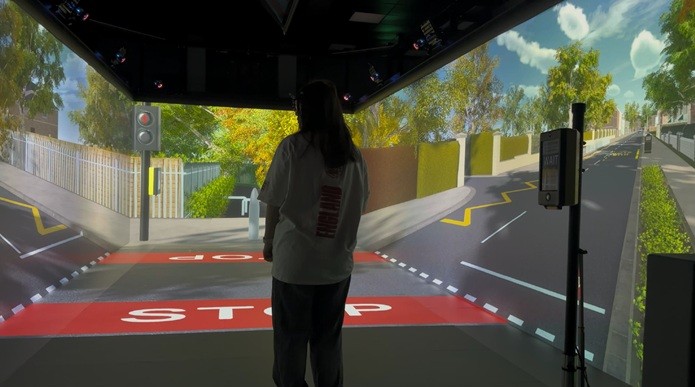
Interim findings from a University of Leeds-led research project, funded by The Road Safety Trust, have identified several areas of road-crossing that can present particular challenges for autistic children, while also highlighting potential differences in how children respond to different types of crossing infrastructure.
The Autistic Children Matter: Addressing Road Crossing Challenges from Multiple Perspectives project is examining how autistic children approach road crossing, the challenges they face and why those challenges arise. It brings together evidence from autistic children, caregivers, independent travel trainers and traffic engineers, with the aim of improving pedestrian safety and supporting safer, more independent travel.
Interim findings from an analysis of 39 Independent Travel Training (ITT) records, provided by Leeds City Council and involving children aged 11–13 years, suggest that some road-crossing skills are considerably more difficult to develop than others.

Navigating around parked vehicles, looking over the shoulder for traffic, dealing with busy roads, and understanding where bike lanes are and how to navigate them emerged as the most challenging areas for autistic children.
The findings also indicate that road-crossing skills can take time to develop. The data suggest that many children may require around 10-12 training sessions to achieve the skills examined, although this estimate is based on observed trends and there is considerable variation between individuals. The researchers say this is significant because approaches to ITT can vary between councils, with some children potentially receiving training in only one session. Further work will examine whether ITT is standardised nationally and how practices differ between local authorities.
The project is led by Dr Yee Mun Lee, of the Institute for Transport Studies at the University of Leeds, who said:
“Safe and independent travel is an important part of everyday life. Our findings suggest that both road infrastructure and the way road-crossing skills are taught can influence children’s experiences.
“By better understanding these factors, we hope to identify practical ways to support safer and more independent travel for autistic children.
“These findings highlight that road-crossing challenges are not the same for every autistic child. By understanding which skills are most difficult and how children learn them over time, we can better tailor training, improve support, and inform the design of more accessible road environments.”
Ruth Purdie OBE, Chief Executive of The Road Safety Trust, commented:
“Understanding how autistic children experience and navigate road crossings is an important step in making our roads safer for everyone.
“This research will provide valuable insights and help develop more effective interventions, improve road safety, and create environments that support greater confidence and independence.”
(Picture: Road Safety Trust)