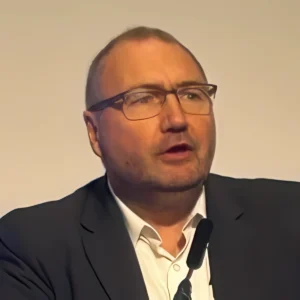
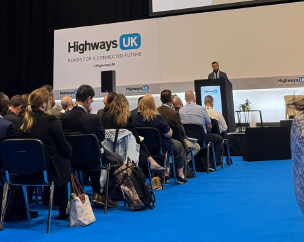
The West Midlands must make smarter use of its existing roads because it cannot build its way out of traffic growth and congestion, Transport for West Midlands Executive Director Sandeep Shingadia has told Highways UK.
Speaking at Birmingham’s NEC, Mr Shingadia said highways professionals would also be key to the success of bus franchising, with reliable journeys essential to winning passenger confidence and supporting economic growth.
Highways Voices podcasts from Highways UK are sponsored by AGD Systems, Arcadis, Nicander, SWARCO and Westcotec. You can hear the full speech by Mr Shingadia on the podcast published on Thursday afternoon, 15 October.
“In the West Midlands, we are no longer delivering significant amounts of new highway,” he said. “We simply can’t build our way out of traffic growth and congestion.”
Instead, he called for more efficient use of existing infrastructure, supported by closer regional coordination and technology that improves journeys, safety and network resilience.
Mr Shingadia explained that the region’s new Local Transport Plan moves away from the traditional “predict and provide” approach, in which infrastructure is developed to accommodate forecast demand, towards “decide and provide”.
That means starting with the places the region wants to create and the economic, social and environmental outcomes it wants transport investment to deliver.
“But let me be clear: this isn’t about being anti-road or anti-car. Far from it,” he said. “It is about recognising that transport investment should actively support the places that we want to create and the economy that we want to build.”
He said roads must support freight and logistics, reliable public transport, safer journeys and better connections between communities. Network performance should increasingly be judged by access to jobs and services, efficient goods movements and whether people feel safe, alongside traffic flow and capacity.
Mr Shingadia outlined an ambition for sustainable modes to account for 50% of all trips by 2035, up from 36%, alongside a target to halve the number of people killed or seriously injured on the region’s roads by 2030.
He also highlighted the need to protect infrastructure against flooding and extreme heat, while meeting customers’ expectations for reliable, seamless journeys across different operators and highway authorities.
Bus franchising will make that cooperation particularly important. Mr Shingadia said the West Midlands Combined Authority would assume responsibility for franchised services from autumn 2027, becoming directly accountable for network performance and passenger outcomes.
“If services cannot operate reliably, customers lose confidence and patronage declines,” he warned.
“The highways profession will be one of the key determinants of whether bus franchising succeeds.”
The region is exploring a more strategic approach to urban traffic control and traffic signal operations, alongside intelligent transport systems, connected infrastructure, predictive analysis and digital platforms providing real-time information about network conditions.
Mr Shingadia said the ITS World Congress in 2027 would offer an opportunity to demonstrate to an international audience how the West Midlands is already using innovation to improve journeys, support growth and make better use of existing infrastructure.
“But technology itself is not the goal. The goal is better outcomes,” he said.
“The value of innovation lies in its ability to reduce disruption, improve reliability, enhance safety, and provide better services for the people and businesses that depend upon our transport system every day.”
(Picture – Highways News)