Local authorities could halve drainage repair times and reduce disruption by using no-dig methods, delegates at LCRIG’s Strictly Highways conference in Blackpool have heard.
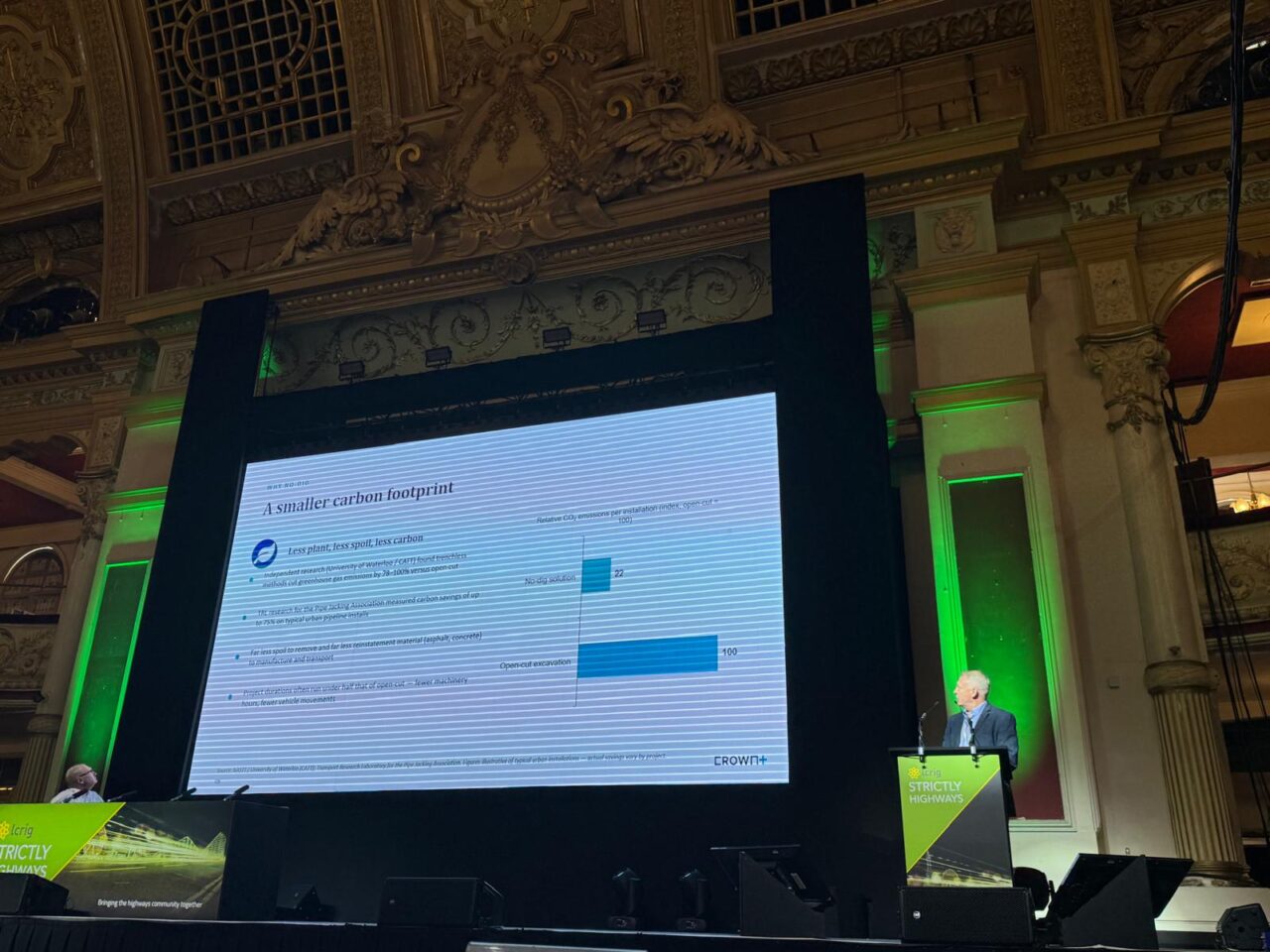
Crown Plus Head of Business Development Paul Hancock said repairing damaged pipes from within could reduce costs, avoid the need for some road closures and deliver carbon savings of up to 78% compared with open excavation.
He urged councils and designers to assess whether existing pipes could be repaired before specifying excavation, highlighting potential savings from shorter works, reduced traffic management and less surface reinstatement.
“Project durations from a patching or a lining perspective actually take far less time than an excavation,” he said.
No-dig repairs use a localised patch to treat an isolated crack or hole, or a structural liner where damage is more extensive. The approach can remove the need to excavate down to the drain and reinstate the ground and road surface afterwards.
Mr Hancock explained that individual patches can cure in place in up to two hours. Once the installation equipment is removed, the patch remains within the pipe.
Where there are multiple defects, a full structural liner can rehabilitate the pipe along its length, with robotic cutters used to reopen connections. Crown Plus’s UV lining process uses ultraviolet light to cure a resin-impregnated liner.
Robotic equipment can also remove tree roots and encrustation to help restore drainage performance.
Mr Hancock said the benefits extended beyond the repair, with patching and lining often possible without closing the road. This can reduce traffic management requirements and limit disruption for residents and road users.
“It creates less noise and dust,” he added.
He also highlighted the smaller site footprint and reduced need to dig near buried services, helping lower cable strike risk and reduce the number of workers exposed to excavation risks.
Mr Hancock encouraged authorities to involve their supply chains and designers early when assessing repair options. He said awareness sessions with designers had helped them incorporate no-dig methods into their recommendations.
While acknowledging that some defects still require excavation, he suggested councils considering the approach could run a pilot scheme to compare costs, assess public perceptions and measure carbon savings.
“If you’ve got any doubts, then just talk to your supply chain,” he said.
(Picture – LCRIG)