
Local authorities are being encouraged to put forward difficult locations on their road networks for the SolarLite Local Authority Impact Challenge, with urban collision hotspots and sites where existing street lighting will remain among the potential candidates.
Two webinars supporting the initiative have highlighted opportunities to improve road safety, reduce carbon and tackle recurring lighting costs, while reinforcing a straightforward message to applicants: identify the problem and let the SolarLite team help explore the solution.
Delivered in partnership with the Local Council Roads Innovation Group, LCRIG, the challenge will give three successful authorities up to 100 SolarLite active road studs each, supplied free of charge with standard installation, subject to site assessment, technical approval and final scheme design.

Applications close at 5pm on Monday 30 November 2026.
Speaking during the webinars, Head of SolarLite Alastair King encouraged authorities to consider locations where clearer guidance could make a practical difference, from difficult bends and rural roads to junctions and roundabouts.
“We want to better understand local authorities and your challenges on your network, and how active studs can better serve you,” he said.
Importantly for urban authorities, participation does not depend on removing street lighting. During the second webinar, a participant from Reading asked whether an urban network could take part to address collision locations while keeping its lighting.
“Yes, absolutely,” Mr King replied. “I mean that’s exactly the sort of thing that we’re doing this impact challenge for.”
He suggested the initiative could help authorities overcome barriers to trying technology they have seen demonstrated but have yet to deploy themselves.
Unlike conventional retroreflective studs, which reflect vehicle headlights, active studs contain LEDs that emit their own light. SolarLite’s solar-powered products collect energy during daylight and illuminate as darkness falls, providing guidance independently of mains electricity.
Mr King illustrated the potential safety benefits with the A143 at Haddiscoe, where he said recorded collisions fell from 22 in the three years before installation to five in the following three years. None of the subsequent collisions occurred during darkness.
The webinars also explored the experience of drivers. Following an installation of 5,000 active studs along a 10-kilometre section of the A38, Mr King said nearly 90% of survey respondents felt reasonably or totally safe after installation.
He also described research involving Edinburgh Napier University on an A1 deployment, reporting improvements in drivers’ confidence and their perceptions of lane, bend and junction clarity.
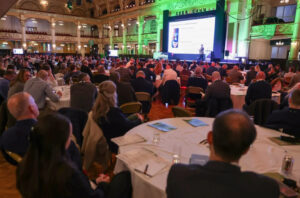
Watch the improving road safety webinar here.
For authorities facing ageing lighting assets, the second session examined how active studs could contribute to a different approach at suitable locations.
Building on the ADEPT Live Labs 2 work in East Riding of Yorkshire, Mr King said the council was progressing further deployment beyond the original programme’s funding.
He stressed that the appropriate solution depends on the site, including the remaining life of lighting assets, carriageway condition and whether drivers have a clear line of sight.
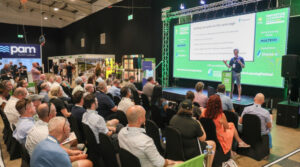
Watch the reducing carbon and street lighting costs webinar here.
Authorities do not need to arrive with a completed scheme design. Applicants are asked to identify a specific location and briefly explain the challenge. More than one location can be submitted through separate applications. Participating authorities will need to arrange and fund necessary traffic management, permits and other excluded site costs.
Successful authorities will receive technical assessment and design support, alongside help establishing a baseline and evaluating outcomes, creating evidence that can inform future decisions and be shared across the highways sector. Authorities will need to arrange and fund necessary traffic management, permits and other excluded site costs.
“With three supported schemes available, the challenge offers councils a chance to tackle a persistent road safety problem,” concluded Alastair King. “The message is simple: bring SolarLite your challenge and let the team explore whether active studs could help provide the solution.”Find out more and enter the SolarLite Local Authority Impact Challenge through LCRIG.
(Picture – SolarLite)