Around 43% of respondents to a roadworker abuse survey said they experienced abuse but did not report it, according to campaign chair Paula Parsons, who is urging the highways sector to share incident data and strengthen support for frontline teams.
Speaking on this week’s Highways Voices podcast, published tomorrow (18 November) during Roadworker Safety Week, the Chair of No Excuse for Roadworker Abuse says better reporting is essential to understanding the scale of the problem and identifying effective action.
Ms Parsons says just under 1,000 people responded to the survey, conducted during June and July. More than 80% reported experiencing verbal abuse at work, while around a third had objects thrown at them. Around 13% had considered leaving the sector because of abuse.

“Anything, any part of a job where you feel physically and verbally threatened by a member of the public is abuse and should be recorded as an instance of abuse,” she says.
Ms Parsons describes reports of serious violence, including an incident in which two roadworkers were attacked with a hammer after a driver objected to a diversion. She says insufficient evidence can prevent incidents progressing to prosecution.
The conversation explores the “golden hour” following an incident, including securing help, recording vehicle registrations and descriptions, preserving camera footage and notifying managers promptly.
Her appeal builds on previous calls for employers to equip and support workers gathering evidence.
However, Ms Parsons stresses that an initial increase in reporting would be an intended outcome of the campaign, helping expose incidents currently missing from the data.
“We know that instances of abuse are happening out there, and through Roadworker Safety Week, we’re hoping to see that reporting increase, not because abuse is on the rise,” she explains. “It’s because we are taking this seriously.”
Organisations are being encouraged to contribute incident information through the campaign’s RAISE platform, allowing data to be brought together, benchmarked and analysed for trends. The longer-term ambition is to reduce abuse through shared guidance and better working practices.
Ms Parsons also discusses prevention, including clearer diversion signs, helpful communication with road users and plans for conflict avoidance training across the sector.
Supporting affected colleagues is another priority, with guidance covering employee assistance programmes, charities and mental health first aiders.
Roadworker Safety Week runs from 16–20 November, with free presentations, videos and practical guidance covering reporting, prosecutions, conflict avoidance and wellbeing.
Ms Parsons says more than 1,000 signatures pledging support were collected at Highways UK, and urges contractors, clients, councils and associations to join the campaign.
“We believe that one strong voice will help eliminate the instances of roadworker abuse we’re seeing,” she says.
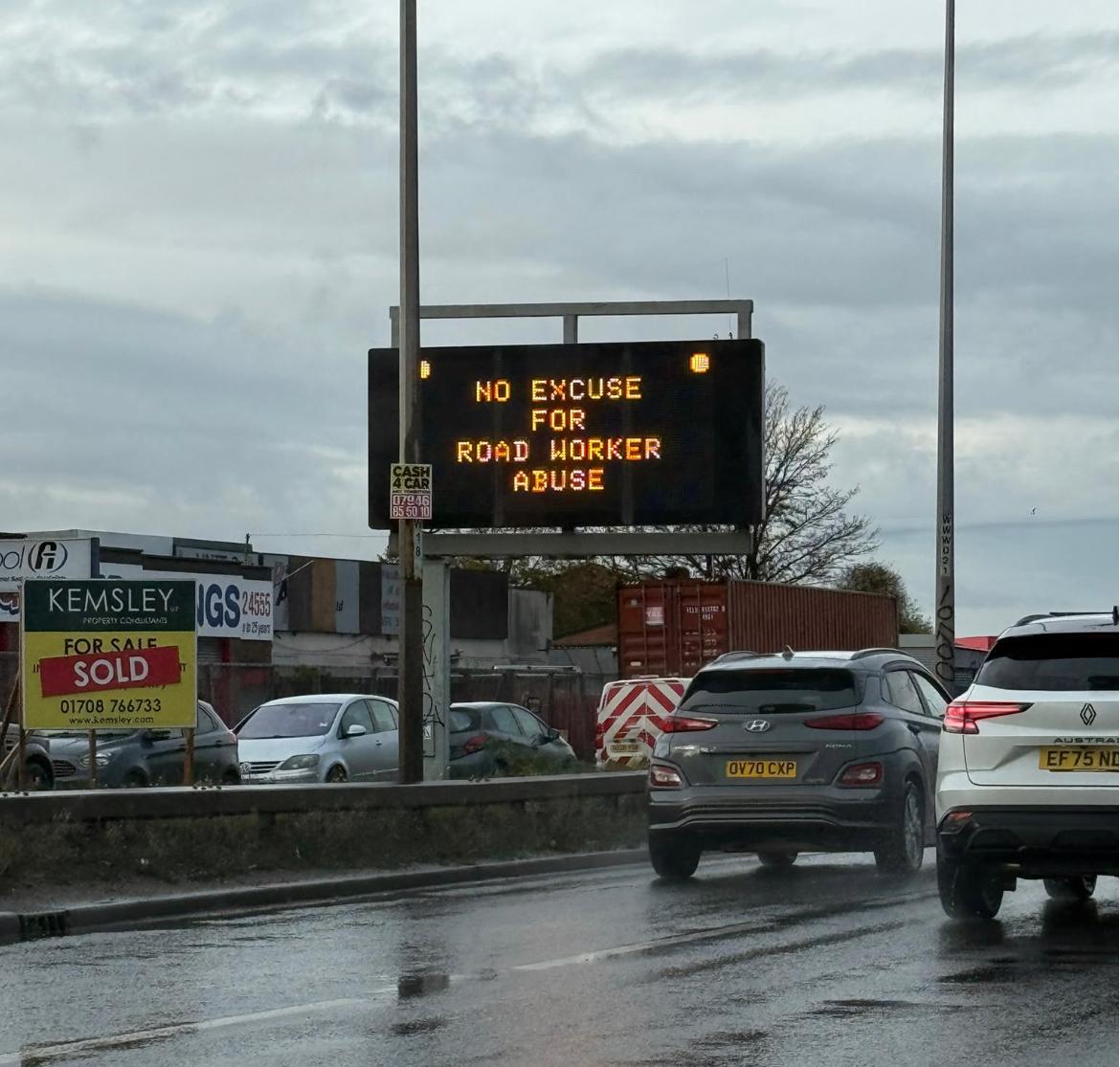
(Picture – Highways News)