Transport for London’s Director of Buses, Lorna Murphy, has said she was shocked by the findings of an ITV News London investigation which revealed how drivers were forced to use an empty plastic bottle as a toilet.
Ms Murphy insisted that she wanted to ensure every route had access to basic hygiene facilities, but that there were currently five routes without access to a dedicated toilet
“Nobody should have to go to the toilet in a scenario such as the one described,” she told ITV News London.
“It was a shock given that we do have toilet facilities on all but five routes – and those five do have alternatives in terms of local shops or restaurants, etc.
“But I certainly never want anybody to have to do that.”
She highlighted recent investment to open more toilets in important locations, such as the end of routes or where one driver takes over from another, adding:
“There has been a dedicated programme of investment since 2017 where several million pounds has been spent putting in new toilet facilities.”
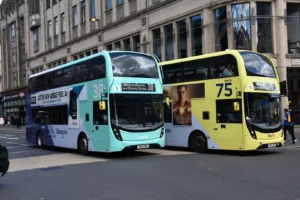
TfL manages a fleet of around 9,000 buses operating on around 675 routes across the capital.
Most services are run by private operators who sign a contract with TfL. Asked if they were doing a good job, Lorna Murphy said: “They are wanting to do the right thing and trying very hard to do well in a difficult operating environment.
“London is a difficult operating environment, but everyone is working together to make conditions for bus drivers as good as they can be.”
Transport for London said it had ways to check whether bus companies were delivering on the terms of their contracts.
But the problems for workers are not limited to toilets. London has been sweltering in a heatwave and temperatures in bus drivers’ cabs can reportedly reach 40°C.
Last week, the Labour MP for Enfield North, Feryal Clark, said London’s bus drivers had “borne the brunt” of the extreme heat in the city, and Lorna Murphy acknowledged they had faced a “really challenging few weeks”.
She said keeping buses cool presented a number of challenges, but some progress had already been made.
“There’s been no let-up and that’s really hard for everybody to deal with personally,” Ms Murphy said.
“It’s also difficult for vehicles and for systems. Over the last few years we have changed our vehicle specification. We have brought in better, more highly rated air conditioning for drivers in their cabs and also for customers.
“It is really difficult because buses have so many windows and doors are opening and closing regularly. Keeping the temperature as cool as you might expect in your car, for example, is difficult.
“But our new specification does go a lot further than what was there before and we have had really good feedback from drivers of those vehicles, which is really positive.
“We’ve introduced a new task force which met for the first time last week, and we’ll continue to meet regularly going forward.”
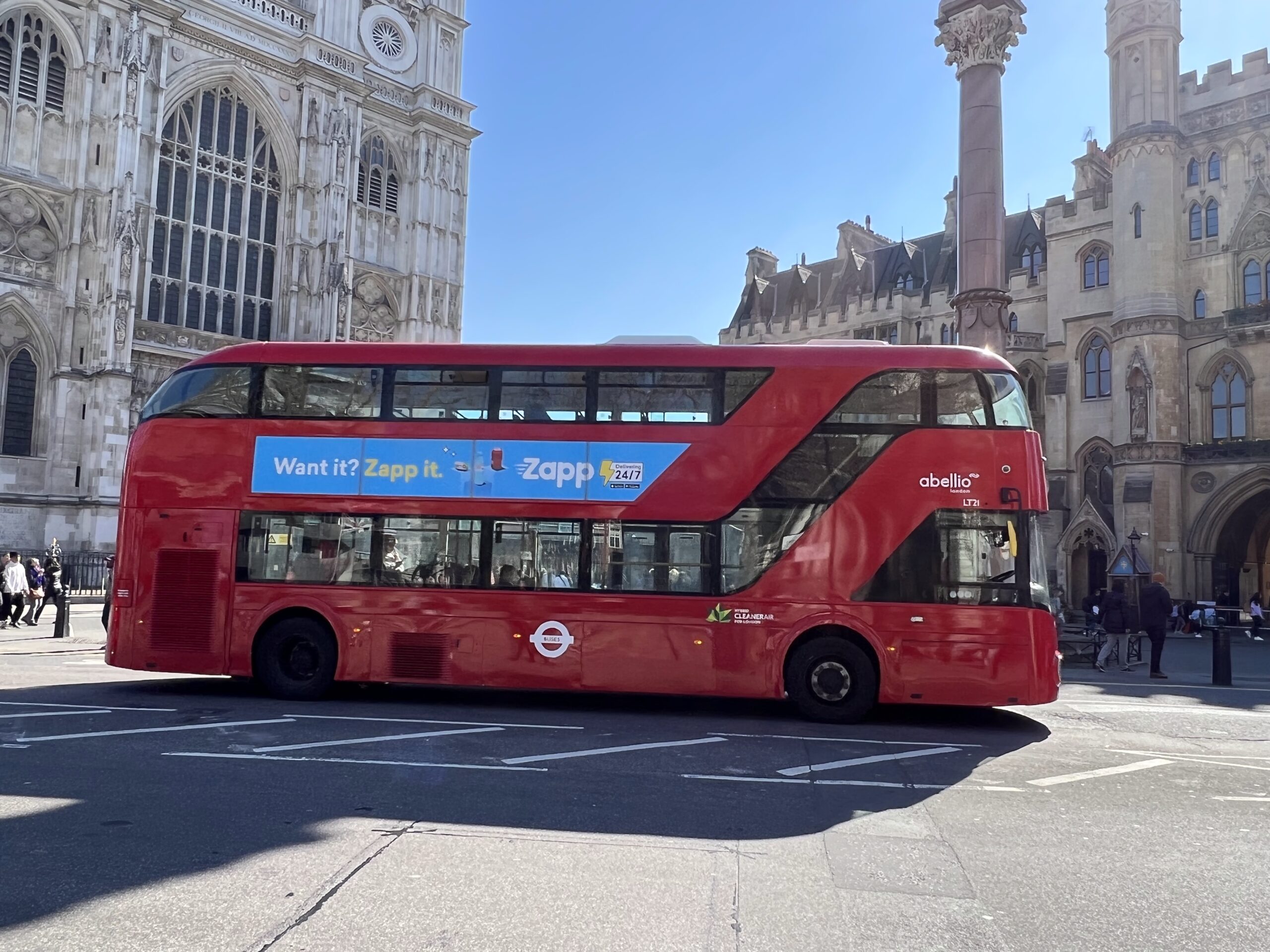
(Picture: Paul Hutton/Highways News)