Officials from the Department for Transport have outlined a £30 million programme to trial digital twins in local transport networks, alongside early plans to help councils adopt artificial intelligence and share successful approaches.
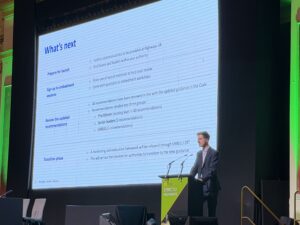
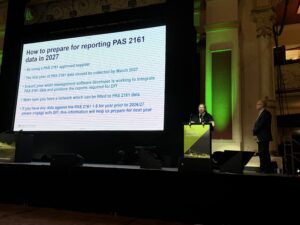
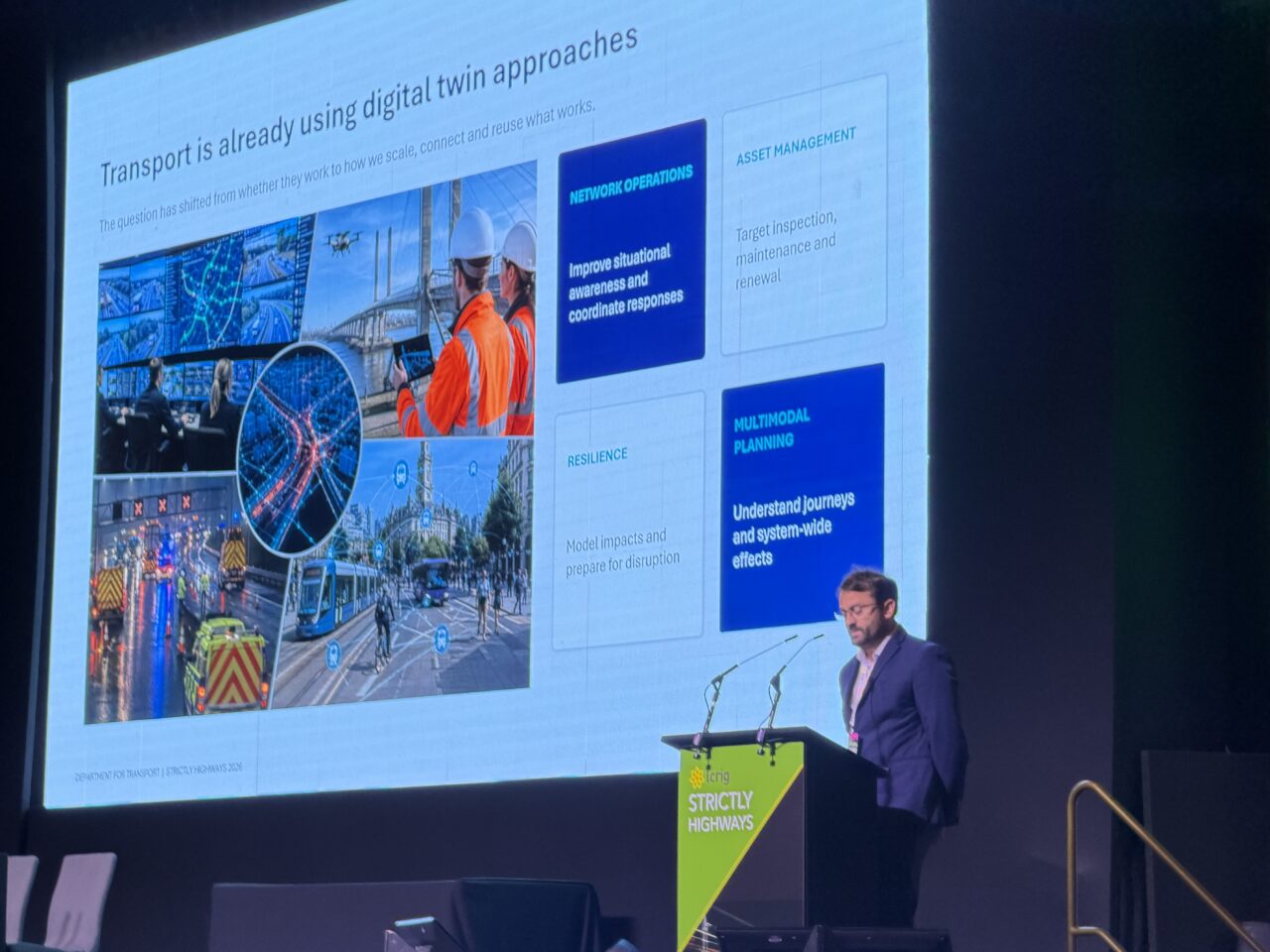
Speaking at LCRIG’s Strictly Highways conference in Blackpool, DfT Public Sector AI Engagement Lead Dr Hannah Parker and Integrated Transport Digital Twins Engagement Lead Chris Brown explained how the technologies can support better decisions, improve network management and reduce duplication across authorities.
Mr Brown said the Integrated Transport Digital Twins trial programme, launched in August, would support between four and six local authority-led programmes through a £30 million Section 31 grant.
Fourteen authorities had been invited to bid, with applications closing the previous week. He reported a stronger response than expected.
The trials will put digital twin capabilities into real local transport environments, testing their use in planning, coordinating disruption, improving resilience and managing networks. Alongside benefits for participating authorities, DfT wants to gather lessons that can help the wider sector adopt successful approaches.
Mr Brown stressed that digital twins are here now, rather than simply a technology for the future, with practical applications already delivering outcomes.
He explained that a digital twin connects a physical asset, system or process with its digital representation, allowing information from the real world to inform analysis and decisions. This can help operators understand current conditions, predict outcomes and test interventions before implementing them.
He highlighted three examples: digital tools supporting environmental and emissions objectives in Oxford; digital models and analytics contributing to safety and network management in London; and digital engineering supporting planning and delivery of the Transpennine Route Upgrade.
For highways authorities, potential applications include coordinating responses to disruption, targeting asset inspections and understanding the wider effects of planned works.
“Digital twins should not be judged by how impressive the visualisation looks, but rather whether they help people act earlier, coordinate better, and deliver improved outcomes,” he said.
DfT is also relaunching the Transport Research and Innovation Board’s digital twin community of practice, with an emphasis on two-way collaboration. Authorities are being encouraged to bring operational challenges, share evidence and help identify barriers to wider adoption.
In the preceding session, Dr Parker outlined three potential roles for DfT in supporting local authorities’ use of AI: enabling local innovation, developing shared capabilities where appropriate, and building skills and confidence across the sector.
She emphasised that this remained early thinking, with feedback sought from councils and the wider industry.
“Success isn’t 150 authorities buying 150 different AI products all trying to solve the same problem,” she said.
Instead, DfT wants authorities to share evidence about what works and what does not, allowing others to build on experience rather than repeatedly starting from scratch.
Dr Parker highlighted the department’s existing Connectivity Tool, which maps access to opportunities and essential services by public transport, walking and cycling. She also described TRACE, the Transport AI Carbon Evaluator, which compares the carbon impacts of an AI application with a realistic alternative, and TAGbot, an AI-powered tool in development to help users navigate Transport Analysis Guidance.
She said practical support could include guidance on governance and procurement, case studies, professional networks and peer learning.
Both presentations emphasised that adoption depends on people, skills, data and collaboration as well as technology, with the value measured through better transport decisions and outcomes.