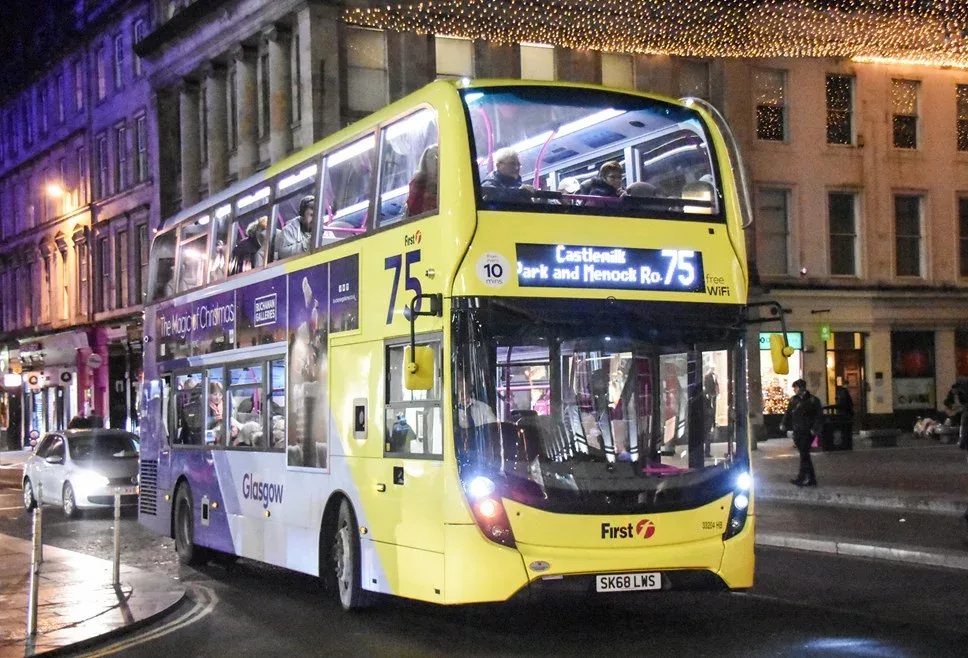
A package of more than £5.8 million in bus infrastructure investment is set to support faster, more reliable and easier-to-use journeys for passengers in Glasgow and across the wider city region.
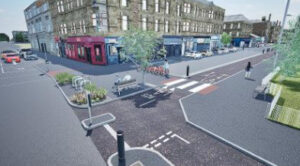
The investment would support a mix of delivery, design and development work, including bus priority measures on major corridors, smarter traffic signals, improved city centre stops, stronger bus lane enforcement and accessibility upgrades at bus stops and near Subway stations.
A £3.63 million award from Transport Scotland’s Bus Infrastructure Fund (BIF) Tier 2 went before the City Administration Committee to seek acceptance, is expected to help progress work to support faster, more reliable bus journeys across Glasgow and the wider city region, with a major focus on five of the city’s busiest bus corridors – Paisley Road West, Pollokshaws Road, Dumbarton Road, Great Western Road and Maryhill Road.
The BIF Tier 2 award forms part of a wider package of investment for Glasgow, helping bring confirmed bus priority grant funding for 2026/27 to more than £5.8 million. This includes £1.737 million from BIF Tier 1, primarily for bus stop accessibility improvements and representing a significant uplift on last year’s funding – alongside £450,000 from SPT.
The SPT funding will support design work for a proposed southern city centre bus hub at Osborne Street/King Street, providing a high-quality interchange for passengers. It will also fund new bus lane cameras and targeted public realm accessibility improvements around Glasgow Subway stations.
The Tier 2 funding will also expand the use of smart traffic signal technology designed to give buses greater priority at key junctions and reduce delays on busy routes. It will build on early results from the Pollokshaws Road AI pilot involving SimplifAI Systems Ltd, where initial testing showed a 33% reduction in journey times for all vehicles when the AI signal plans were deployed.
The AI pilot will now be developed further to focus more directly on bus movements, with similar AI and virtual detection work also planned for Paisley Road West and Aikenhead Road.
Some city centre bus stops will be upgraded, with improved layouts to help services move more efficiently – alongside road and public space enhancements. New, additional temporary stops and routes on strategic city centre diversion corridors will also strengthen public transport resilience in the event of disruption or planned works.
The funding will also support early-stage work on a potential SEC Bus Link through the campus to Glasgow Harbour, as well as a study into bus priority measures on the A803 between St Rollox and the M8 at Junction 15. Plans for Mobility Hubs, including potential Park and Ride locations across the city region, will also be developed.
Design work will be progressed for junction and traffic signal improvements on Auldhouse Road, while a city region-wide review of bus lane operating hours and enhanced enforcement will be taken forward.
Cllr Angus Millar, Convener for Transport and Climate, said:
“This is a significant funding boost for bus passengers in Glasgow and the wider city region, supporting improvements that can be delivered relatively quickly alongside the development of future bus priority measures on some of our busiest routes.
“Buses carry thousands of people every day and are central to a fair, accessible and sustainable transport network. This investment will help us make better use of road space, give buses greater priority where it matters most, and support more reliable journeys for passengers. It will also allow us to build on innovation already being developed in the city, including the Pollokshaws Road AI traffic signal pilot, where early testing showed a one-third reduction in journey times for all vehicles when the AI signal plans were deployed.
“By combining bus priority, smarter signals, improved stops, stronger enforcement and accessibility upgrades, this package is about making everyday bus journeys quicker, more reliable and easier to use.”
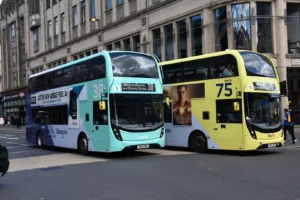
(Picture: First Bus)