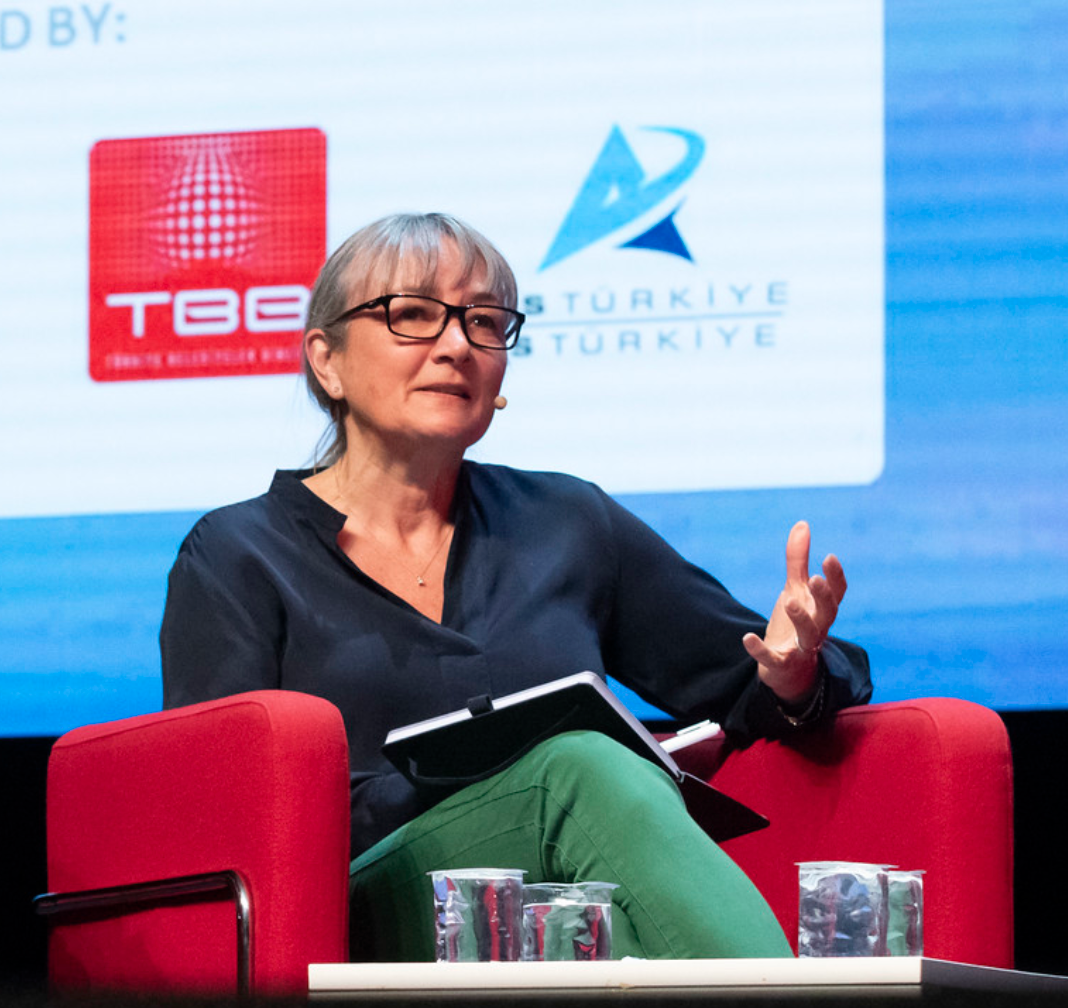
Google Maps’ Director of Global Product Partnerships has told delegates at the ITS European Congress athat despite years of progress in journey planning and digital tools, the reality of seamless mobility is still falling short.
Sarah-Jayne Williams, who works across Google’s mapping and mobility ecosystem, was speaking at the event in Istanbul’s plenary session, and argued that the industry has built a compelling “front-end” experience, but underneath, the system remains deeply fragmented.
“We can all plan quite complex multimodal journeys in seconds,” she explained. “The challenge comes in actually making that journey happen in the real world.”

She explained how users are still required to stitch together multiple steps – different apps, payment systems, and service providers – just to complete a single journey and argued this creates unnecessary friction and places too much burden on the traveller.
“The root cause is fragmentation in the digital ecosystem,” she said, pointing to disconnected data layers, inconsistent payment channels and varying service structures across cities.
She said how the result is a system that looks integrated on the surface but lacks true end-to-end functionality.
Ms Williams also addressed the role of technology platforms like Google in shaping user behaviour, particularly as cities push towards more sustainable transport choices. Rather than controlling decisions, she believes platforms should focus on “nudging” users in the right direction. This could include highlighting lower-carbon routes or presenting multimodal options more clearly, but always with transparency.
“It’s a balance,” she said. “You want to guide users towards better choices, but you have to maintain trust. People need to feel confident in the intent behind the information they’re given.”
Looking ahead, she suggested that the rise of artificial intelligence presents a unique opportunity to rethink how mobility services are structured.
Current systems, she argued, were designed before the emergence of advanced AI capabilities. Now, there is potential to move beyond standalone apps towards more integrated, “agent-driven” experiences.
This could see AI handling the complexity of journeys in the background, connecting services, managing payments and adapting in real time, removing much of the effort currently placed on users. “It’s a moment to rethink how we design the digital ecosystem,” she said.
A recurring theme in Sarah-Jayne Williams’ comments was the importance of data. She stressed that digital infrastructure must be treated with the same priority as physical transport infrastructure. “If real-world changes aren’t reflected in the digital layer, they effectively don’t exist for users,” she noted.
This has significant implications for cities and transport authorities, particularly when planning new schemes or upgrading networks.
Ultimately, the Google director framed the issue as one that cannot be solved by a single player. Achieving seamless mobility will require closer alignment between cities, regulators and technology providers. There is, she suggested, already a shared set of goals: improving safety, reducing emissions and delivering better user experiences. The challenge now is to align systems and incentives to deliver on them.
Her message was clear: the tools and technology largely exist, but without integration and collaboration, the vision of seamless, sustainable mobility will remain out of reach.
(Picture – ERTICO)