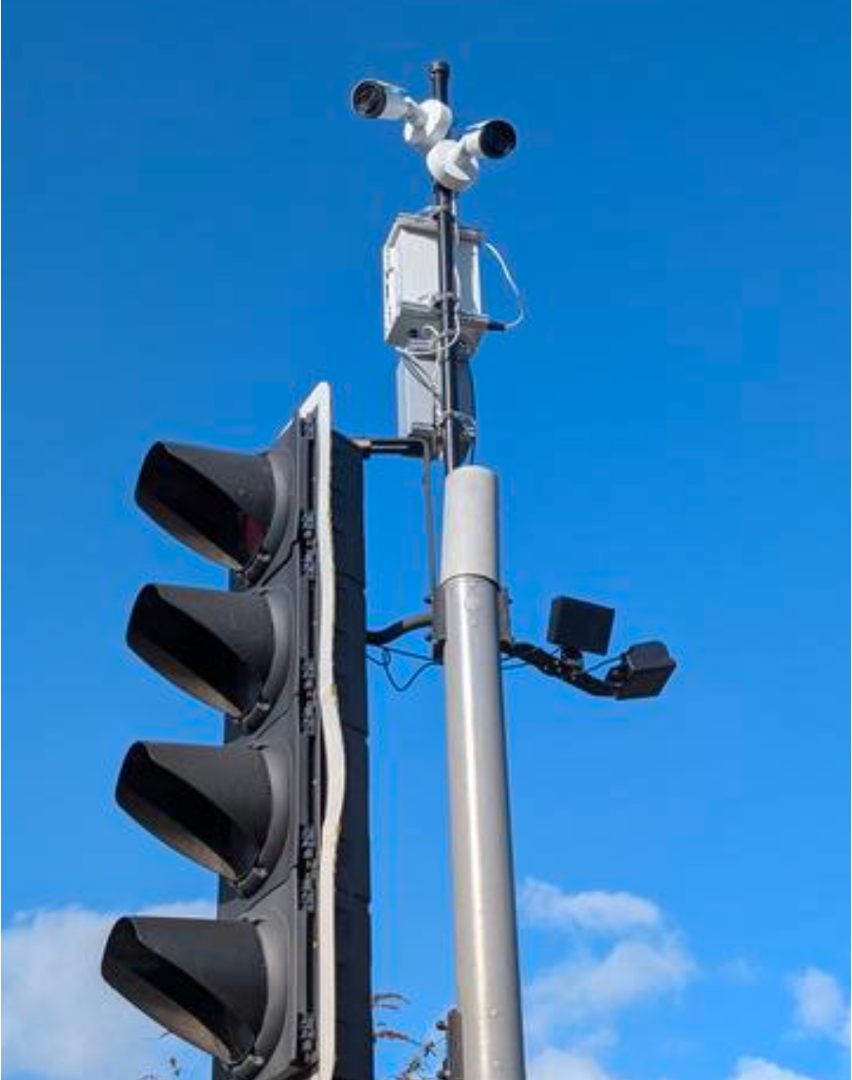
Highways and transport solutions provider Clearview Intelligence has helped deliver accurate bus detection & movement data to help the city better understand bus demand through a busy junction in Worcester City Centre and its correlation to junction congestion.
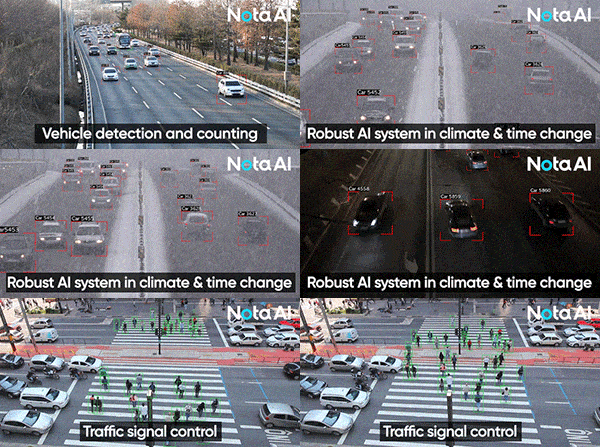
Working with Worcestershire County Council, Clearview deployed its Insight Vision AI multi-modal sensors at a key junction to detect, classify and track different road users in real time, including buses, general traffic, cyclists and pedestrians along with real time connected vehicle data for congestion understanding
This has enabled the Council to measure how long vehicles, and particularly buses, take to traverse the corridor, with specialised bus detection and occupancy

zones identifying when a bus is approaching. This has allowed highways managers to quantify how often priority “hurry calls” should be issued to the traffic signal controller and how signal behaviour could be adjusted dynamically in response to actual demand.
“Abbey Bridge Junction in Worcester was selected as the site for this proof of concept, because it’s a controlled environment in which the Council could test whether data-driven bus priority could measurably improve junction congestion and public transport performance without negatively affecting wider traffic conditions,” explained Mac Needham, Business Development Manager at Clearview Intelligence. “By using above-ground sensors and existing signal infrastructure, we avoided intrusive civil works, reduced installation time, and minimised impact on road users, completing the physical deployment in only two consecutive days, demonstrating how AI-driven transport technology can be layered onto existing assets quickly, cost-effectively, and with minimal disruption.”
The project has provided new insight into bus impact on journey times, congestion, service reliability and timetable adherence, enabling the Council to understand whether dynamic signal optimisation can reduce delays, improve service consistency and enhance passenger experience. It also means that highway managers can be confident that improvements for public transport do not create unintended congestion elsewhere, and by distinguishing bus dwell time from genuine congestion delay, the Council has gained an accurate picture of why buses run late and where targeted interventions will be most effective.
“The Abbey Bridge Junction project demonstrates a practical, low-risk pathway to delivering data-driven bus management,” Mr Needham concluded. “By combining AI-powered vision sensing and Floating vehicle data with dynamic signal optimisation, Worcestershire County Council is building a scalable, evidence-based approach to improving bus reliability while safeguarding overall network performance, with robust, auditable evidence to support Bus Service Improvement Plan funding and future investment decisions.”
All captured data is securely hosted within the Clearview Intelligence Insight platform, which integrates vision analytics, floating vehicle data, and signal performance metrics into a single, data- agnostic environment, creating a consistent, auditable, and defendable evidence base for future transport planning.
(Picture – Clearview)