Belfast has retained its A-grade status for climate action for the fourth year in a row and remains the only city in Ireland, and one of only 20 cities in the UK, to achieve the ranking.
The internationally renowned accolade, from the Carbon Disclosure Project, recognises the multiple climate initiatives supported by Belfast City Council and the bold steps it has taken to cut carbon emissions in line with the city’s net zero targets.
Councillor Micheal Donnelly, Chair of the council’s Climate and City Resilience Committee, said:
“I’m delighted to use Earth Day to highlight some of the ongoing work of the council and our partners and to raise awareness of the good work being done to protect the environment and create a sustainable city.
“We are committed to active travel, reducing pollution, planting more trees, using clean transport technology, investigating better ways of heating and powering the city, greening the city and developing a sustainable food network.
“Residents should be assured we’re doing everything we can to ensure the safety and stability of Belfast for everyone who lives here now, and in the future.
“Everyone can play their part though – from leaving the car at home where possible, to using up leftovers, recycling your food, plastic, glass and cardboard waste; small changes can really help. Belfast is a beautiful city, and we want everyone to be aware of the role we can all play to ensure it is well placed to meet, and deal with, the challenges posed by climate change.
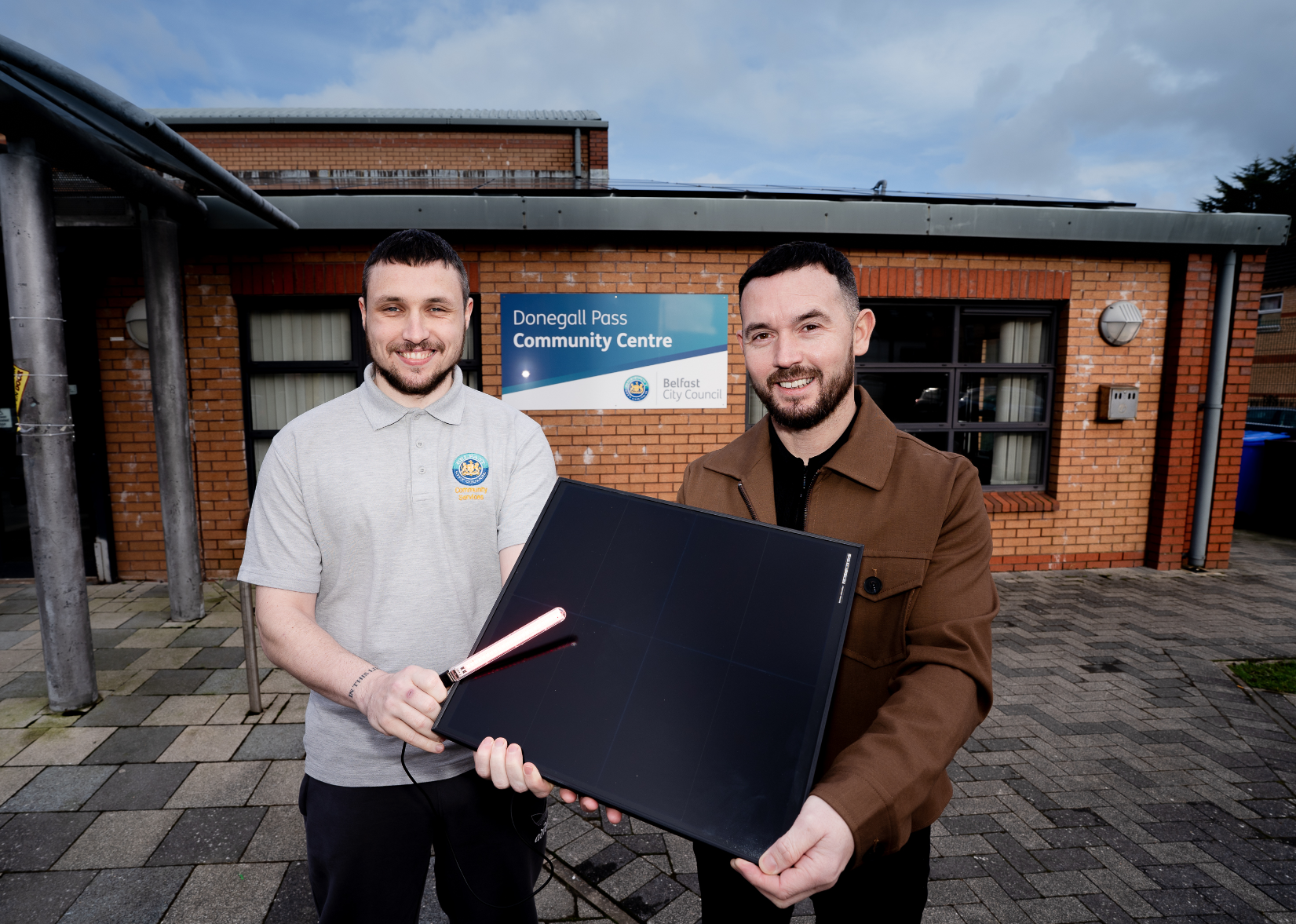
The council has also embraced the potential of solar power. Solar panels on the roof of Donegall Pass Community Centre now power the building, and all activities held at the centre. Since the panels were switched on in March, the building has been effectively off-grid for 80% of the time.
This pilot project, along with other smaller solar panel installations in locations like the Grow NI community garden in the Waterworks, are also being used to test the feasibility of expanding the approach to other council properties.

Bin lorries and other council vehicles are also becoming more sustainable too, with 235 of the 410-strong fleet now running on Hydrogenated Vegetable Oil (HVO). HVO is an odourless, biodegradable, low carbon, zero sulphur fuel manufactured from waste renewable materials such as rapeseed and sunflower oil. It eliminates up to 90% of CO2 emissions when compared to fossil diesel and significantly reduces nitrogen oxide (NOx), particulate matter (PM) and carbon monoxide (CO) emissions.
The council also maintains a further 31 electric vehicles, all of which release zero CO2 emissions into the atmosphere, alongside one hybrid vehicle.
(Picture: Belfast City Council)