Edinburgh’s Sheriffhall roundabout has been the subject of several Highways News articles over the last few years. The busiest junction on the City Bypass is due for a major upgrade, but the project has been delayed by almost 10 years. Despite the issue being raised frequently, there has been little sign of progress, says the Edinburgh Evening News.
The Sheriffhall roundabout is the most congested junction on the A720 Edinburgh City Bypass. Plans for a flyover were unveiled in 2016 and in 2017 funding of £120 million was announced as part of the Edinburgh and South East Scotland City Region Deal. But more than nine years on, a decision to go ahead with the project is still awaited and the congestion continues.
Plans were paused in 2020 for a review of the project following a Scottish Government budget deal with the Greens. A public local inquiry was eventually held in early 2023 and the report delivered to the Scottish Government in early 2024. But repeated questions in parliament have met with the answer that the report is still being reviewed by officials.

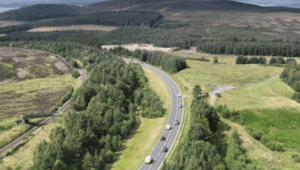
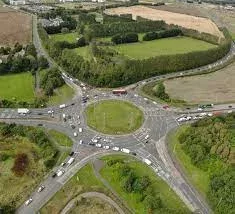
Sheriffhall is a traffic light-controlled, six-arm roundabout at the junction of the A720, A7 and A6106. Traffic jams are common at most times of day. A flyover would allow all through traffic to flow freely through the junction without having to stop, while local traffic would turn off. It is said the flyover would allow improve road safety and journey times for all road users.
Sheriffhall is the only roundabout on the City Bypass – everywhere else there is grade-separated junction. The decision to build a roundabout was largely due to complex ground conditions at the junction. This included a geological fault and mine workings which were active at the time. Mining activity in the area has since stopped.
The Scottish Greens have campaigned against the project, even branding the flyover plan a “spaghetti junction”. In 2020, then Lothians Green MSP Alison Johnstone said: “Since the 1960s we’ve known that if you build more roads, they fill up with cars.”
And in 2021, Labour’s Cammy Day, then depute leader of Edinburgh council, said he was “not convinced” the flyover was the right thing for the Capital and voiced concern about more cars coming into the city. He said: “It’s in no-one’s interests to have an incentive for more people to travel by car in the region, but it is still crucially important that a bypass works and does its job.”
Former Midlothian South SNP MSP Christine Grahame wanted an extra lane created at the roundabout to help ease congestion. She said some motorists already used scrub land next to the A7 as an unofficial extra lane and she wrote to Transport Scotland, calling for the lane to be “done properly”. Officials said the idea had not been considered to date, but its feasibility could be explored with Midlothian Council.
Last year Sheriffhall roundabout was named as one of the UK’s top 10 most stressful junctions – and the 24th most stressful in the world. A junction in the Ethiopian capital of Addis Ababa was named the world’s worst junction with a stress score of 56 out of 100. Sheriffhall was the worst in Scotland and 10th worst in the UK, with a stress score of 35.
Shortly before the Holyrood elections in May, the then Transport Secretary Fiona Hyslop told MSPs she was “disappointed and frustrated” that she was not in a position to make an announcement before the parliament was dissolved.
Soon after that, Transport Scotland chief executive Alison Irvine wrote to Edinburgh Council and other partners, saying a decision on Sheriffhall was expected “early in the new session”.
New Transport Secretary Stephen Flynn told the Scottish Parliament on 2 June 2:
“I share the frustration of individuals who have been impacted by the delays in the project, and who are keen to see progress made. However, I remind colleagues that 2,770 objections were made, and some 1,200 pieces of information are there to be analysed. I can give an assurance that we are very keen to make progress. I will try to come back to the chamber as soon as possible with further details.”
(Picture: Transport Scotland)