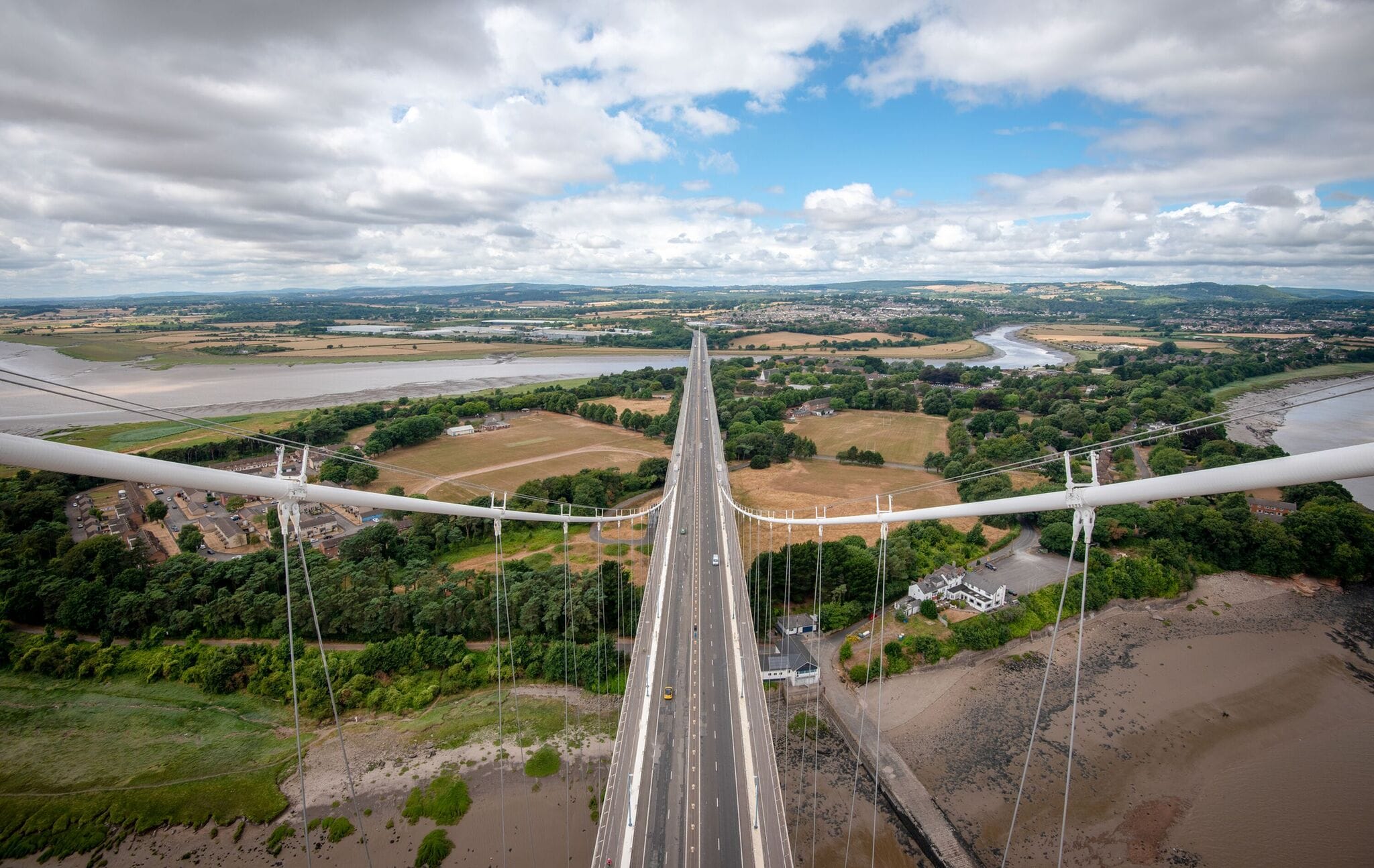
National Highways has identified a solution which will remove the weight restriction for HGVs using the Severn crossing by early next year. By ensuring there are never too many HGVs using the crossing, the solution would see HGVs leave the M48 at Junctions 1 (westbound) and Junction 2 (eastbound) via the off-slip roads with re-entry controlled by signals on the on-slips.
This will mean the bridge is reopened to vehicles over 7.5t 24-hours a day and will operate in “free-flow” for the vast majority of the time.
Following engagement with local authorities and businesses on proposals, this is a preferred solution for the medium-term, while longer term options are explored by National Highways.

The latest traffic modelling also shows that there will be no longer be a requirement to restrict HGVs travelling eastbound during the morning peak, which will have large benefits for the people and businesses in the Chepstow area and beyond. To make sure the new system is robust and works as intended, National Highways needs to carry out additional tests and checks, delaying the planned implementation
Alan Feist, Programme Manager for National Highways said: “The solution we have identified to enable us to lift the weight restriction on the bridge is innovative and requires extensive testing and quality checks so that we can be confident the system operates safely and properly.
“To enable enough time for us to carry out the essential testing and safety audits, we plan to introduce the system in January, a little later than originally planned.
“Once in place, we’ll be able to lift the weight restriction for vehicles over 7.5 tonnes by managing the number of HGVs using the bridge whilst still ensuring the safety of the bridge is protected.”
The M48 Severn Bridge is Grade 1 Listed and almost 60 years old. Its marine location exposes it to hostile weather conditions all year round which has contributed to the corrosion of the cables.
The bridge was not designed and built for today’s levels or weight of traffic. Vehicles have got heavier and traffic levels have increased significantly over the last 60 years putting greater load on the cables.
Routine survey work and testing found that the main cables on the bridge have deteriorated and weakened. To keep the bridge open to the majority of traffic we needed to reduce the load on these cables, which has meant removing the heaviest vehicles for the time being.
(Picture: National Highways)