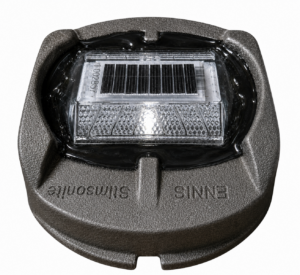
Aberdeenshire Council is to trial new street lighting, signage and road markings on a section of the A952 at Mintlaw. Lower carbon options currently being installed between the East Mains of Pitfour roundabout and the pavilion on North Street include the installation of highly reflective signs, new road markings and solar-powered studs.
The aim is to reduce long-term carbon emissions associated with the construction and maintenance of such infrastructure on major routes.
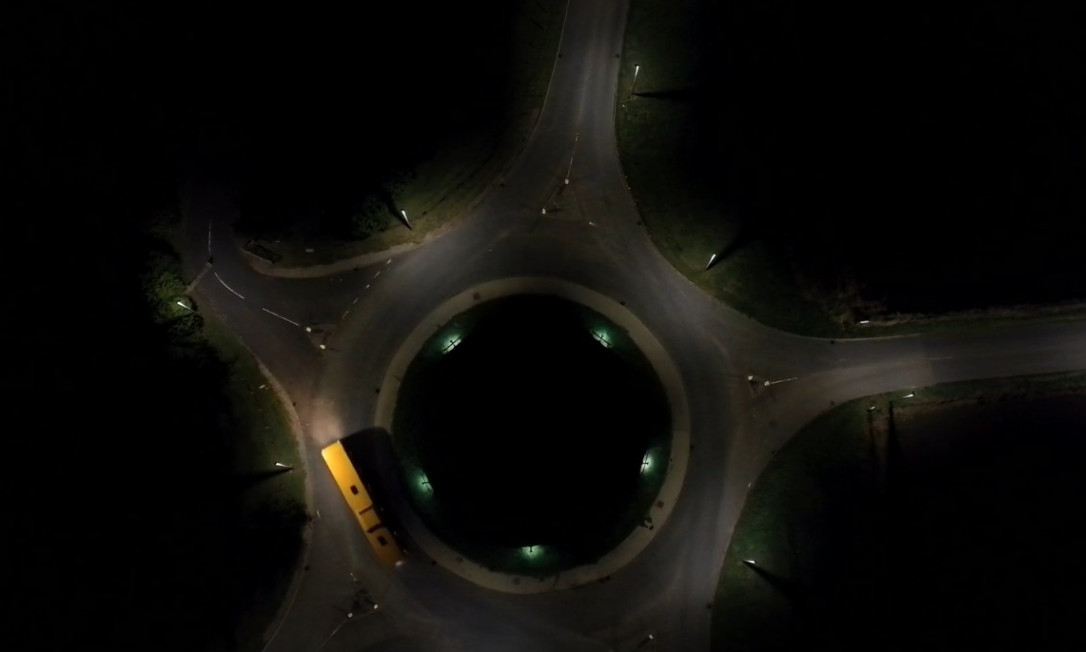
The proposal for the Mintlaw testbed will involve switching off the streetlights on October 30 at and on the approaches to the Balring Roundabout and also those on the A952 southwards to a point just north of the access to the garden centre. As this section lies on the village edge, pedestrian activity after dark is minimal, although a pedestrian island with nearby bus stops has been noted and mitigation measures have been designed accordingly.

Several mitigation measures are being installed including the use of solar-powered road studs, passive infrared sensor-controlled lighting at the pedestrian island and the use of high-performance materials for road markings and signs.
Aberdeenshire is one of several local authorities supporting East Riding of Yorkshire Council in trialing next-generation, low-carbon lighting and visual road technologies through the Live Labs 2 research programme – a three-year, £30 million, UK-wide programme funded by the Department for Transport.
Seven projects, grouped under four inter-connected themes, are being delivered by local authorities in collaboration with commercial and academic partners. These projects focus on decarbonising local highways infrastructure assets and will be followed by a five-year monitoring and evaluation period.
Over the past decade, Aberdeenshire Council has invested approximately £6 million in energy reduction measures, replacing more than 90% of street lighting lanterns with low-energy LED units. While this has reduced energy consumption by 60%, escalating energy costs have resulted in higher overall expenditure. Further reductions can now only be achieved through lighting less, by reducing lighting levels, lighting hours or the number of lit locations.
As a partner authority in the Decarbonising Street Lighting project, Aberdeenshire is now well placed to both contribute to and benefit from the national work underway to establish appropriate lighting levels and trial effective mitigation measures where traditional street lighting is reduced or removed. The full cost of the works involved in the trial will be funded by an £89,500 grant from the project.
Changes in driver behaviour will also be monitored using AI technology to analyse optical and thermal video streams. Comprehensive risk assessments have been carried out by ERYC and a further safety audit will be completed once the lights are switched off.
Councillor Alan Turner, chair of the council’s Infrastructure Services Committee, said:
“We are delighted to be working in partnership with the Live Labs 2 programme to trial this important new technology in our region. The trial at Mintlaw will test alternatives such as new lighting designs, solar studs and improved signing and lining to cut carbon, costs and improve safety. We will rigorously monitor and evaluate throughout the trial and, if successful, we will consider a wider roll-out of improvements in the future.
(Picture: Aberdeenshire Council)