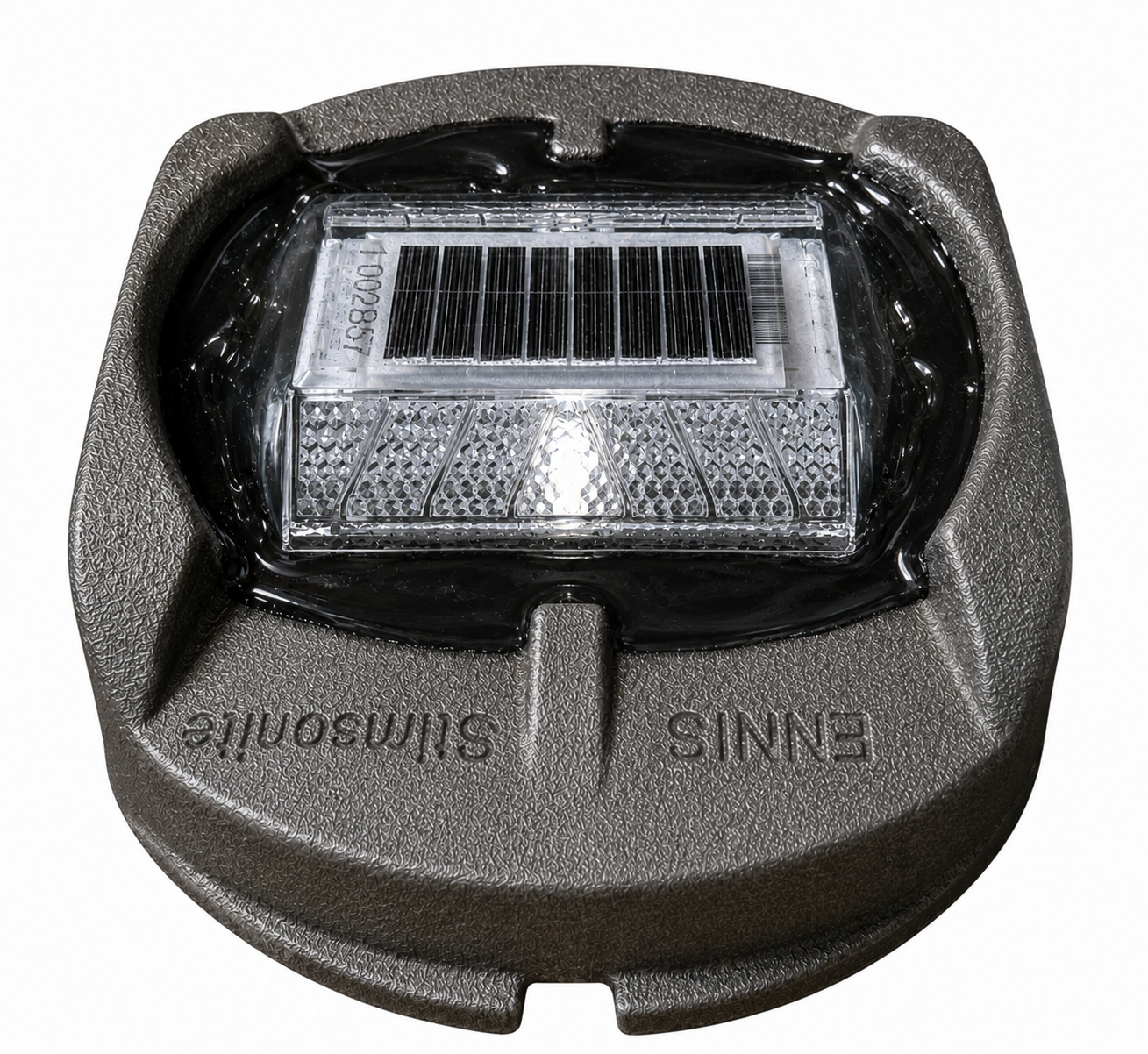
Highways and transport solutions provider Clearview Intelligence has secured Department for Transport Type Approval to use standard road stud housing for its environmentally-friendly LED road safety stud.
A joint innovation between Clearview and project partner Prismo Road Markings, the SolarLite® S381 is designed to fit directly into traditional cast iron road stud installations, meaning it will be much easier for highway authorities to upgrade old-fashioned passive delineation with modern active technology without changing established installation practices.
“The approval marks the arrival of the latest addition to the company’s long-established SolarLite® range, combining its proven solar-powered active road stud technology with a heavy-duty cast iron housing,” explained Head of SolarLite, Alastair King. “The result is a robust solution for applications where a conventional cast iron road stud would traditionally be specified, while offering the improved visibility and safety benefits of an active illuminated stud.”

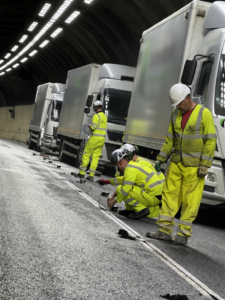
The new product has been developed to fit seamlessly into existing resurfacing and road marking programmes. The SolarLite S381 is installed using the same industry-standard methods as a conventional retroreflective road stud housed in cast iron, allowing white lining and road marking contractors to incorporate it into routine works without additional civil engineering, electrical connections or changes to installation programmes.
For road authorities, this provides a straightforward route to replacing passive road studs with active solar guidance technology while retaining familiar specification and installation methods.
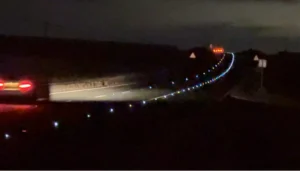
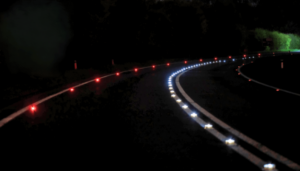
The SolarLite S381 incorporates the same core technology that has already seen many thousands of SolarLite studs installed across the UK. It remains entirely solar powered, requiring no mains electricity, and uses high-performance LED optics to provide active road delineation that can be seen from up to 900 metres away. By comparison, conventional retroreflective road studs are typically visible from around 90 metres in good conditions and rely entirely on vehicle headlights, with performance reducing significantly in poor weather.
This increased visibility enables drivers to identify bends, junctions and other hazards much earlier, improving confidence and giving more time to react, particularly during darkness or adverse weather conditions.
“The addition of the heavy-duty cast iron housing extends the range into more demanding operating environments,” Mr King added. “As well as providing greater protection against heavy traffic loading, the housing is designed to withstand winter maintenance operations and is resistant to damage from snow ploughs, making it suitable for strategic routes and other heavily trafficked roads.”
The product also continues the SolarLite range’s environmental credentials. Because it operates entirely from solar power, there are no ongoing electricity costs and maintenance requirements are kept low, with an expected service life of between eight and ten years.
Its launch comes as highway authorities increasingly seek lower-carbon approaches to improving road safety. The ADEPT Live Labs 2 programme demonstrated that alternative visual guidance solutions can reduce carbon emissions by up to 25 per cent while delivering savings of approximately £1.24 million over ten years compared with conventional street lighting solutions. Active solar road studs therefore offer authorities an opportunity to improve night-time visibility while reducing both operational costs and carbon emissions.
“Rather than replacing the existing SolarLite range, the new S381 expands it,” Mr King concluded. “It complements Clearview’s established products by bringing the technology to schemes where cast iron housed road studs are preferred or specified, while also providing a direct upgrade path from conventional passive retroreflective studs to active illuminated guidance.”
With DfT Type Approval now in place, the SolarLite S381 will be available with lead times of around eight to ten weeks. For highway authorities and contractors alike, Clearview says the approval removes another barrier to adopting active road stud technology, allowing improved road safety, easier specification and more sustainable infrastructure to become part of routine maintenance and resurfacing programmes.
(Picture – Clearview Intelligence)