Clearview Intelligence’s Head of SolarLite, Alastair King, has launched a new series of articles sharing lessons from almost a decade working with road studs, beginning by asking whether the right questions are being asked when they are specified.
Writing in the first of a new series, Stud for Thought, Mr King says that while road studs have been performing an important role on the highway network for decades, the range of products, technologies and applications available has changed considerably.
He argues this increased choice means specifiers need to ensure they select the right product for the application, that it has the appropriate approval and that it is installed in the correct location.

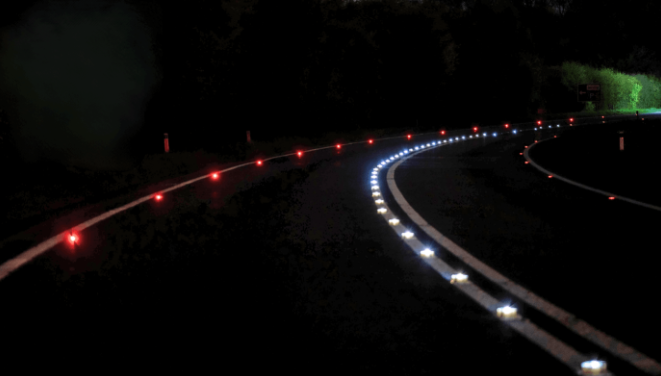
“To start with, I thought I’d go right back to basics: when specifying a road stud, are the right questions asked?” he writes. Mr King identifies four areas he believes should be considered, beginning with choosing the correct stud colour for its location. He points out that colours are not decorative but provide information to drivers, with white generally used for lane and centre-line delineation, red for the left-hand edge of the carriageway, amber alongside a central reservation and green where the carriageway edge may be crossed.
He also urges specifiers to consider whole-life value rather than simply purchase price, including how long a product will perform and how well it is suited to its intended location.
Mr King says active solar-powered road studs can offer an alternative in some locations without requiring the mains electricity supply and associated infrastructure needed for street lighting, while potentially reducing carbon costs and the impact of lighting on biodiversity.
The article also considers whether flush or surface-mounted studs are best suited to particular applications. Mr King says factors including wheel paths, road geometry and the position in which the stud will sit need to be considered, warning: “A good product in the wrong location is still the wrong specification.”
His final question concerns approval, with Mr King advising specifiers to check that road studs have the appropriate Department for Transport approval or authorisation and that scheme designs comply with the Traffic Signs Regulations and General Directions.
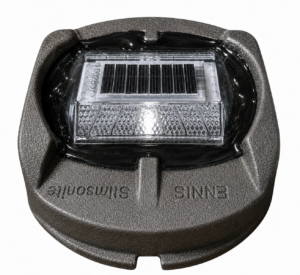
The blog comes after Clearview secured DfT Type Approval for the latest addition to its SolarLite range, the S381, which combines the company’s solar-powered active road stud technology with a heavy-duty cast iron housing.
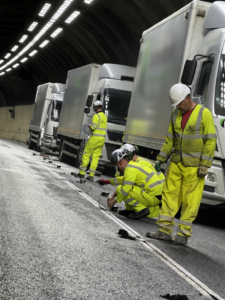
Developed with Prismo Road Markings, Clearview says the S381 can be fitted using established installation methods for conventional retroreflective road studs housed in cast iron, allowing it to be incorporated into routine resurfacing and road marking works.
The company says its SolarLite technology has been installed in its thousands across the UK, using solar power and LED optics to provide active road delineation without a mains electricity connection.
Mr King says his Stud for Thought series will continue monthly, with the next article looking at what happens after road studs have been installed and asking whether they remain in place and continue to perform as intended.
Read Alastair King’s full Stud for Thought blog post here.
(Picture – Clearview Intelligence)