
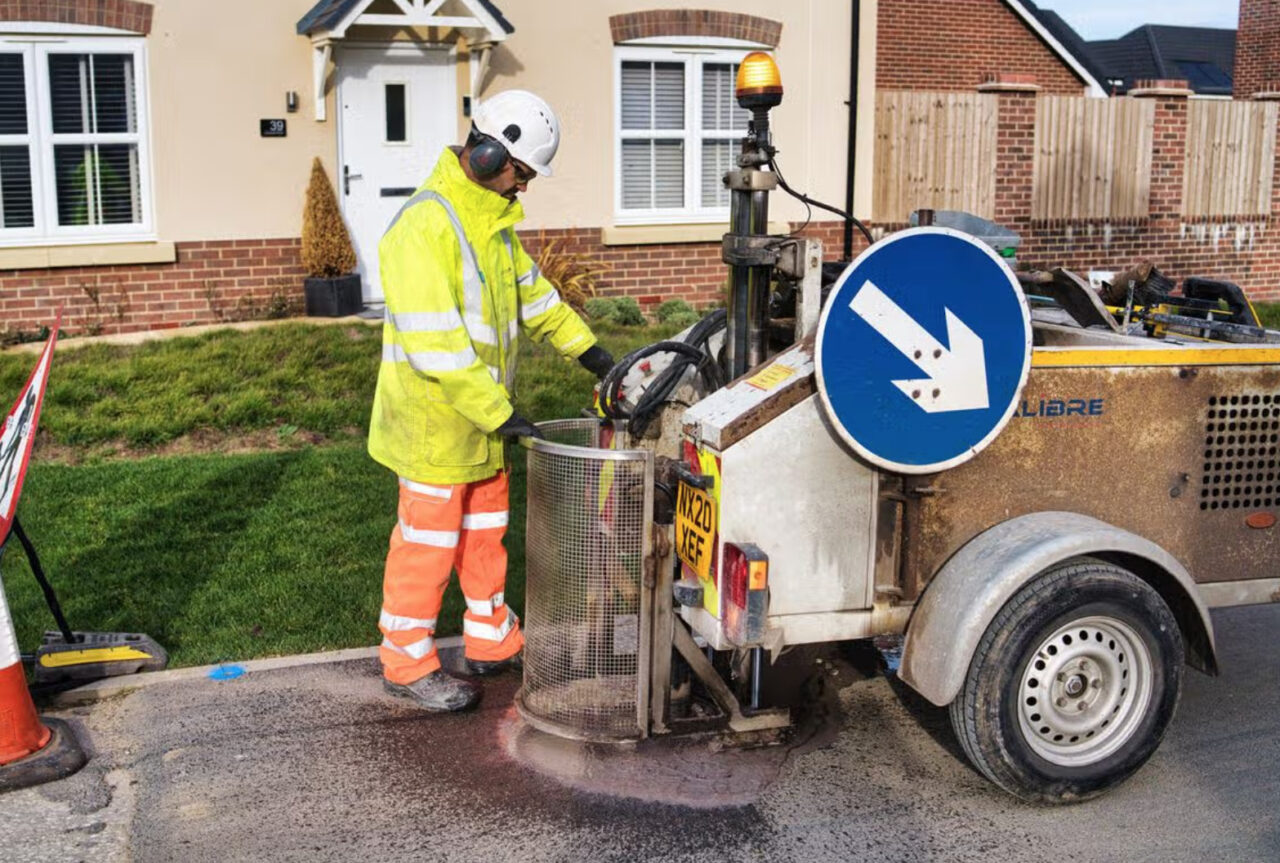
More than 5,000 samples are taken from Lincolnshire’s roads and footways every year as the county council uses specialist laboratory testing to identify underlying defects, assess construction quality and inform future highway maintenance decisions.
The work is carried out by Lincs Laboratory, Lincolnshire County Council’s specialist highways and construction materials laboratory, which extracts between 40 and 60 tonnes of road material annually to help engineers understand the condition of the county’s highway network.
The samples, known as cores, provide a detailed picture of what lies beneath the road surface, allowing engineers to assess the thickness and condition of different pavement layers and identify problems that may not be visible during routine inspections.

The council says the information helps it select more appropriate repair treatments, avoid unnecessary expenditure and ensure that maintenance work delivers better long-term value.
Lincs Laboratory operates three towable coring rigs and two smaller portable versions, allowing samples to be taken from a variety of locations, including sites where access is more restricted.
Using hydraulically powered, diamond-tipped drilling equipment, the rigs extract cylindrical sections of asphalt or concrete. Samples can be up to 450mm long, with extensions available where deeper investigation is required.
A typical core taken from a newly constructed road is 150mm in diameter and weighs approximately 7.5kg.
Chris Neal, laboratory services manager at Lincolnshire County Council, said:
“A core gives us a direct look at the materials beneath the road surface. We can establish how thick the different layers are, assess their condition and, where necessary, test their composition and physical properties.
“That information is particularly valuable when investigating an existing road. Surface defects don’t always tell the whole story, and understanding what is happening underneath helps engineers identify the likely cause of a problem and design a more appropriate, durable repair.”
The testing is used both to investigate existing highways and to check the quality of newly constructed roads and maintenance schemes.
For existing roads, samples can reveal deterioration within the pavement structure, helping engineers establish whether a defect is confined to the surface or requires more extensive intervention.
Testing can also identify the presence of road tar, a material historically used in road construction which is now recognised as a carcinogen. Identifying it allows appropriate health and safety precautions and disposal arrangements to be put in place before work begins.
On new construction and resurfacing schemes, laboratory analysis provides evidence that the correct materials have been used and that pavement layers have been laid to the specified thickness and properly compacted.
Further testing can assess material strength, stiffness and composition, including whether the proportions of bitumen binder and aggregate meet the required specification.
The laboratory also uses specialist equipment including a Rolling Straight Edge and Texture Meter to assess road smoothness and surface texture, characteristics which can influence ride quality, braking performance and road noise.
The results provide an independent check on the quality of work carried out by contractors on behalf of the county council. Where shortcomings are identified, contractors can be required to rectify the work at their own cost.
Councillor David East, executive member for highways at Lincolnshire County Council, said: “Looking after Lincolnshire’s roads is a significant responsibility, and residents rightly expect us to make careful use of public money.
“Lincs Laboratory’s specialist work helps us understand what roads need, check the quality of new construction and make decisions based on evidence rather than guesswork. This can help us target maintenance more effectively, avoid unnecessary spending and get better long-term value from the investment we make in the county’s highways.”
The council says that without detailed material testing, engineers would have to rely more heavily on visual inspections and surface defects when planning repairs, potentially resulting in unsuitable treatments or repeat maintenance.
By combining laboratory results with other highway condition information, the authority aims to develop a more accurate understanding of its network and ensure that maintenance interventions address the underlying causes of deterioration.
Lincs Laboratory employs 37 permanent staff, alongside a pool of relief surveyors, with teams working both on site and in the laboratory to support highway construction, maintenance and materials testing.
The facility is accredited to nationally recognised quality and safety standards.
(Picture: Lincolnshire County Council/Lincs Laboratory)