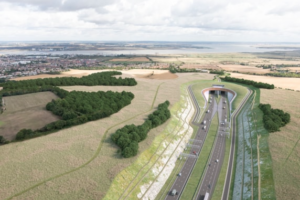
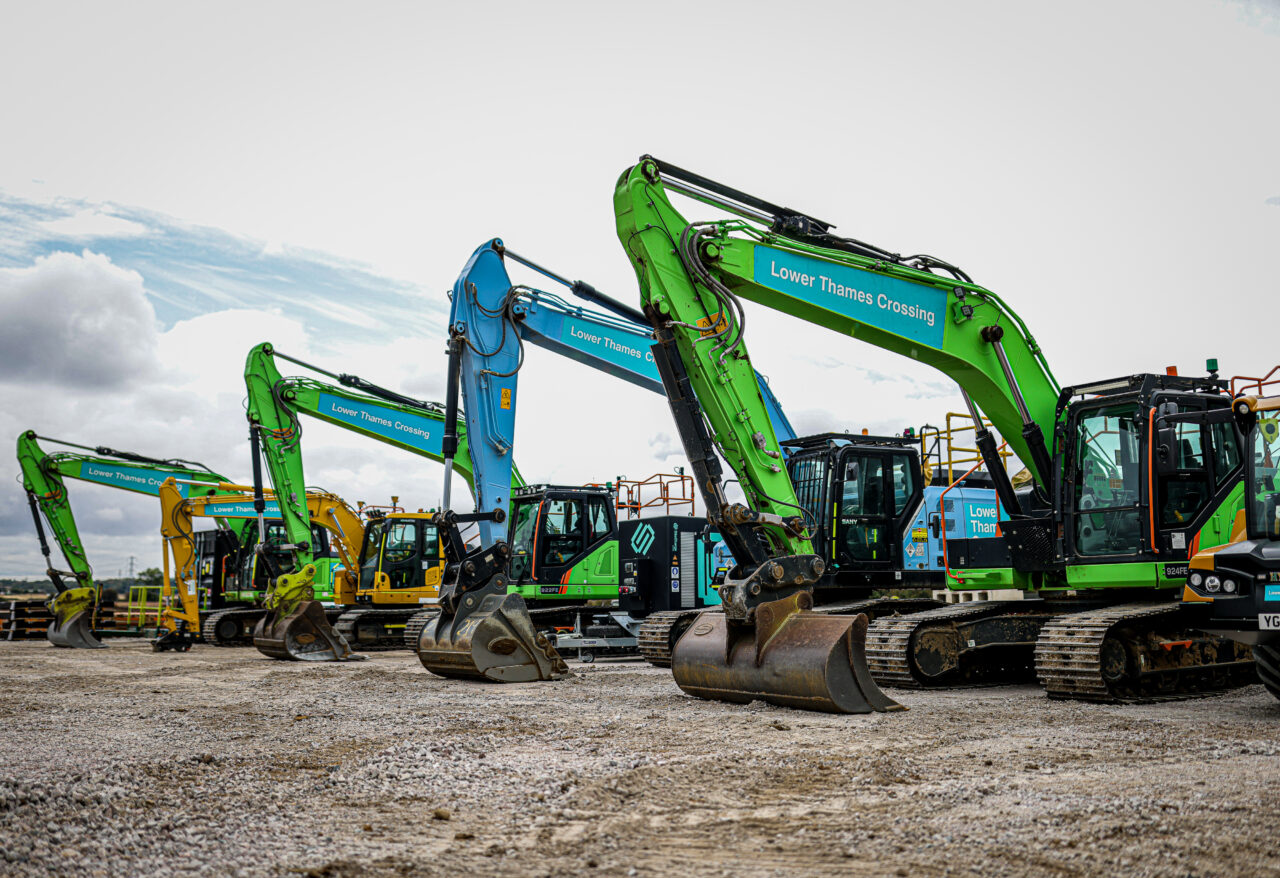
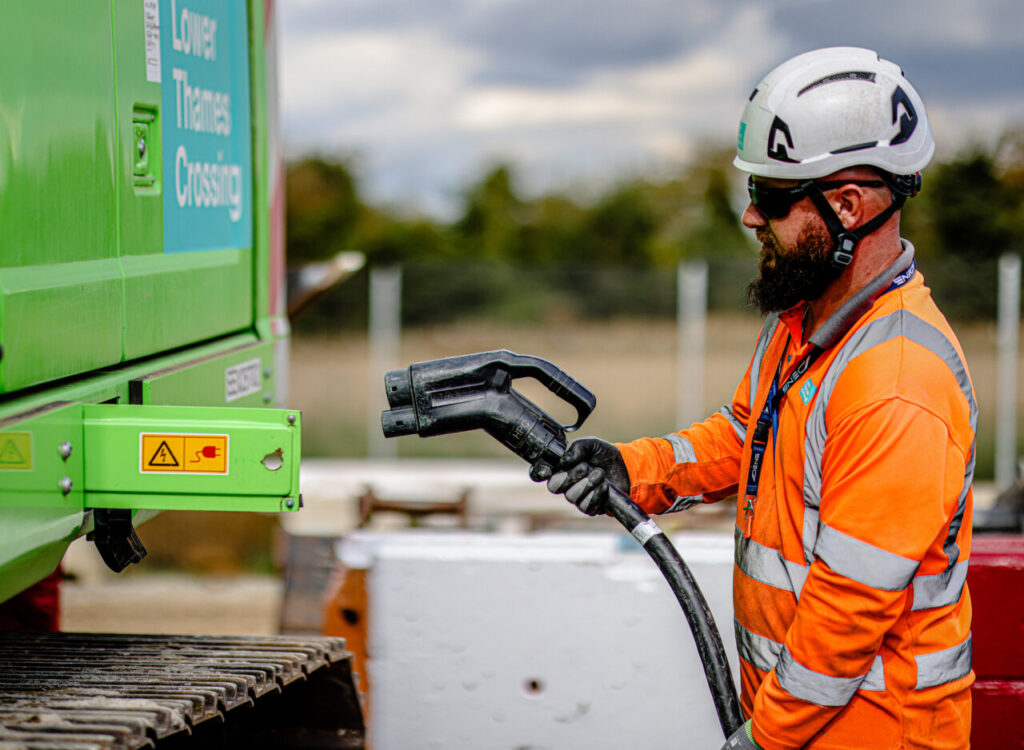
National Highways’ Lower Thames Crossing project is on track to meet its goal to be the first major infrastructure project in the UK to be carbon neutral, as the roll out of zero-emissions construction equipment is underway.
Work on the new road and tunnel under the River Thames began in early 2026, and is being carried out only using electric, HVO and hydrogen powered equipment and machinery.
Over 30 zero-emissions machines are already working on sites across Kent and Essex, with the fleet expected to grow to around 150 by peak construction in 2028 – with the Construction Equipment Association predicting it will be one the largest deployments of zero emission equipment for an infrastructure project anywhere in the world.

Machines currently at work include 20 tonne excavators, rollers, tractors, telehandlers and hydrogen generators.
No diesel has been permitted on Lower Thames Crossing construction sites since 2025 – another first for a major British infrastructure project.
Matt Palmer, Chief Executive Officer of the Lower Thames Crossing, revealed the news in the project’s 2025-26 Sustainability Report.
He said: “We’re making real progress on the Lower Thames Crossing, and our ambition to make this the greenest road ever built in the UK means we’re cutting carbon on a scale that hasn’t been tried before. By putting these zero-emissions machines to work, we’re showing that the construction industry can break its reliance on diesel and these innovative low-carbon approaches can become normal practice on projects across the UK.”
The Lower Thames Crossing was designated as a carbon pathfinder project to reduce its carbon footprint, and prove that low-carbon methods could be rolled out at scale to support the construction industry’s transition to net zero.
The approach pioneered by the project has now been adopted by over £30 billion of future projects planned by organisations such as Sizewell C, Anglian Water and East West Rail.
(Pictures: National Highways)