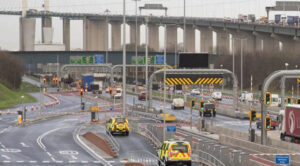

New road tolls could be introduced under proposed Government plans to allow private companies to finance, build and operate road improvement schemes, with an official impact assessment warning that charges could be higher than under a publicly delivered model.
The assessment, published alongside the proposed legislation, acknowledges a risk that private operators could use their position at roads, bridges and tunnels to set higher user charges.
It says there is a risk that charges could be higher than those set under a public delivery model, potentially affecting the affordability of schemes for road users and wider economic outcomes.

The proposals form part of the Government’s Highways (Financing) Bill, which would establish a new framework allowing private firms granted a licence to recover the costs of building or upgrading A roads and motorways through road user charges.
That means tolling could become an option on some existing roads that are upgraded through the new financing model, as well as on newly built infrastructure. It would not, however, mean tolls automatically being introduced across the existing road network.
The proposed regime would be overseen by the Office of Rail and Road (ORR), which would have responsibility for regulating charges and ensuring they do not become excessive.
However, the impact assessment also raises concerns about the regulator’s ability to oversee the new arrangements effectively.
It states that the ORR “may lack sufficient capability to regulate” the schemes and highlights the potential for private companies to have better information than the regulator about the costs involved in delivering and operating infrastructure.
The assessment warns this could create an incentive for companies to inflate costs where those costs can subsequently be recovered through user charges.
The Government says the new financing model could help unlock investment in road schemes where public funding is not available, allowing private capital to contribute to the delivery and improvement of infrastructure.
However, the potential for higher charges will be an important consideration as the proposed framework progresses, particularly where privately financed schemes occupy strategic routes or other locations where drivers have limited alternatives.
(Picture: Chris Moncrief)