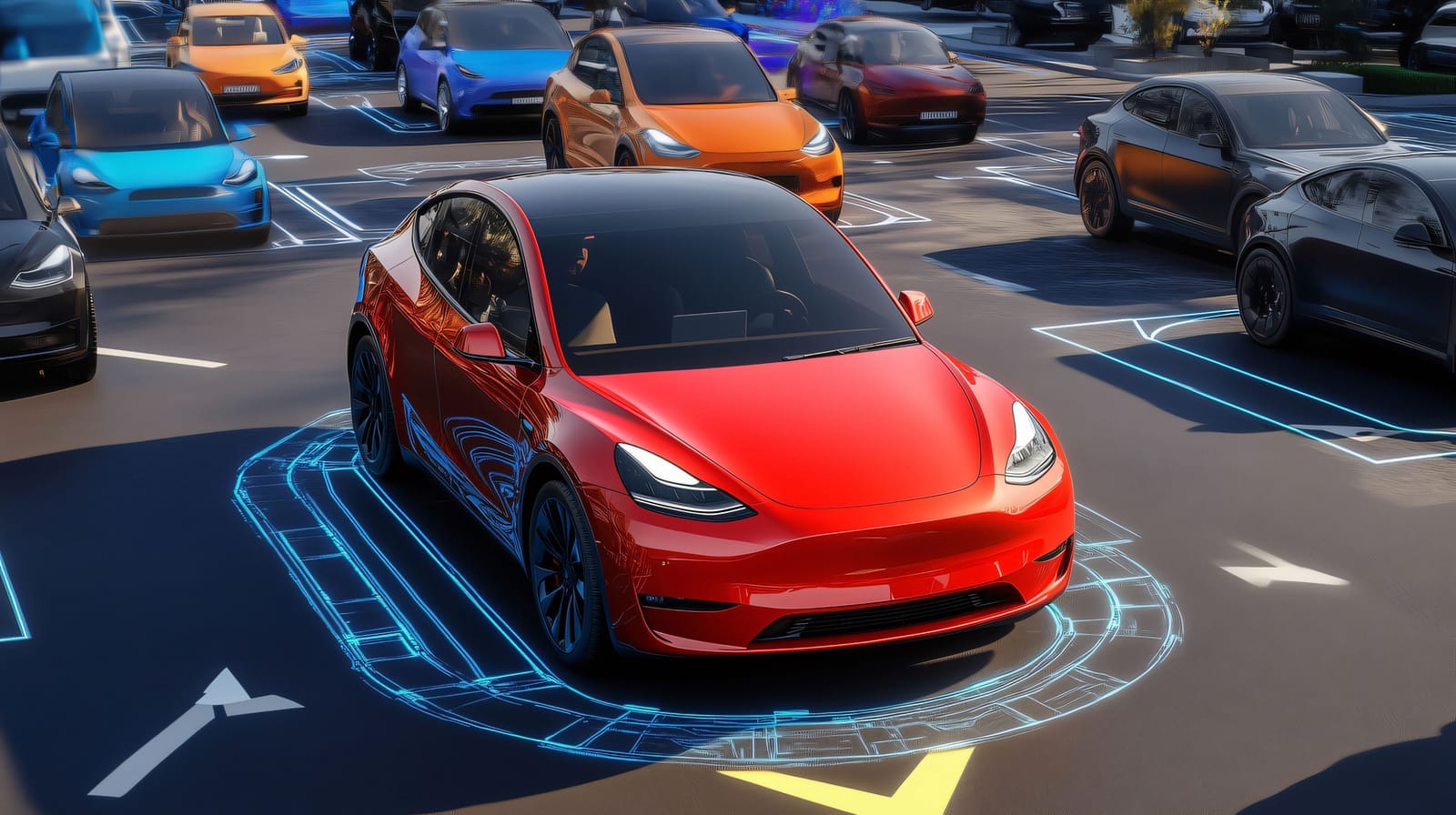
Vastly experiences road engineering expert Derek Cozens explores the fundamental flaw of cars packed full of modern technology being driven by human beings on roads that were, in many cases, designed for horse-drawn carriages. In this fascinating opinion piece written exclusively for Highways News, he outlines some potential solutions and wonders if the incentive to implement them is sufficiently there
In 2026, we continue to design, regulate, and maintain our roads using engineering standards that have their roots in the middle of the last century. Yet, during the same period, vehicle manufacturers have transformed automotive safety through sustained investment, research, and technological innovation.
Modern vehicles now incorporate advanced braking systems, intelligent driver assistance, collision avoidance technology, lane-keeping systems, fatigue monitoring, and increasingly sophisticated safety features. Unfortunately, the roadside environment has not evolved at the same pace.
This raises an important question. If human error is responsible for the overwhelming majority of collisions, why are we still relying on road infrastructure that was designed for an era in which many of today’s technologies simply did not exist? The challenge facing road engineers is not to eliminate human error. Human beings will always become distracted, tired, overloaded with information, or unfamiliar with their surroundings. The challenge is to design a road environment that anticipates these predictable errors and substantially reduces the likelihood of them resulting in death or serious injury.
The encouraging news is that we already possess the technology to achieve this. Many of the tools that could transform road safety are neither experimental nor prohibitively expensive. LED displays, intelligent sensors, vehicle detection systems, solar power, wireless communications, active road studs, and low-cost microprocessors are all readily available. The opportunity now is to integrate these technologies into the road environment in a systematic and coordinated way. Fatal and serious collisions are often viewed as isolated incidents. In reality, they are the culmination of countless dangerous occurrences taking place every day across the road network.
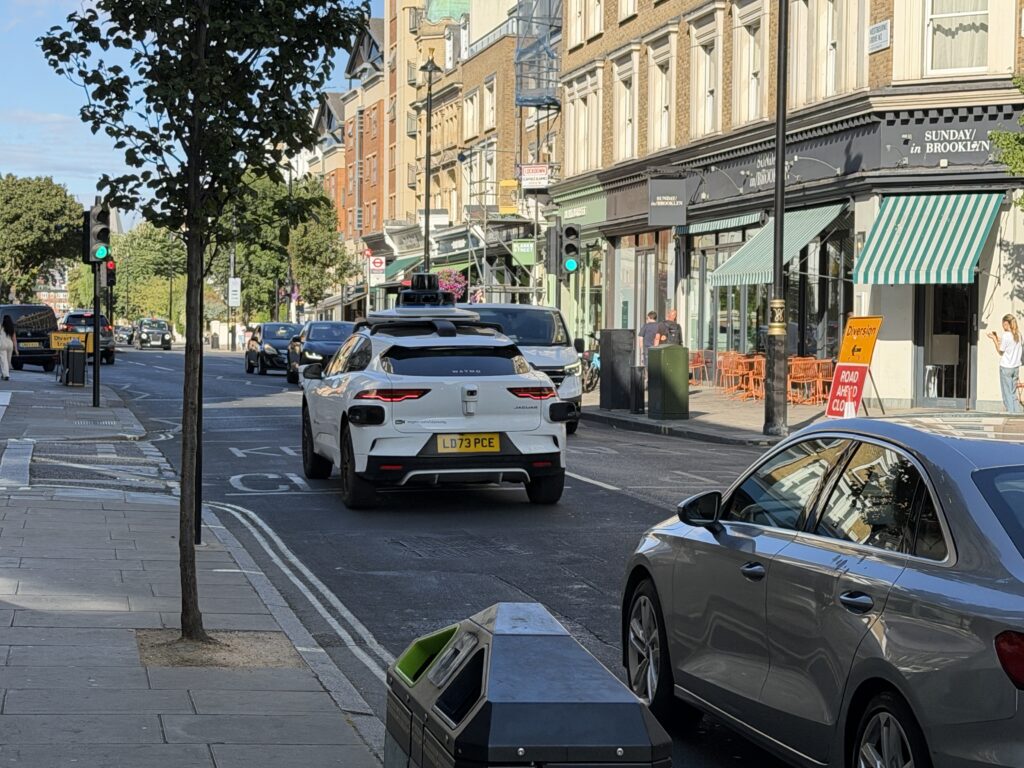
A driver misses a sign. A vehicle approaches a crossing without reducing speed. A prohibited turn is attempted. A junction is entered in error. A driver travels in the wrong direction. Most of these events do not result in a collision, but they reveal weaknesses within the system. Heinrich’s accident triangle demonstrated this principle decades ago. Serious accidents do not occur in isolation. They are preceded by much larger numbers of less serious incidents and countless unsafe acts. That theory is playing out on our roads in real time every day.
There is already an established model for addressing this problem. Over recent decades, workplace safety has been transformed through systematic risk management, hazard identification, and structured maintenance systems. The very engineers responsible for designing, building, and maintaining our roads have benefited from these developments throughout their working lives. Risks are identified, the severity of the potential consequences is assessed, and control measures are introduced to reduce the likelihood of harm. Where the potential outcome is death or serious injury, the expectation is clear. The probability of the event occurring should be reduced until it becomes highly unlikely.
Curiously, many of the same principles that have become standard practice in protecting the workforce have not been consistently applied to the road environment itself. When this methodology is applied to parts of our road infrastructure, many of the scenarios that could result in death or serious injury remain not only possible but highly likely.
The traditional assumption has been that driver training and compliance will compensate for deficiencies in the road environment. Workplace safety abandoned this philosophy many years ago. Industry no longer expects training alone to overcome hazardous conditions. Instead, physical safeguards are introduced to prevent accidents from occurring. Machine guards, interlocks, warning systems, and fail-safe mechanisms are now considered fundamental elements of good safety design. Road safety should follow the same path. The Government’s latest road safety strategy, together with the proposed Road Safety Investigation Branch, presents an opportunity to rethink how road safety is delivered. Rather than focusing solely on individual collisions, a central investigation and oversight function could identify recurring patterns of driver error, investigate the factors contributing to those errors, and promote engineering solutions that directly address the underlying risks.
Put simply, our current road engineering standards are not as safe as they could be. Relatively low-cost improvements could significantly improve safety across the entire network. When we examine the current road environment, there are several weaknesses that also represent significant opportunities for innovation. One example is directional information. Road centre lines divide opposing traffic flows, yet there is often very little information to continuously reinforce the correct direction of travel. The expectation remains that driver training, local knowledge, and memory will be sufficient to prevent errors.

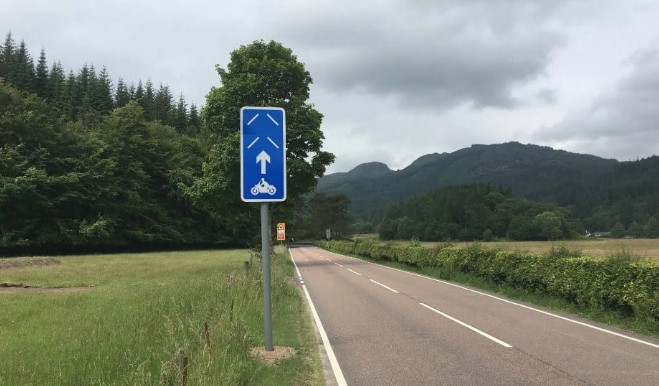
Evidence suggests otherwise. Recent reports identified 947 wrong-way incidents on England’s motorway network in a single year. This should not be viewed simply as a driver behaviour problem. It should be viewed as evidence that existing control measures are inadequate. Another weakness is our continued reliance on static signs in situations where the consequences of an error may be catastrophic. Human vision operates according to a hierarchy of visibility.
Traditional signs have the lowest visual profile, followed by stationary lights, while animated and flashing displays provide the greatest level of visual prominence. Static signs generally require direct observation through central vision. Flashing and animated displays, however, can be detected through peripheral vision and are capable of attracting attention even when a driver’s focus is directed elsewhere. Understanding how drivers process visual information should influence how we design the roadside environment.
The use of LED technology to enhance the visibility of critical roadside information could become one of the most important developments in future road safety engineering. Two complementary strategies could deliver permanent and sustainable accident reduction. The first is a programme of national infrastructure upgrades designed to address common driver errors across the entire network. Wrong-way and wrong-side driving could be reduced by introducing continuous directional guidance through upgraded carriageway markings, improved directional arrows, enhanced signing, and the use of reflective or active road studs. These improvements could be incorporated into routine maintenance programmes, delivering safety benefits at relatively low cost.
Prohibition signs in high-risk locations could be reinforced with active displays designed to ensure that drivers not only see the sign but acknowledge the information being presented. Pedestrian crossing safety could also be transformed. Traditional Belisha beacons could be upgraded with pedestrian detection systems that alert approaching drivers when pedestrians are waiting to cross or are already on the crossing. Rather than simply identifying the location of a crossing, the system would communicate the presence of a vulnerable road user and encourage drivers to prepare to stop. Signal-controlled crossings could incorporate additional stop displays positioned lower on the signal poles and activated when approaching vehicles are detected without sufficient deceleration.
Traffic signals themselves could also be improved. Additional displays positioned on the rear of traffic signal heads could provide drivers turning right with clearer information about approaching traffic, reducing uncertainty and improving decision-making at junctions. The second strategy is the adoption of individual risk assessments for high-risk locations, supported by a toolbox of proven and cost-effective engineering solutions. Traffic signs could be enhanced with active warning systems positioned directly beneath the sign to increase visibility and improve driver recognition. Speed-activated systems could reinforce warnings on the approach to hazardous bends.
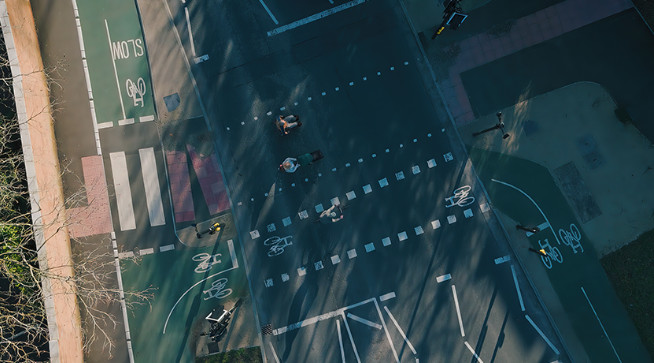
Vehicle-activated displays could strengthen stop and give way instructions at high-risk junctions. Pedestrian crossings could be redesigned using low-cost, solar-powered technology that requires minimal infrastructure while delivering a significantly greater visual presence than the current designs. Perhaps the most exciting aspect of this vision is that these technologies are already available.
They are not futuristic concepts waiting to be invented. They are off-the-shelf solutions waiting to be applied. The challenge is not technological. The challenge is regulatory. Bureaucracy has, to date, restricted potentially life-saving technology to the development of stand-alone electronic replicas of existing warning signs rather than encouraging their integration into existing roadside infrastructure.
The result has been the introduction of expensive, large-scale displays that often provide poor LED representations of conventional road signs, despite the fact that the same technology could be used to enhance the visibility of an existing sign only a few yards away, while simultaneously delivering an additional warning message such as “Slow Down”, at a fraction of the cost. If vehicles can evolve from the safety standards of the 1960s to the intelligent systems of today, there is no reason why our road infrastructure cannot undergo the same transformation.
The future of road safety will not be built on the unrealistic expectation that drivers will stop making mistakes. It will be built on engineering systems that recognise those mistakes as predictable, design against them, and prevent them from becoming tragedies.
That future is within our reach. The technology already exists. What is needed now is the determination to use it.
(Pictures: Olga Gonzalez/Yay Images/Road Safety GB/AGD Systems)