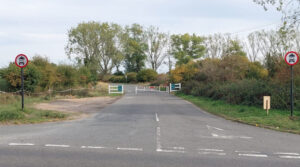
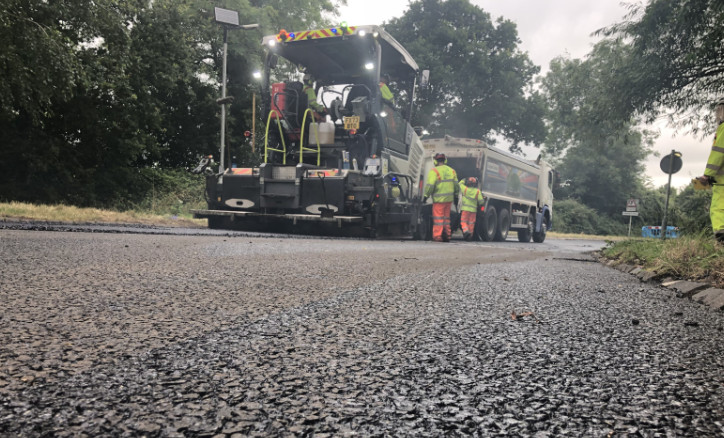
A scheme to resurface a stretch of the B4445 in Chinnor, Oxfordshire will pilot a unique package of low-carbon materials expected to save over 30 tonnes of CO2 while improving the road’s performance.
Starting this week, the project will replace the existing carriageway surface and road markings. It will also include verge clearance and drainage repairs and improvements.
The scheme has been developed by Oxfordshire County Council and its highways contactor M Group in close collaboration with industry-leading highways and low-carbon materials specialists.
It brings together five complementary innovations, which collectively are expected to reduce embodied carbon emissions by more than 30 tonnes of CO2 equivalent compared with conventional resurfacing.
Councillor Liz Leffman, Oxfordshire County Council’s Cabinet Member for Highways Construction and Repairs, said:
“This project represents an exciting opportunity to bring together several industry-leading innovations within a single scheme and better understand how they can help us reduce carbon emissions from highway maintenance.
“Importantly, the trial is about more than carbon reduction alone. We are also exploring how these technologies can improve durability, reduce future maintenance requirements and support better long-term outcomes for Oxfordshire’s road network.”
The largest single carbon saving is expected to come through replacing a conventional asphalt binder course with a bespoke mix of Breedon’s ACLA Net Zero Binder Course that has been specifically developed for this scheme.
Richard Lovewell, M Group’s Business Director said:
“M Group is proud to be working with Oxfordshire County Council to pioneer new approaches to carbon reduction.
“This is much more than a change in material use: by working in alliance with our supply chain partners Breedon, DJT, TSM and Wilson & Scott we are combining a range of lower carbon materials, plant and equipment, welfare cabins, traffic management innovation and techniques within one project. This enables us to evaluate how they perform together in real-world conditions and generate learning that could influence future schemes across the industry.”
(Picture: Oxfordshire County Council)