Surrey County Council has treated more than 45 miles of the county’s roads this year as part of a £7 million surface dressing programme covering 63 roads.
The council says the work is intended to extend the service life of worn road surfaces, restore skid resistance and prevent water ingress, while causing less disruption than conventional resurfacing.
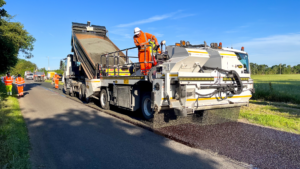
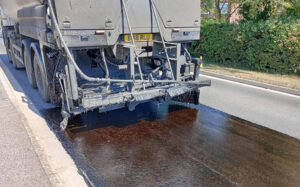
Surface dressing is a preventative maintenance treatment rather than a reconstruction technique. A bitumen binder is sprayed onto the existing road surface before stone chippings are spread and rolled into it. Traffic then helps to embed the remaining loose aggregate into the binder.
The council says the treatment can extend the life of a road by more than 10 years when used appropriately.
For Surrey, the attraction is the ability to treat relatively large areas quickly. The council says roads can be treated in a single day, reducing the duration of traffic management and associated congestion compared with more extensive reconstruction.
The treatment also provides a way of addressing one of the main causes of road deterioration: water entering the pavement. By sealing the surface, surface dressing can help limit further deterioration and reduce the development of potholes.
It can also restore skid resistance on surfaces that have become polished through traffic.
The approach is not, however, the end of the maintenance operation. Following treatment, Surrey says roads require follow-up work including reinstating road studs and repainting markings. Loose chippings can also remain on the surface for around a week while traffic beds them into the binder.
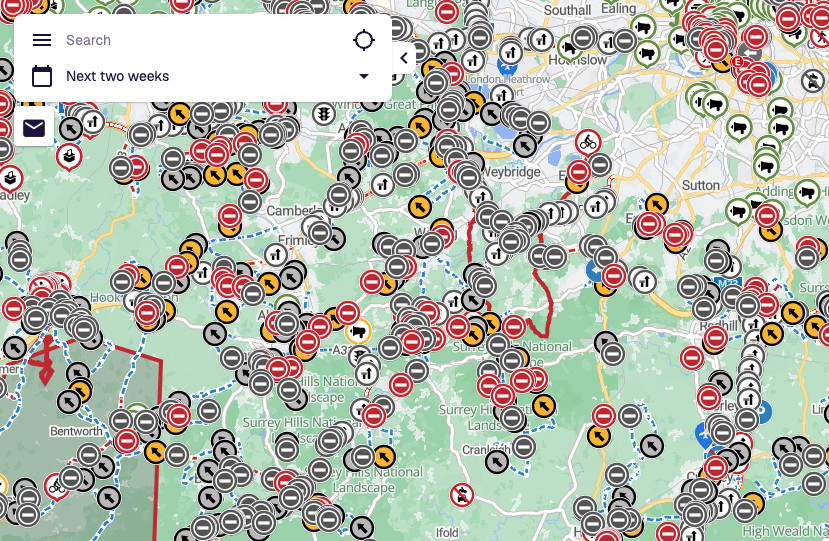
Surrey CC’s website features an interactive map (pictured) showing the roads included in this year’s programme, as well as roads being considered for treatment in future years.
For a highway authority managing an extensive network under pressure from both maintenance costs and traffic disruption, the appeal of surface dressing is therefore less about creating a new road surface than about intervening before a road requires more expensive structural treatment.
The £7 million programme provides a sizeable example of that preventative-maintenance approach in practice.
(Picture: Surrey County Council)