Transport Scotland has taken another step forward in delivering the A9 Dualling Programme with the publication of a £1.94 billion Contract Notice on Public Contracts Scotland (PCS) inviting contractors to bid for a new delivery Framework Agreement to deliver the remaining 58 miles, yet to commence procurement (92.4km).
The delivery framework has been developed following a market consultation exercise with the construction industry and includes early contractor involvement and flexibility to use the NEC4 Option A (fixed price) and Option C (target cost) contract options.
The Framework Agreement includes two Lots, with Lot 1 including three contracts with estimated values below £400 million and Lot 2 having two contracts with estimated values above £400 million. The Framework will be used to procure the five remaining contracts of the Programme which are yet to enter procurement, as follows (including the estimated contract value):
• Dalraddy to Slochd (£553 million at March 2026 prices – Lot 2),
• Glen Garry to Crubenmore (£336 million at March 2026 prices – Lot 1),
• Pass of Birnam to Tay Crossing (£266 million at March 2026 prices – Lot 1),
• Killiecrankie to Glen Garry (£438 million at March 2026 prices – Lot 2); and
• Crubenmore to Kincraig (£344 million at March 2026 prices – Lot 1).
The Framework provides a long-term pipeline visibility for contractors and will run for four years following conclusion.
The commencement of this procurement signals major investment by the Scottish Government to delivering a safer, more reliable A9, while supporting creation of jobs, training opportunities, and opportunities for businesses within long supply chains across Scotland.
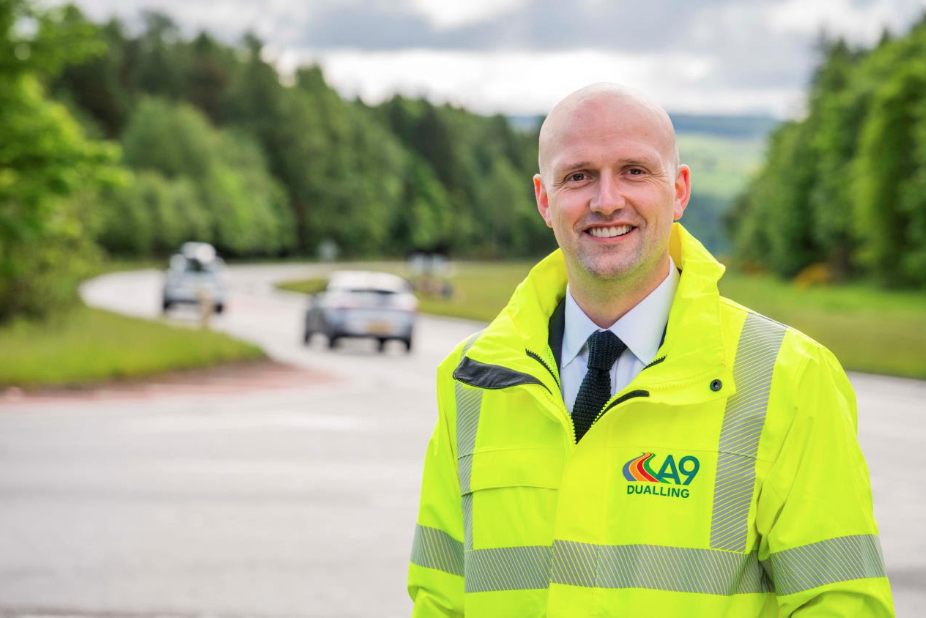
The Cabinet Secretary for Economy, Tourism and Transport, Stephen Flynn said:
“Commencing the procurement of this Framework Agreement today gives a clear signal to the industry and to Scotland, that we are serious about delivering A9 Dualling. We have listened to the industry and have refreshed our delivery model to achieve this Government’s commitment to delivering dualling of the A9 by the end of 2035. This announcement today is evidence of our continued commitment to full dualling of the A9.
“The A9 Dualling Programme is about far more than infrastructure, it is about strengthening connections between the Highlands and the Central Belt, supporting communities, and creating opportunities for people and businesses across Scotland.
“The contracts delivered within this £1.94 billion Framework are expected to support jobs, training and apprenticeship opportunities for local people and supply chain opportunities for local businesses, helping to deliver lasting benefits for communities along the A9 corridor.
“With 11 miles (18km) currently under construction, and a further 4 miles (6km) expected to be in construction later this year, following award of the section between Pitlochry and Killiecrankie in Autumn, this Government is maintaining strong momentum in delivering the A9 Dualling Programme.
“The Scottish Government remains committed to fully dualling the A96. We are progressing the Inverness to Nairn section, including the Nairn Bypass, with land secured and funding in place to begin advanced works in 2026/27. The Capital Spending Review sets out plans to commence construction of the Nairn Bypass in 2029/30, subject to final approvals, and we will continue to progress dualling of the A96 eastwards as funding allows.”
Gemma Patterson, Head of A9 Dualling Programme Delivery at Transport Scotland said:
“This Framework has been designed to support a more efficient approach to the remaining sections of the programme providing a clear pipeline of opportunity for the supply chain to plan with confidence.
“The framework enables early engagement with contractors, helping to drive efficiencies and improve delivery outcomes across the programme. “The contracts being delivered within the Framework are expected to support jobs, training, apprenticeships, and supply chain opportunities for local businesses and communities, helping to deliver lasting benefits for communities along the A9 corridor.”
(Picture: Transport Scotland)