
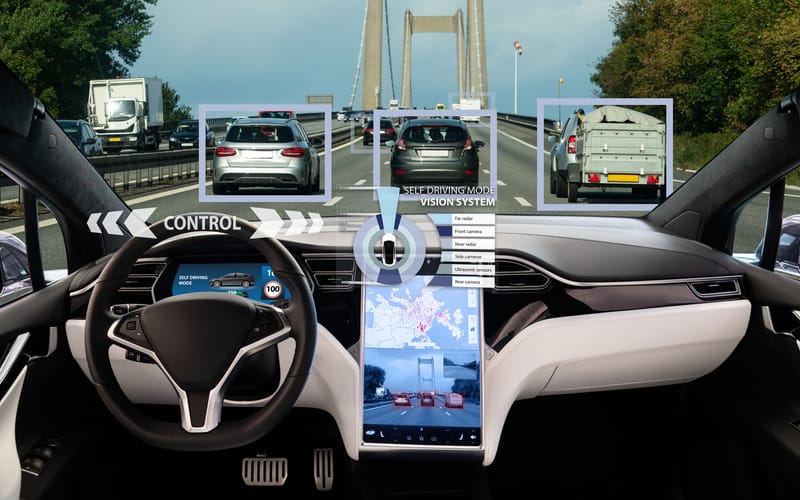
The UNECE (United Nations Economic Commission for Europe) World Forum for Harmonization of Vehicle Regulations (WP.29) has adopted the world’s first regulatory framework for fully driverless Automated Driving Systems (ADS). The announcement comes a decade after early predictions of widespread automated driving failed to materialise, the global regulatory landscape has reached a decisive milestone.
The new framework establishes uniform international safety requirements and a common methodology for validating ADS-equipped vehicles. Built on a safety‑case approach and a safety management system, it aims to strengthen trust among governments, industry, and the public by ensuring that automated systems meet rigorous, outcome‑focused safety standards.
WP.29’s decision underscores the growing importance of harmonized global vehicle rules. By preventing fragmented national approaches, the regulation offers clarity for manufacturers, confidence for consumers, and a pathway to scale innovation safely across markets. The regulation enters into force in about a month.

The key features of the regulation are:
- Safety Management System – Manufacturers must implement audited, lifecycle‑wide safety governance and processes.
- Credible testing requirements – Test environments, including virtual toolchains, must meet strict credibility criteria.
- Safety Case – Companies must provide structured evidence that their ADS poses no unreasonable risk.
- In‑service monitoring & reporting – Continuous performance monitoring and reporting ensure real‑world safety oversight.
- Data Storage System for Automated Driving – Vehicles must record safety‑relevant ADS data.
The regulation requires ADS performance to match or exceed that of a competent human driver. Because ADS shall perform the Dynamic Driving Task i.e. handles all tactical and operational driving tasks (e.g. steering, accelerating, decelerating, lighting, signalling, etc.), manufacturers must demonstrate to safety authorities robust design, validation, and compliance with traffic rules through simulation, track testing, and real‑world trials.
The framework accommodates diverse ADS use cases – from highways to urban environments – and supports innovation while maintaining consistent safety levels. Major automotive markets including Canada, China, the EU, Japan, the UK, and the US have endorsed the regulation, signalling strong momentum toward global adoption.
Alongside the new ADS regulation, WP.29 has adopted amendments to around ninety UN regulations to introduce clarifications ensuring that existing vehicle regulations remain applicable to vehicles equipped with automated driving systems, including those without traditional driver controls.
This approach will ensure continuity of the regulatory framework while enabling innovative vehicle designs, including fully driverless configurations.
(Picture: Scharfsin86)