A new report says the vast majority of traffic enforcement schemes around the world are still being delivered as standalone systems rather than as part of integrated Intelligent Transport Systems.
The transport advisory firm Curvidia study analysed 152 public procurement contracts for speed, red-light and point-to-point enforcement programmes awarded between June 2021 and May 2026 across the UK, Europe, North America and Australia/New Zealand. It found that just five contracts, or 3.3% of the total, combined traffic enforcement with wider ITS platforms such as motorway operations, tolling, smart city systems or national ANPR infrastructure.
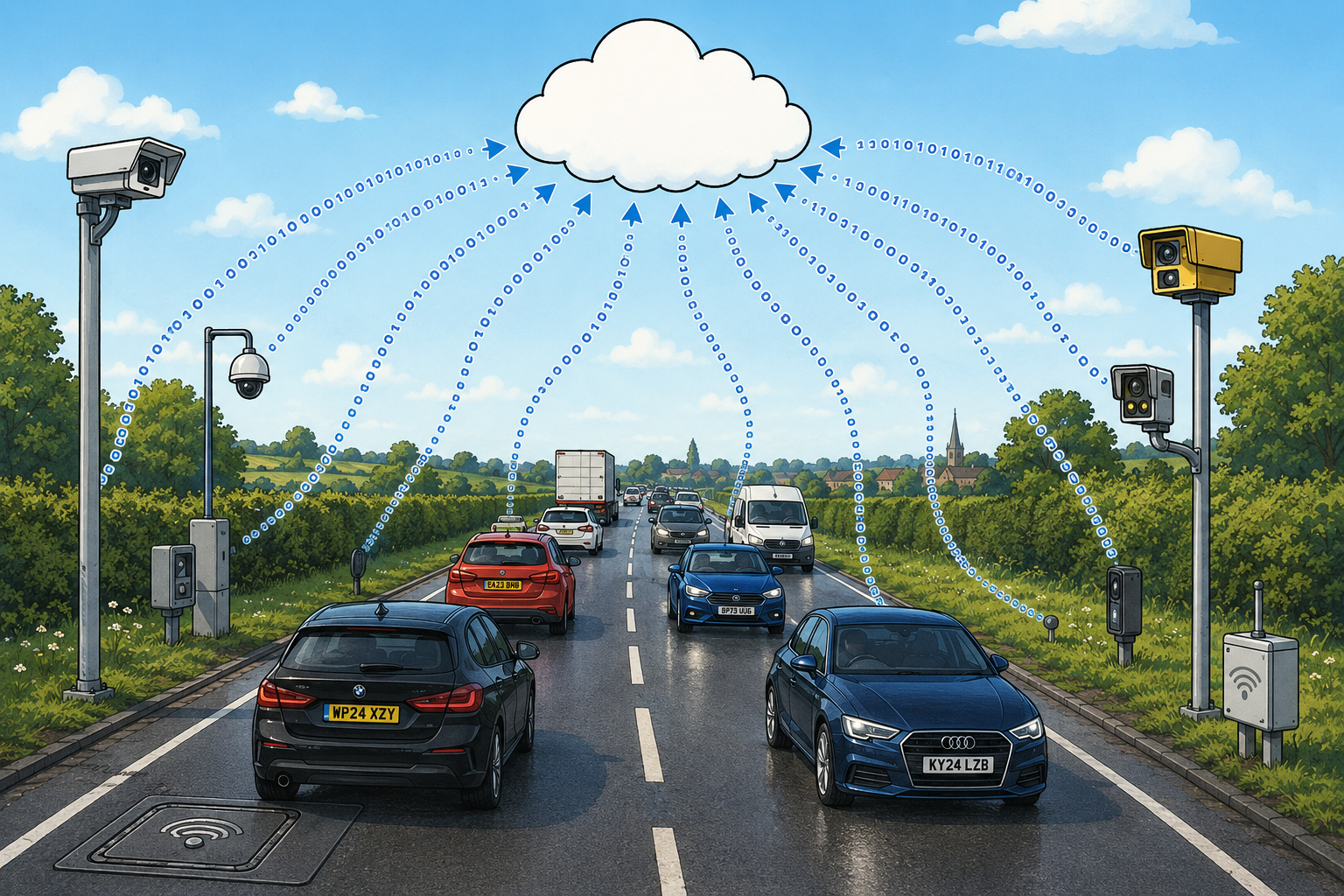
Despite roadside technology being able to “work harder” by sharing infrastructure, communications and data across multiple applications, the report concludes that 88.8% of contracts remain focused on a single enforcement purpose, while only 7.9% combine speed or red-light enforcement with other functions such as bus lane enforcement, yellow box monitoring or AI-powered detection of mobile phone use, distracted driving or seatbelt offences.

The report’s author, Dudi Cohen, argues that the biggest obstacle is not technology but the way schemes are specified and procured. “Convergent platforms already exist and operate across enforcement, tolling and traffic management today,” he said. “What is missing is the institutional mandate to specify that convergence at the procurement stage, not the ability to build it.”
The research also found that integrated programmes are much more likely to be delivered under outsourced or managed-service contracts. 16 of the 17 schemes that combined multiple technologies or enforcement functions were outsourced, compared with fewer than half of standalone enforcement programmes. Mr Cohen said this reflected the greater operational complexity of managing multi-domain platforms rather than outsourcing itself driving integration.
Curvidia’s report says its findings highlight a significant gap between transport authorities’ long-term vision of shared, multi-function roadside infrastructure and the reality of current procurement practice. The company says future tenders will need to place greater emphasis on cross-domain integration if authorities are to reduce roadside equipment and unlock the wider benefits of connected ITS platforms.