
Corrosion can turn a small crack in concrete into a much bigger maintenance problem. Sean Hightower, regional account manager for Cortec MCI, explains how migrating corrosion inhibitors work and where they could help protect highway infrastructure.
Concrete cracking is a familiar challenge for anyone responsible for maintaining highways infrastructure. But while cracks can result from shrinkage, temperature changes and freeze-thaw cycles, the consequences can extend beyond the visible damage.
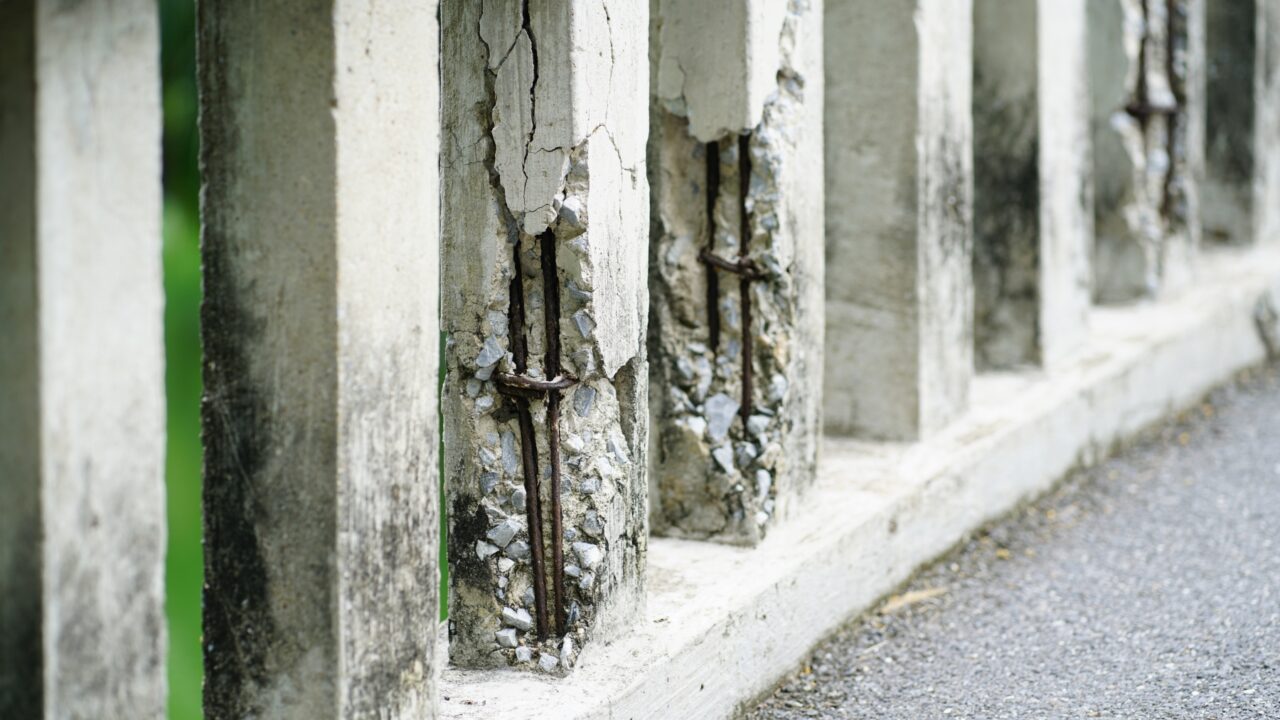
Once water, chloride-rich de-icing salts and other corrosive substances reach the steel reinforcement inside concrete, corrosion can begin. As the steel corrodes, it expands, putting pressure on the surrounding concrete and potentially causing further cracking and spalling.

That process can become self-perpetuating, increasing the scale of the damage and the need for remedial work.
We spoke to Sean Hightower, regional account manager for Cortec MCI, about the role of migrating corrosion inhibitors (MCIs) in helping to slow deterioration and extend the service life of concrete structures.
Why does concrete crack, and how much of a role does corrosion play?
People often accept cracking as an inevitable characteristic of concrete. As Hightower points out, there is some truth in that: cracking can occur for a range of reasons, including shrinkage and freeze-thaw action.
However, corrosion is an important part of the picture, particularly where concrete contains steel reinforcement.
A crack can provide a route for water and chlorides from road de-icing salts to penetrate the concrete and reach the reinforcement. Once corrosion takes hold, the steel begins to expand, placing additional stress on the surrounding material.
The result can be further cracking, delamination and spalling, which in turn expose the structure to more corrosive agents.
For highways authorities and maintenance teams, the challenge is therefore not simply to repair visible cracks, but to understand and address the deterioration that may be taking place beneath the surface.
Why is this a concern for highways infrastructure?
Bridges and other reinforced concrete assets are routinely exposed to conditions that can accelerate deterioration. Water ingress, temperature fluctuations and the use of de-icing salts can all contribute to the risk of reinforcement corrosion.
Once damage becomes established, repairs can be disruptive as well as costly. Work may require lane closures, traffic management and repeated interventions over the life of an asset.
Measures that help slow corrosion could therefore have a role in maintenance strategies aimed at preserving structural condition and reducing the need for more extensive repairs.
What are migrating corrosion inhibitors, and how do they work?
Migrating corrosion inhibitors are designed to help protect the steel reinforcement within concrete.
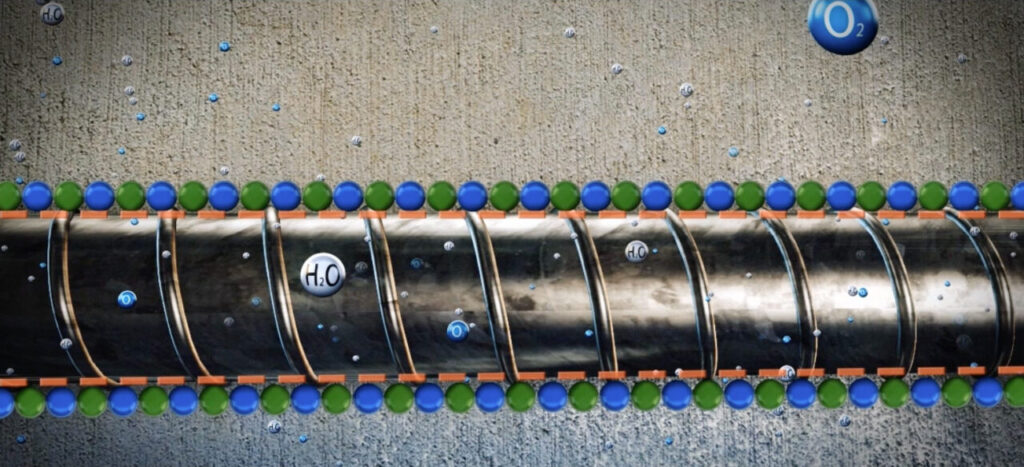
According to Cortec, its MCI products work by migrating through concrete and forming a protective molecular layer on metal surfaces. This helps inhibit corrosion reactions, delaying their onset and reducing corrosion rates once the process has begun.
The technology is intended to provide an additional means of protecting reinforcement, rather than relying solely on preventing every crack or keeping corrosive substances out of the concrete.
Can MCIs be used on existing structures, or are they only suitable for new construction?
One of the potential advantages of the technology is its application across different stages of a structure’s life cycle.
MCIs can be considered for new concrete as well as existing structures requiring maintenance or rehabilitation. Their ability to help mitigate corrosion in cracked concrete may also be relevant where complete exclusion of moisture and chlorides is difficult to achieve.
For asset owners, the appropriate approach will depend on the condition of the structure, the extent of any damage and the wider repair strategy. Corrosion inhibitors should form part of an assessment-led maintenance plan, rather than being treated as a substitute for investigating structural defects or carrying out necessary repairs.
Do corrosion inhibitors remove the need to repair cracked or damaged concrete?
No single treatment should be regarded as a universal solution to concrete deterioration.
MCIs are intended to help slow reinforcement corrosion, but they do not remove the need to assess cracks, investigate the cause of damage or repair concrete where its integrity has been compromised.
Their potential value lies in adding another tool to the maintenance options available to engineers and asset managers, particularly when the aim is to manage corrosion risk and extend the service life of existing infrastructure.
What should highways professionals take away from this?
Cracking may be difficult to avoid entirely, but the subsequent deterioration of reinforced concrete is something that asset owners can seek to manage.
Understanding the relationship between cracks, chloride ingress and reinforcement corrosion is an important part of that process. Technologies such as migrating corrosion inhibitors may offer an additional means of slowing deterioration, provided they are selected and applied appropriately for the structure and its condition.
For highways authorities facing pressure to maintain ageing assets while minimising disruption and whole-life costs, the key is to consider corrosion protection as part of a broader, long-term approach to concrete maintenance.
(Pictures: Cortec MCI)