Over 700 tonnes of lower-carbon asphalt have been used in a pilot road resurfacing scheme in Oxfordshire, with the project estimated to have saved up to 30 tonnes of CO₂ compared with conventional resurfacing methods.
The 300-metre scheme on the B4445 Chinnor Road, between Thame and Chinnor, was delivered by M Group for Oxfordshire County Council through its Oxfordshire Highways Contract.
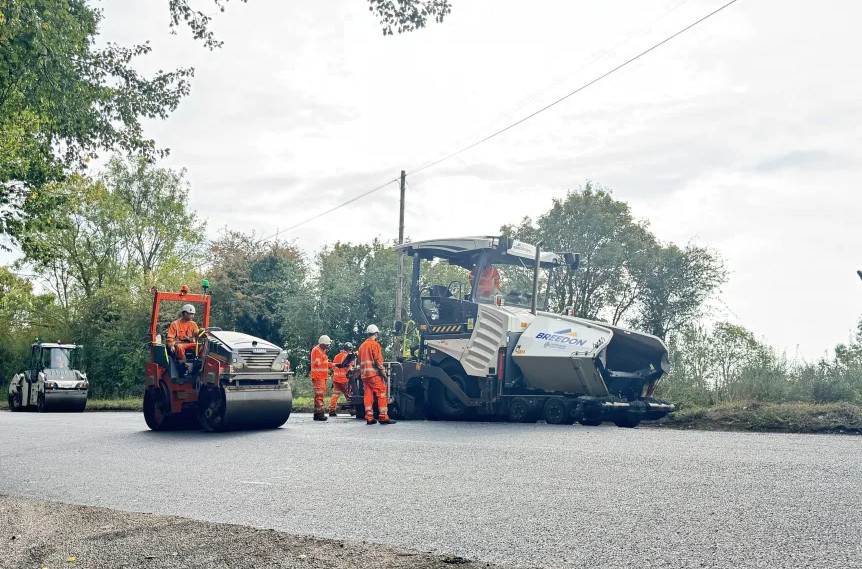
Breedon Group supplied the asphalt, which was laid by its dedicated Surfacing Solutions business. The project brought together lower-carbon materials and construction techniques to investigate how emissions from routine highway maintenance could be reduced.

The asphalt incorporated two materials designed to reduce its carbon footprint.
For the binder course, Breedon supplied a bespoke mix incorporating ACLA, developed by Low Carbon Materials. The material combines biochar and minerals to replace a proportion of virgin aggregate and lock carbon into the asphalt.
The ACLA binder-course mix accounted for an estimated carbon saving of 23.94 tonnes of CO₂, according to the project figures.
The surface course incorporated Cariphalte Ultra Carbon Sink bitumen, which uses biomass-derived components to store carbon within the road material. This was estimated to deliver a further saving of 4.42 tonnes of CO₂.
The project team said most of the carbon stored through the use of the bitumen remains locked away even when the asphalt is subsequently recycled.
Breedon secured the work with M Group and provided technical support during the planning and design stages to develop the lower-carbon solution and ensure the materials were suitable for the application.
Victoria Rand, commercial manager at Breedon Surfacing Solutions, said:
“We’re pleased to contribute to this important project, which is exploring practical ways to reduce carbon emissions in road construction and maintenance. Schemes like Chinnor Road give us the opportunity to work with customers and supply chain partners to put lower-carbon materials into practice and learn from their use on a live scheme.
“That experience is valuable in understanding how we can reduce emissions while meeting the demands placed on our roads. By sharing what we learn, we can help build confidence in these approaches and support their use on future projects.”
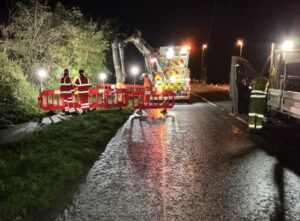
Alongside resurfacing, the scheme included drainage repairs and improvements, verge reinstatement and replacement road markings.
It also formed part of a wider trial of lower-carbon highway construction techniques, bringing together several supply chain partners to assess how different technologies and approaches perform under real-world conditions.
Richard Lovewell, business director at M Group, said:
“The Chinnor scheme is a great example of what can be achieved when clients, contractors and suppliers work collaboratively to challenge traditional methods and adopt proven alternatives. By working closely with our supply chain partners – Breedon, LCM, DJT, FCL, TSM and Wilson & Scott – we have combined low-carbon materials, plant, equipment, welfare cabins and traffic management into one project.
“This enables us to evaluate how they perform together in real-world conditions and generate learning that could influence future schemes across the industry.”
All asphalt materials used on the scheme were produced at Breedon’s Corby plant.
The trial is intended to provide evidence of how lower-carbon materials can be incorporated into conventional resurfacing operations, potentially supporting wider adoption across local authority highway networks.
The estimated carbon savings will also provide an indication of the contribution that material selection can make to reducing the environmental impact of routine road maintenance.
(Picture: Breedon Surfacing Solutions)