The Institute of Highway Engineers must continue to prepare its members for emerging technologies, develop new routes into the profession and continue as a strong advocate for the highways sector, its President Darren Capes has told the JCT Traffic Signals Symposium.
Mr Capes, who is also Head of Road Infrastructure Technology at the Department for Transport, used his address in Lincoln to outline the three areas he intends to prioritise during his two-year IHE presidency.
He said the Institute already performs excellently, providing training, accreditation and professional registration for highway engineers and technicians. However, he stressed that it should now extend this role to reflect changes in technology, skills and the political environment surrounding roads.
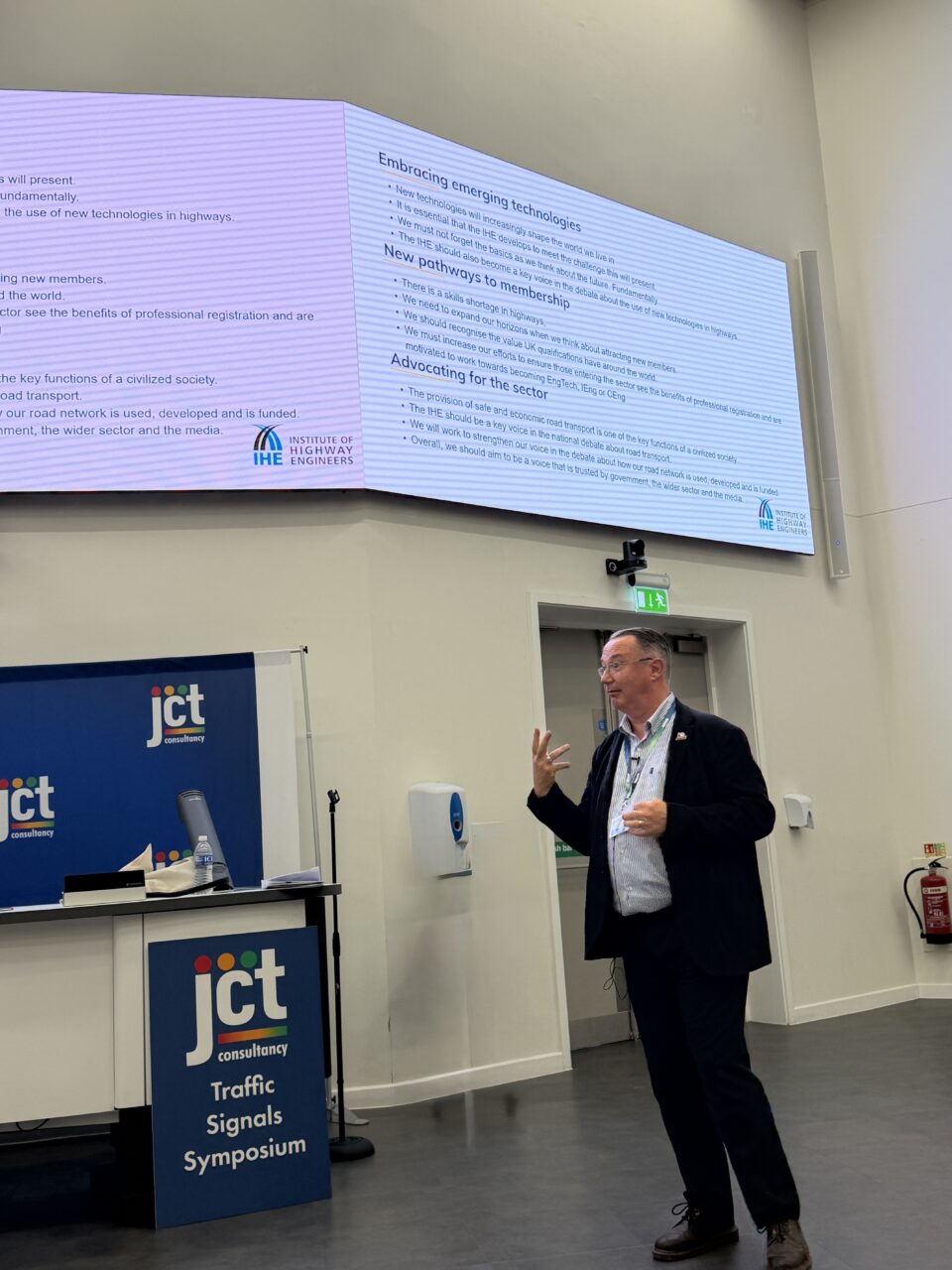
His first priority is ensuring that the IHE and its members are ready to embrace emerging technologies such as artificial intelligence, digital modelling, digital twins and increasingly intelligent highway machinery.
Mr Capes pointed to the sensors, cameras and AI systems already being incorporated into equipment used on the network as evidence that digital technology is no longer a separate specialism.
“Every aspect of our job will be affected by technology in some way,” he said.
He explained that the IHE will expand its ability to support people whose professional experience includes emerging disciplines such as digital modelling and agentic AI, both through training and when assessing applications for professional registration.
The Institute should also become an authoritative voice in discussions about the appropriate use of new technology in highways, while ensuring the sector does not lose sight of the engineering fundamentals on which safe and effective roads depend.
A second area of focus will be widening the routes through which people can enter a career in highways and gain professional recognition.
Mr Capes said that universities and apprenticeships remain important, but addressing the sector’s skills shortage will require the profession to look beyond conventional recruitment routes. This includes attracting career changers, people leaving the Armed Forces and those bringing relevant technological skills from other industries.
He added that the highways industry must do a better job of explaining the variety of work and opportunities available within the sector.
(Picture – JCT)