
The industry association for the transport technology sector in the United Kingdom, ITS UK, is urging traffic technology companies and local authorities to support its campaign for a rolling programme of government investment to replace ageing traffic signals, warning that political pressure will be essential if funding is to be secured.
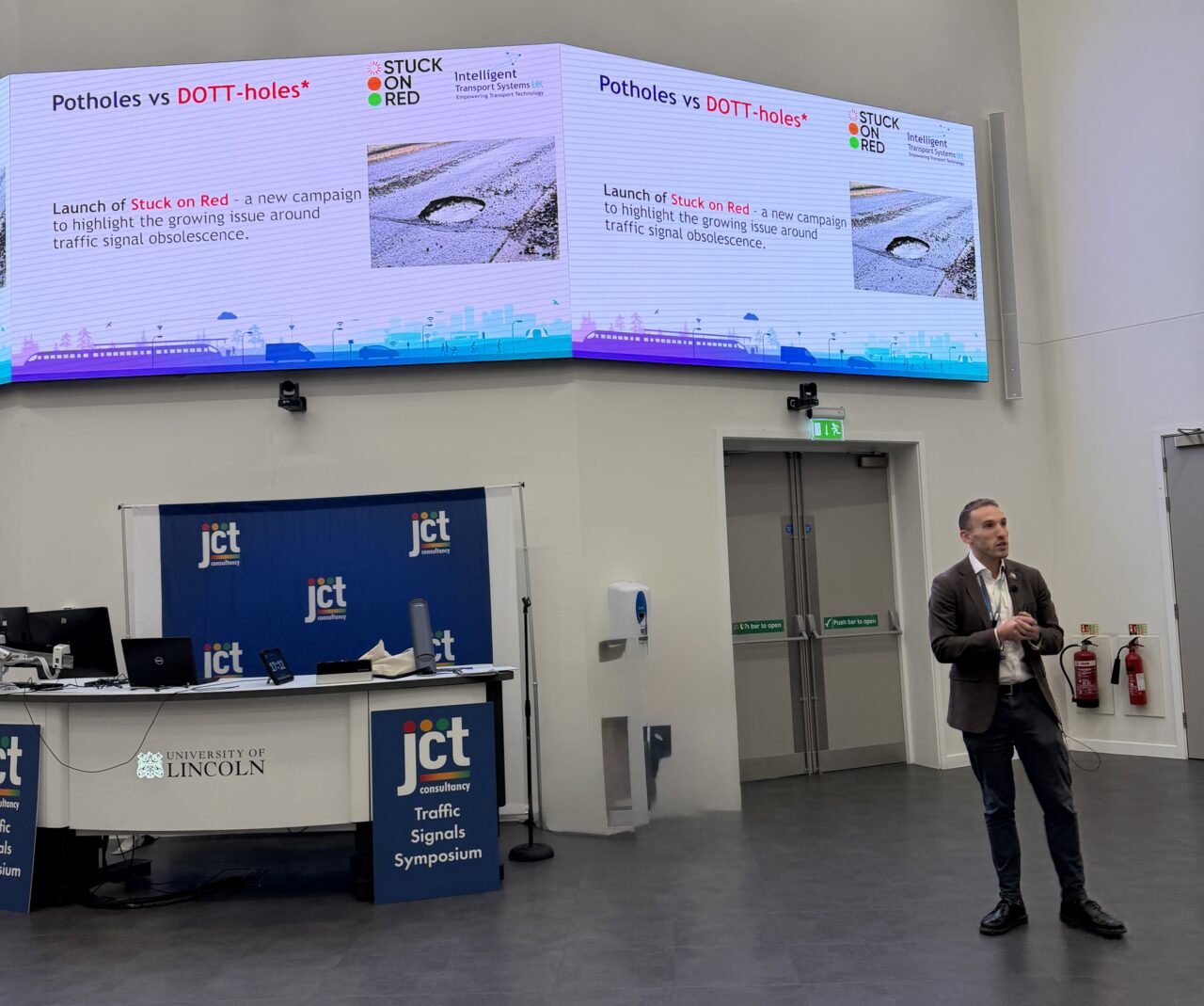
Speaking at the JCT Traffic Signals Symposium in Lincoln, ITS UK Chief Executive Max Sugarman said the organisation’s “Stuck on Red” campaign was gaining traction among politicians, but needed wider industry backing to maintain momentum.
ITS UK estimates that 51% of England’s traffic technology network is now obsolete, potentially rising to 61% by 2028 under a “do nothing” scenario. Mr Sugarman revealed that soon-to-be-published analysis suggests the position in Scotland is significantly worse, with around 75% of the network classified as obsolete.
The organisation is calling for a rolling government fund worth approximately £45 million per year in England and £15 million in Scotland, alongside contributions from local authorities. Figures for Wales and Northern Ireland are expected to follow.
Mr Sugarman said spreading investment over several years would allow the supply chain to plan and deliver upgrades, avoiding the “boom and bust” which could result from attempting to clear the entire backlog at once.
He told delegates: “If we do not have that political buy-in, we won’t get the decisions made. At the end of the day, to sign something like this off means a politician’s signature on it, and so we need to go to where that decision is going to be taking place.”
Since launching the campaign at Traffex in May, ITS UK has met MPs, peers, councillors and members of the Scottish Parliament. Its work has already led to parliamentary questions and letters to ministers, while the organisation is also arranging a meeting with the new Roads Minister.
However, Mr Sugarman warned that policy campaigns can require sustained effort before achieving a breakthrough and called on companies, councils and other industry organisations to become formal supporters.
“I really just want to do this as a bit of a call for action,” he said. “If you are interested in supporting this, then come and talk to us. If you’re from a company, if you’re from a private sector organisation, come and get involved.”
He added that local authority officers could use the national campaign to explain the problem to cabinet members and other local decision-makers, with ITS UK offering evidence and assistance.
The campaign argues that outdated traffic technology increases maintenance and operational costs, contributes to congestion and creates greater cyber security risks. It could also prevent authorities taking advantage of connected vehicles, bus priority and other emerging transport technologies.
ITS UK has estimated that fully addressing the backlog could require around £450 million in England and £150 million in Scotland. Mr Sugarman compared the proposed annual investment with the Government’s commitment of approximately £9 billion for potholes, arguing that modern traffic signals could produce savings through reduced maintenance, energy consumption and equipment failures.
The campaign was developed with support from SWARCO, Telent, TRL and Yunex Traffic.
(Picture – JCT)