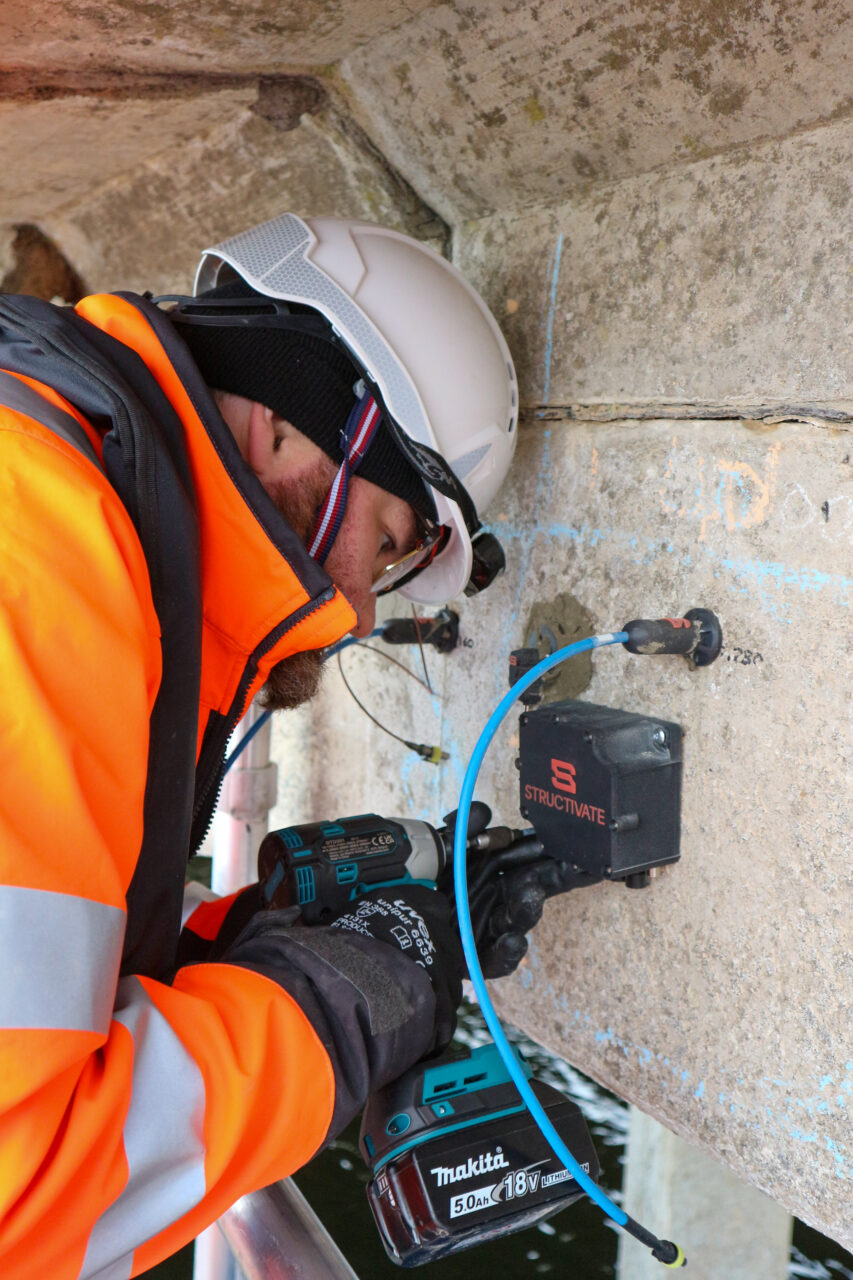
Structivate, the Dublin-based corrosion intelligence specialist, has installed its SM:ART corrosion-monitoring system at Morton’s Bridge, near Outwell, and Rungay’s Bridge, in Marshland St James, as part of a trial agreed with Norfolk County Council. The installations were completed between 27 and 29 October.
The trial will explore how readings collected from within existing concrete can add to the information available to engineers responsible for bridge inspection and maintenance. It follows the system’s first live installation at Lifford Bridge in Ireland in July 2026.
SM:ART combines retrofitted sensors with an online platform, allowing engineers to review corrosion-related measurements between site visits. Its intended role is to complement inspections and targeted testing, helping build a clearer picture of conditions over time rather than replacing established assessment methods.

Corrosion is a challenge in managing reinforced-concrete bridges because the steel is concealed within the structure. Concrete normally protects the reinforcement, but chlorides or carbonation can undermine that protection and allow corrosion to develop before obvious signs appear at the surface.
As corrosion progresses, it can reduce the steel’s cross-section and cause cracking or spalling of the surrounding concrete. Visual inspections remain important, but engineers may also need information from beneath the surface to understand the condition of the reinforcement and decide where further investigation is required.
The SM:ART system collects half-cell potential and concrete resistivity measurements alongside temperature and humidity data. Half-cell potential helps assess the likelihood of corrosion activity in the reinforcement. Resistivity measures the concrete’s resistance to electrical current, providing information relevant to the conditions in which corrosion may occur.
These measurements need to be interpreted in context. Temperature and moisture can affect electrical readings, so a change does not automatically indicate deterioration. Recording environmental information alongside corrosion-related measurements helps engineers examine patterns and consider possible explanations for changes over time.
Readings are transmitted through a mobile network to the online platform. This provides a way to review information between inspections and compare changes over time, alongside observations and measurements gathered during site investigations.
For bridge managers, the practical value lies in how that information contributes to an assessment. Monitoring may help identify locations that warrant closer investigation, but any interpretation needs to take account of the bridge’s construction, exposure, maintenance history and other inspection or test findings.
The aim of the Norfolk trial is to explore how information from within concrete can support the ongoing management of existing bridges, helping engineers judge where additional investigation, maintenance or repair may be needed.
(Picture: Structivate)