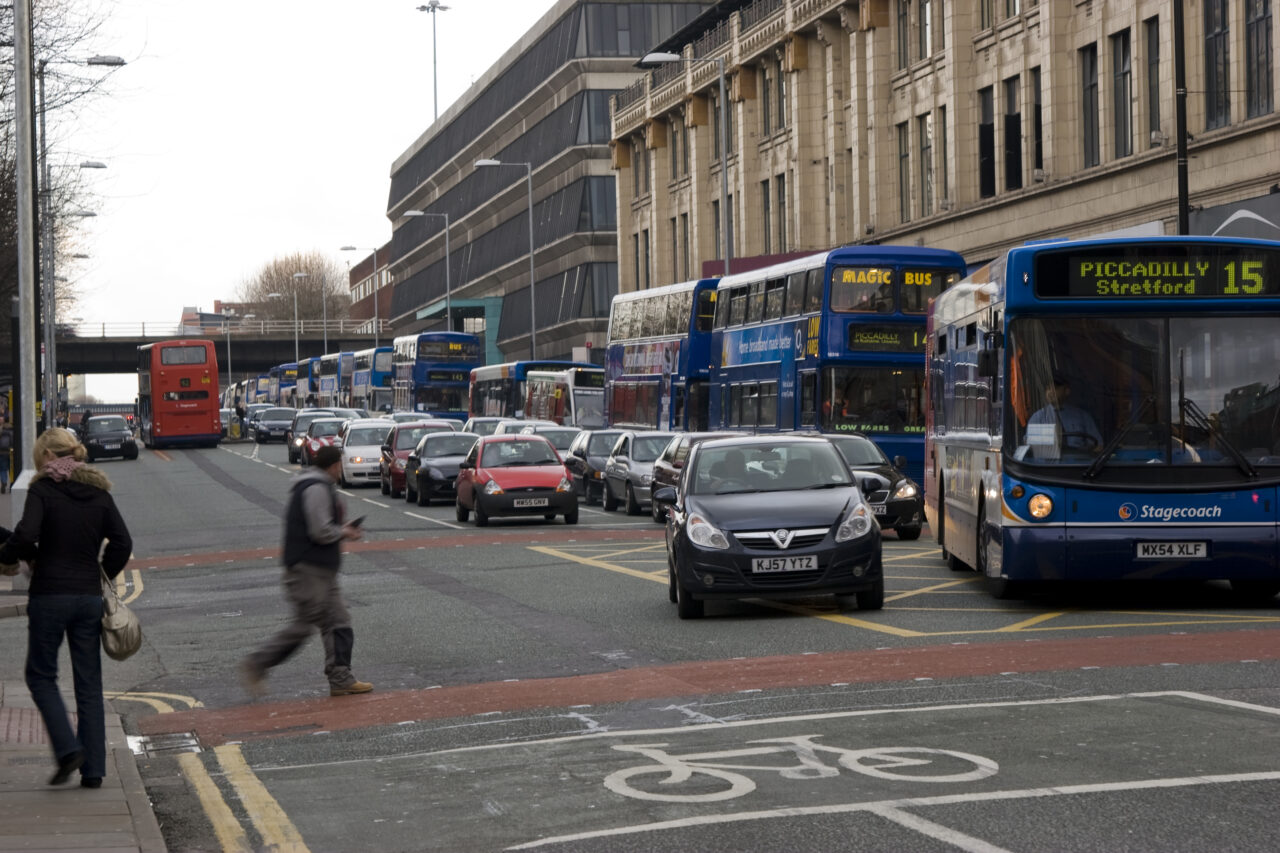
Motorists in Greater Manchester will not be facing a London-style congestion charge, according to transport officials, despite growing concerns about traffic levels and the economic cost of congestion across the region.
Transport for Greater Manchester (TfGM) has confirmed that there are no plans to introduce a charge in any part of the region, saying investment in public transport, walking and cycling will instead be the focus of efforts to get traffic moving, reports the BBC.
The announcement follows the publication of a Manchester City Council report which puts the annual cost of congestion to the regional economy at £1.3 billion.

The report also highlights the growing pressure on the road network, with traffic levels in Greater Manchester now three per cent above those recorded in 2019.
A TfGM spokesperson said:
“There are no plans for a congestion charge in any part of Greater Manchester, instead we are investing heavily in the Bee Network to give people a reliable alternative to getting in their car.”
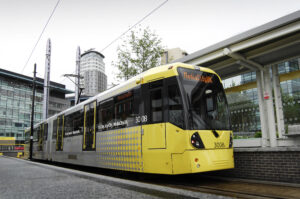
The transport authority pointed to the potential for public transport to reduce the number of vehicles on the roads, saying one full tram could replace around 200 cars, while a double-decker bus could take the place of approximately 75.
Around £2.5 billion of government funding is due to be invested in the region between 2027 and 2032, while the next stage of the Bee Network will see local rail services brought into the integrated transport system from December.
The question of whether Manchester should follow London’s example is not new. In January 2017, the Centre for Cities think tank called on Greater Manchester’s first elected mayor to make the case for a congestion charge in the city centre.
Its report argued that charging motorists could help manage traffic, reduce pollution and generate revenue to improve public transport links in areas less well served by existing services.
The suggestion attracted political opposition. Jane Brophy, the Liberal Democrat candidate in the 2017 mayoral election, said she could see the benefits of a smart congestion charging system, although she did not consider it a priority.
The then interim mayor, Tony Lloyd, also rejected the proposal, pointing to the decisive vote against congestion charging in the 2008 Greater Manchester referendum.
Andy Burnham, who subsequently became mayor, also ruled out a congestion charge, arguing that motorists should be given a genuine alternative to using their cars before being asked to pay an additional charge.
There is, therefore, a history of debate around the idea, but the latest confirmation from TfGM makes clear that a congestion charge is not currently on the agenda.
Pressure on the road network
The latest council report highlights the difficulty of accommodating Greater Manchester’s continued growth alongside increasing car ownership.
At a scrutiny meeting, a Manchester City Council officer warned that the city’s roads could only be expanded so far, particularly given the large number of narrow Victorian streets.
The council said the combination of new housing, economic growth and increasing car use meant more vehicles were competing for the same limited road space.
A spokesperson said the authority was working with its Greater Manchester partners to encourage a shift towards other forms of transport.
Investment in public transport, walking and cycling infrastructure was intended to provide more travel choices and help make journey times more reliable, including for those who still need to drive.
(Picture: Yay Images)