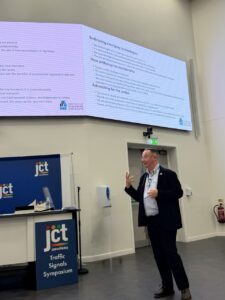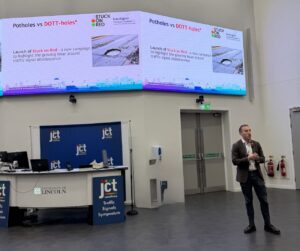
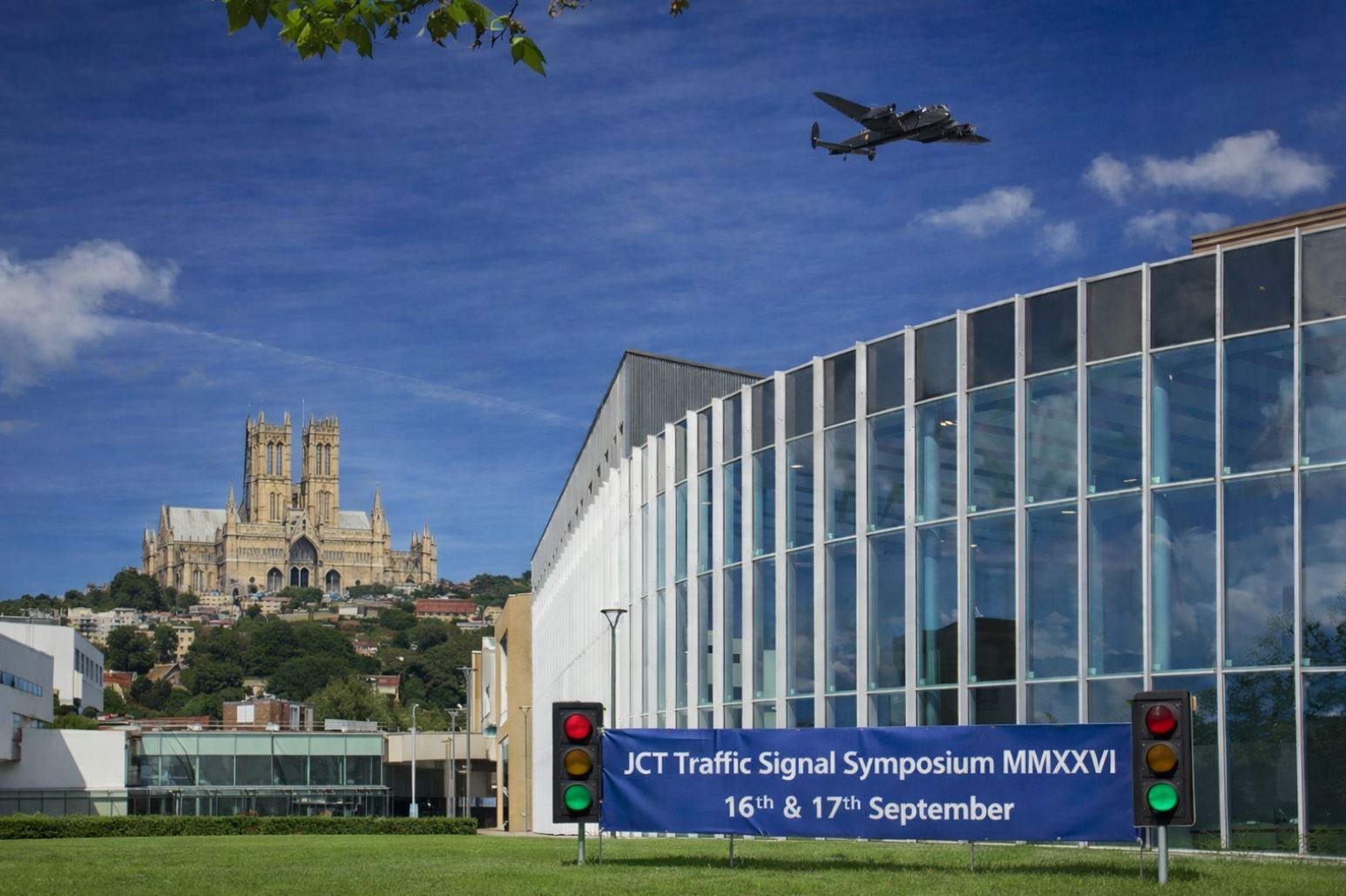
The popular JCT Traffic Signals Symposium returns this September with a packed programme of presentations covering everything from artificial intelligence and connected roadworks through to prison transport, detector standards and the future of ageing traffic signal infrastructure.
Taking place in Lincoln and organised by JCT Consultancy, the long-running event is the UK’s premier forums for traffic signal professionals, bringing together local authorities, the Department for Transport, National Highways, suppliers, consultants and academics to discuss the latest developments in traffic management and signal control.
This year’s symposium opens with Anthony Gent of Lincolnshire County Council, welcoming delegates to the host city and there is another keynote addresses from Darren Capes, Head of Road Infrastructure Technology, who will provide an update on the Government’s vision in Roads to the Future.

One of the most intriguing papers on the list is “Zero-queue traffic control, using green-times and prices together”, presented by Professor Michael J Smith of the University of York and Richard Mounce of RBM Traffic Solutions. The paper promises to explore a radical approach to traffic control, combining signal timing with pricing mechanisms to minimise or potentially eliminate queuing at junctions.
Another innovative contribution comes from Peter Richards of National Highways, who will discuss “Modelling a complex system of junctions and signals by means of floating vehicle data and fluid mechanics.” The presentation will examine how modern vehicle data can be combined with advanced modelling techniques to better understand and optimise network performance.
Artificial intelligence also features prominently on the agenda. Daniel Ellis from Barnsley Metropolitan Borough Council and Nick Rule of Yunex Traffic will present “AI-Enhanced Traffic Management in Barnsley Using AwareAI”, providing delegates with a real-world example of how AI is being deployed to improve traffic operations and network efficiency.
Innovation from a local authority perspective will be explored by Lyndon George of Reading Borough Council in a presentation entitled “Innovation needs to start, from the ground up.” The session is expected to focus on how councils can foster practical innovation within day-to-day traffic management activities.
A Birmingham city centre scheme forms the basis of another paper attracting attention. In “Delta Force!”, Shane Collins of 4way Consulting will explain how stakeholder requirements were balanced while delivering priority for pedestrians, trams and buses at the new Bull Street/Corporation Street Delta Junction.
The programme also includes a strong focus on operational performance and asset management. Dr Adrian Withill of Derbyshire County Council, alongside Hugo Barnes of AECOM, will unveil a Journey (Delay) Monitoring Tool, while Dr Withill will also join Andrea Newman of SWARCO to discuss Connected Roadworks and Real Time Delay Minimisation, highlighting how better connectivity can reduce disruption during roadworks.
Technical specialists will be particularly interested in Mark Pleydell’s update on developments in TOPAS detector standards, while Peter Routledge of IRC Ltd will provide the latest update on DCIS, a subject of ongoing interest to signal engineers across the country.
The symposium will conclude with what promises to be a timely discussion from ITS UK Chief Executive Max Sugarman. His presentation, “Stuck on Red: Making the case for support for obsolescent traffic technology,” will examine the growing challenge facing authorities as ageing signal equipment reaches the limits of its operational life.
Other presentations include:
- Sarah Shuff (Transport for London) – Unlocking the Next Stage
- Wendy Davidson (TRL) and Chris Small (Transport for Greater Manchester) – Managing matchday demand: flow, incidents and response with SCOOT® 8AI
- Chris Kennett (CKC Ltd) – Old Tricks, New Dogs: Improving capacity using old techniques and new tech
These are in addition to previously announced papers; Transport for London’s study into prisoner transport operations, Beyond the Bus – Applying our Route Analysis Theory to Prisoner Transport, and National Highways’ thought-provoking paper asking whether traditional traffic signal tools such as queue loops and hurry calls are still required in a modern traffic management environment.
Alongside the technical programme, delegates will once again be able to take part in the popular MOVA Users Group, providing practitioners with an opportunity to discuss developments, share experiences and hear the latest updates relating to the widely used adaptive traffic signal control system.
The event continues to attract strong support from across the industry. Sponsors for this year’s symposium include Yunex Traffic, NAL, Telent, PTV Group, SWARCO and TRL, reflecting the breadth of organisations involved in shaping the future of traffic signal technology.
With a programme ranging from AI-powered traffic management and floating vehicle data to detector standards, connected roadworks and the future of legacy infrastructure, the 2025 JCT Traffic Signals Symposium looks set to provide one of the most comprehensive snapshots yet of the challenges and opportunities facing traffic signal professionals across the UK.
(Picture – JCT)