How do you give priority to trams without causing unnecessary delays to buses, pedestrians and cyclists? That’s the challenge delegates at this year’s JCT Traffic Signals Symposium will hear has been tackled at one of the most operationally complex junctions on the West Midlands Metro network.
Shane Collins, Smart Cities Sector Lead at 4way Consulting, will explain how engineers developed a bespoke traffic signal strategy for Birmingham’s Bull Street/Corporation Street “delta junction”, where three tram routes converge while also accommodating busy pedestrian crossings, buses and general traffic. His paper examines the engineering behind a junction designed to keep all modes moving safely while remaining flexible enough to accommodate future developments on the expanding tram network.
The presentation explores how the design team worked with the Midland Metro Alliance, SWARCO and other stakeholders to meet a series of often competing operational requirements. These included giving trams priority through the junction, ensuring pedestrian crossings remained convenient, minimising disruption to bus services and future-proofing the installation so Automatic Route Setting technology can be introduced without major redesign.

Rather than simply prioritising one mode over another, the paper argues that successful traffic signal control depends on balancing the needs of everyone using the network. The resulting controller strategy includes innovative features such as allowing pedestrian stages to be inserted at multiple points within the signal cycle, configuring the junction to favour bus-heavy approaches when appropriate and carefully integrating tram signalling with traffic signal operation to ensure safe and efficient movements.
Mr Collins will also reflect on the lessons learned from designing and commissioning the junction, highlighting the importance of early collaboration between traffic signal engineers and tram systems specialists, thorough interface testing and designing today’s infrastructure with tomorrow’s technology in mind. Since entering service, the junction has successfully supported the opening of the first sections of the Birmingham Eastside Metro Extension while safely accommodating trams, pedestrians, cyclists and buses.
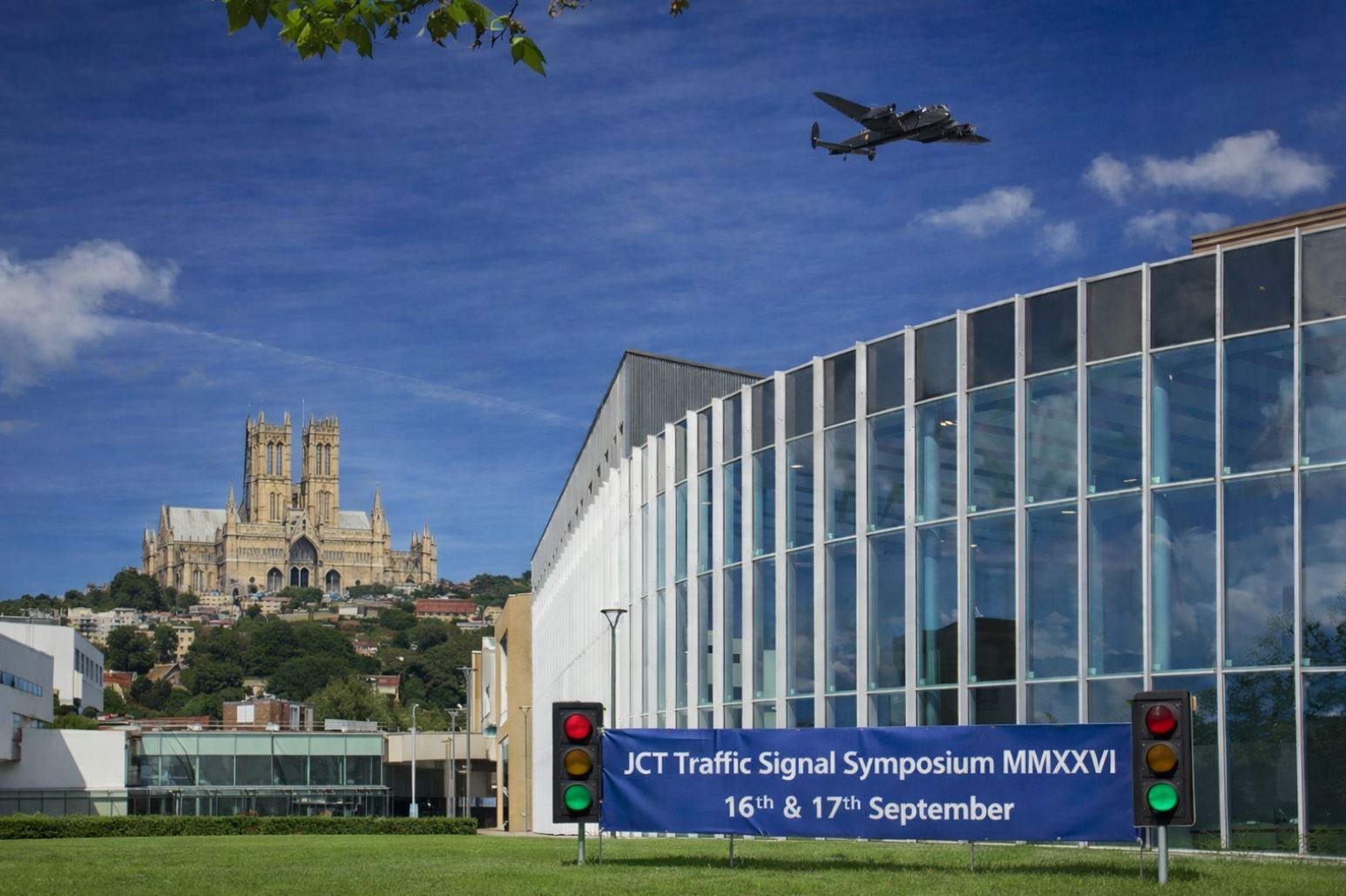
The paper is one of fifteen technical presentations being delivered at this year’s JCT Traffic Signals Symposium, taking place at which takes place on 16 and 17 September at the University of Lincoln and brings together traffic signal engineers, local authorities, consultants and technology suppliers to discuss the latest thinking in traffic management and control. The Mova Users’ Group takes place the day before.
To book your place, click here.
(Picture – JCT)