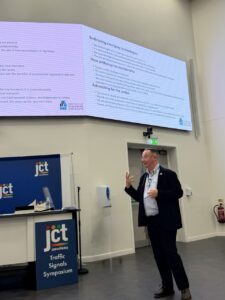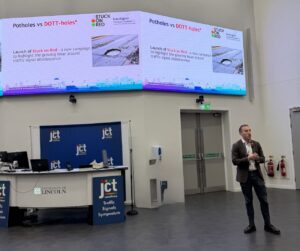

The founder of the JCT Traffic Signals Symposium, Brian Simmonite, had a simple ambition when he launched the event in 1996 – to create a forum where experienced traffic signal engineers could learn from each other, challenge ideas and return year after year.
“The forum will consist of a series of short papers (presented by some of the delegates) which will hopefully encourage discussion and debate,” the late signals expert and pioneer wrote in the original symposium introduction. “Delegates will be expected to have a reasonable amount of experience in the signals field and be competent practitioners. It is intended that the forum will be held annually, and delegates will be encouraged to attend annually if possible.”
Thirty years on, that vision is being celebrated through JCT Consultancy’s “30 Years: 30 Stories” series on LinkedIn, highlighting the people, presentations and moments that have shaped what has become the UK’s leading conference dedicated to traffic signals.

The series reflects on how the symposium has grown from a specialist gathering into an industry institution while remaining true to its founding principles of knowledge sharing and practical engineering.
Among the stories featured so far are recollections of early symposiums, alongside memories of the event’s move through different venues as attendance steadily increased.
For example, looking back at the inaugural programme from 1996 reveals just how many of today’s transport priorities were already being tackled three decades ago. The first JCT Traffic Signals Symposium covered innovative junction designs, including signalised roundabouts and capacity improvements, alongside the latest traffic signal controllers and installation practices. Delegates discussed bus priority, the then-new Toucan crossing, safety issues, cabling and intergreens, while sessions on MOVA, SCOOT, TRANSYT and the early development of LinSig demonstrated how software was beginning to transform signal design and traffic management.
“Looking back, many of the subjects remain remarkably familiar, illustrating how the symposium has continually evolved by building on strong engineering foundations while embracing new technologies,” commented JCT engineer Stuart Hanson who is curating the memories series. “It’s also amazing how many of the names in our archives from the mid 90s are still people we all know about today”.
The campaign also looks at landmark technical debates, from the development of traffic signal modelling and controller technology to the increasing role of data, connected vehicles and digital traffic management. In doing so, it charts not only the history of the symposium itself, but also three decades of rapid change across the traffic signals profession.
The anniversary series comes ahead of this year’s JCT Traffic Signals Symposium in September, which continues to showcase emerging technologies and research while maintaining the emphasis on practitioner-led papers that Mr Simmonite set out three decades ago.
“The legacy of Brian Simmonite continues to be recognised across the industry,” concluded Stuart Hanson. “His contribution to UK traffic signals was recently commemorated through the creation of the Simmonite Number, the national identification system for traffic signal controllers developed as part of the Digital Controller Interface Specification, ensuring his influence will continue as the UK’s traffic infrastructure becomes increasingly digital. The Symposium’s journey mirrors the wider development of JCT Consultancy, which has grown from its origins developing the LinSig traffic signal design software into a leading provider of software, consultancy and training for the sector.”
This year’s JCT Traffic Signals Symposium, which takes place on 16 and 17 September at the University of Lincoln, brings together traffic signal engineers, local authorities, consultants and technology suppliers to discuss the latest thinking in traffic management and control. The Mova Users’ Group takes place the day before. To book your place, click here.
(Picture – JCT)