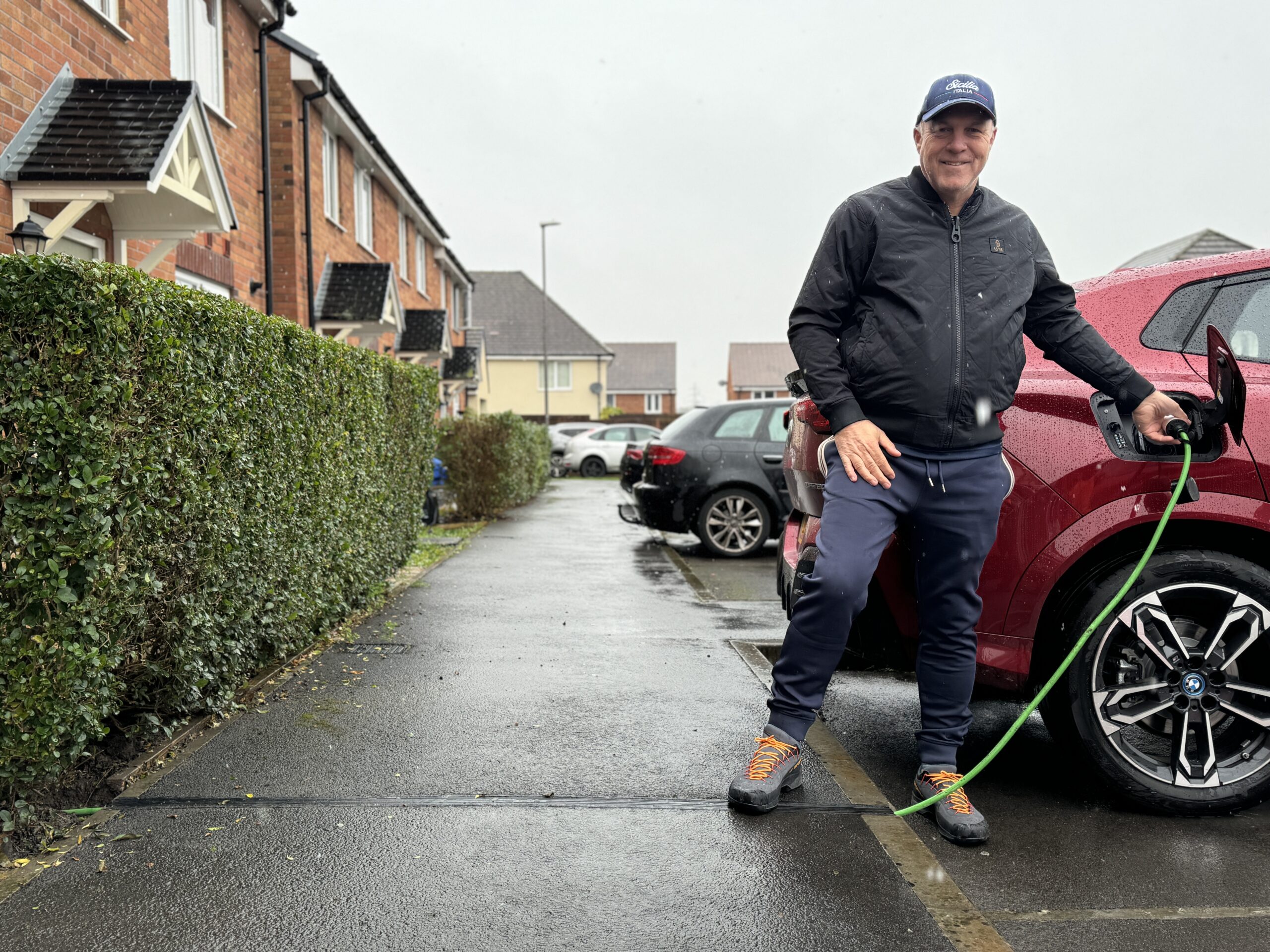
People can now save up to £300 on charging at home without a driveway from today (21 October 2026) as the government has slashed red tape to make it cheaper, easier and quicker to install.
Drivers will no longer need planning permission to install cross-pavement chargers which run under pavements from people’s homes to their cars. This will save drivers up to £300 on installation and open up home charging for as little as 2p per mile. This is all part of the government’s bid to deliver ‘everyday fixes’ that help people with the cost of living.
It comes as September 2026 saw another record-breaking month for UK electric car sales – up 36% in a year, with nearly 100,000 electric cars sold in a single month alone.
Sales have been boosted by the government’s Electric Car Grant (ECG), which has now helped over 190,000 drivers save up to £3,750 off a new electric vehicle (EV).

Buses and Local Transport Minister Simon Lightwood said:
“We’re saving drivers up to £300 off the cost of installing home charging by cutting unnecessary red tape. The EV transition is in full swing – sales are up 36% on last year and over 190,000 have saved thousands making the switch in the last year alone.”
Cross-pavement charging means residents without off-street parking can plug into cheaper domestic electricity prices, helping them access savings of up to £1,750 on running costs.
By slashing unnecessary red tape for these home chargers, the government is speeding up installations, putting money back in drivers’ pockets and revving up the transition to electric.
Changes to permitted development rights also mean it will be quicker and cheaper for charge point operators to install larger, higher-powered public EV charging hubs.
Vicky Edmonds, CEO of EVA England, said:
“This might look like a small planning change, but for someone without a driveway, it could make the difference between being able to afford an electric car and ruling one out altogether. Removing the need for planning permission for cross-pavement charging is a really welcome and meaningful step towards a fairer transition.
“Our research found that 60% of petrol and diesel drivers without off-street parking would never consider an EV. Being able to connect a car parked on the street to cheaper home electricity could help change that. It’s now up to local authorities and landlords to make these solutions easier to access in practice.”
(Picture: Kerbo Charge)